Culture Ark · D-1118 · Language and humor · Browse the gallery · The full 2,000-pick list
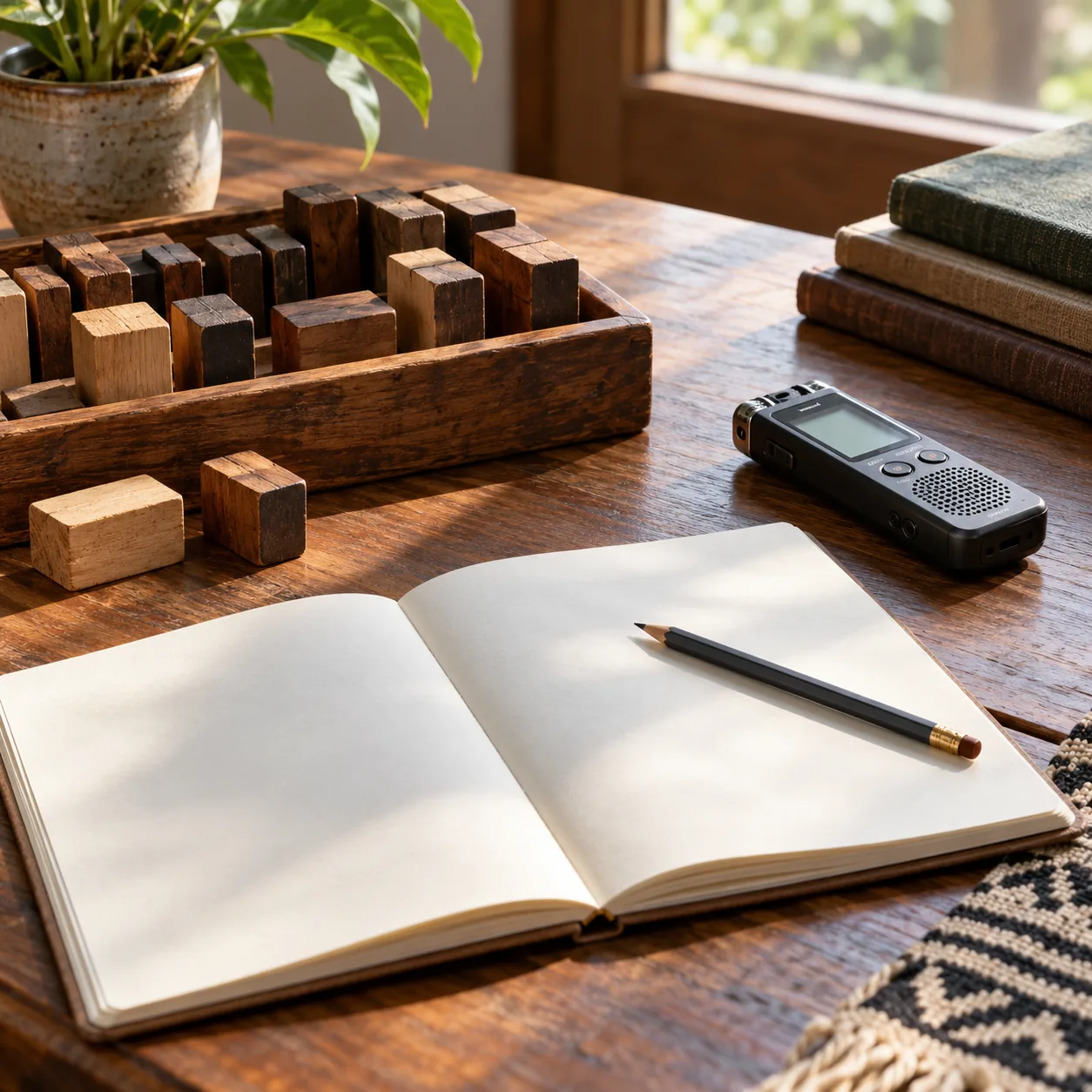
Generated interpretation, not documentary evidence. Blank notebook, recording device and unmarked blocks suggest the connection between Cherokee speech, writing and learning.
Credit: AI-generated for Culture Ark using OpenAI image generation Reuse/status: Generated content; no exclusive ownership or underlying-work rights claimed Notebook and blocks remain unmarked; recorder is generic. No invented syllabary or claim to depict Sequoyah’s desk; incidental textile has no assigned cultural symbolism. No authentic-reference or endorsement claim.
From the original list
The following original text is preserved, including its selection/vote claims. Preservation is not independent verification of every assertion.
Why: A writing system invented by Sequoyah.
What to preserve: the syllabary
Year and origin: 1821 · United States
Vote: 5/9 (historian 2 · future kid 1 · curator 2)
Learn more: Cherokee syllabary on Wikipedia
Supplemental context
Sequoyah developed a syllabary for writing Cherokee. The New Georgia Encyclopedia’s collection record dates its completion to 1821 and emphasizes that its characters represent spoken syllables. Western Carolina University’s language collection connects the writing system with subsequent literacy and printing. For future readers, the selection demonstrates linguistic invention within a living community, not the invention of the spoken language itself. Written records should be preserved alongside speaker-led pronunciation and teaching resources, since marks on a page alone cannot transmit every aspect of speech or cultural use.
Creator/community: Sequoyah and Cherokee-speaking communities, teachers and printers Place/era: Cherokee homelands and later communities; syllabary completed in 1821 and used thereafter
Context and limits
Cherokee language and culture long predate the syllabary. Character forms have histories of handwriting and print; this card does not reproduce a valid chart. Community teaching and permissions should guide reuse of recordings and specific texts. The source institution explicitly distinguishes access to its image from permission to republish it; no reference image is copied.
Where to learn more
- https://apiarybee.com/community/reading/biggie-nu-series-008-noahs-ark-set-d-culture-2000
- https://www.georgiaencyclopedia.org/articles/history-archaeology/sequoyah-ca-1770-ca-1840/m-831/
- https://www.wcu.edu/library/DigitalCollections/CherokeeTraditions/Language/
- https://language.cherokee.gov/posters/syllabary-and-numbers/
Apiary library | Original Culture Ark article
Public ID and individual routes: pending publisher allocation. Internal source ID: D-1118
Part of the Culture Ark: 2,000 things people should still be able to see in 2,000 years, picked by AI research teams. This page keeps the original list entry for D-1118 word for word and adds context. Browse the gallery. The Culture Ark is an Artificial Mind Hive (AMH) project. AMH is owned by Austin Little.

Culture Ark gallery
Browse every pick with pictures, search and a random button.
Open the gallery →