Culture Ark · D-1121 · Language and humor · Browse the gallery · The full 2,000-pick list
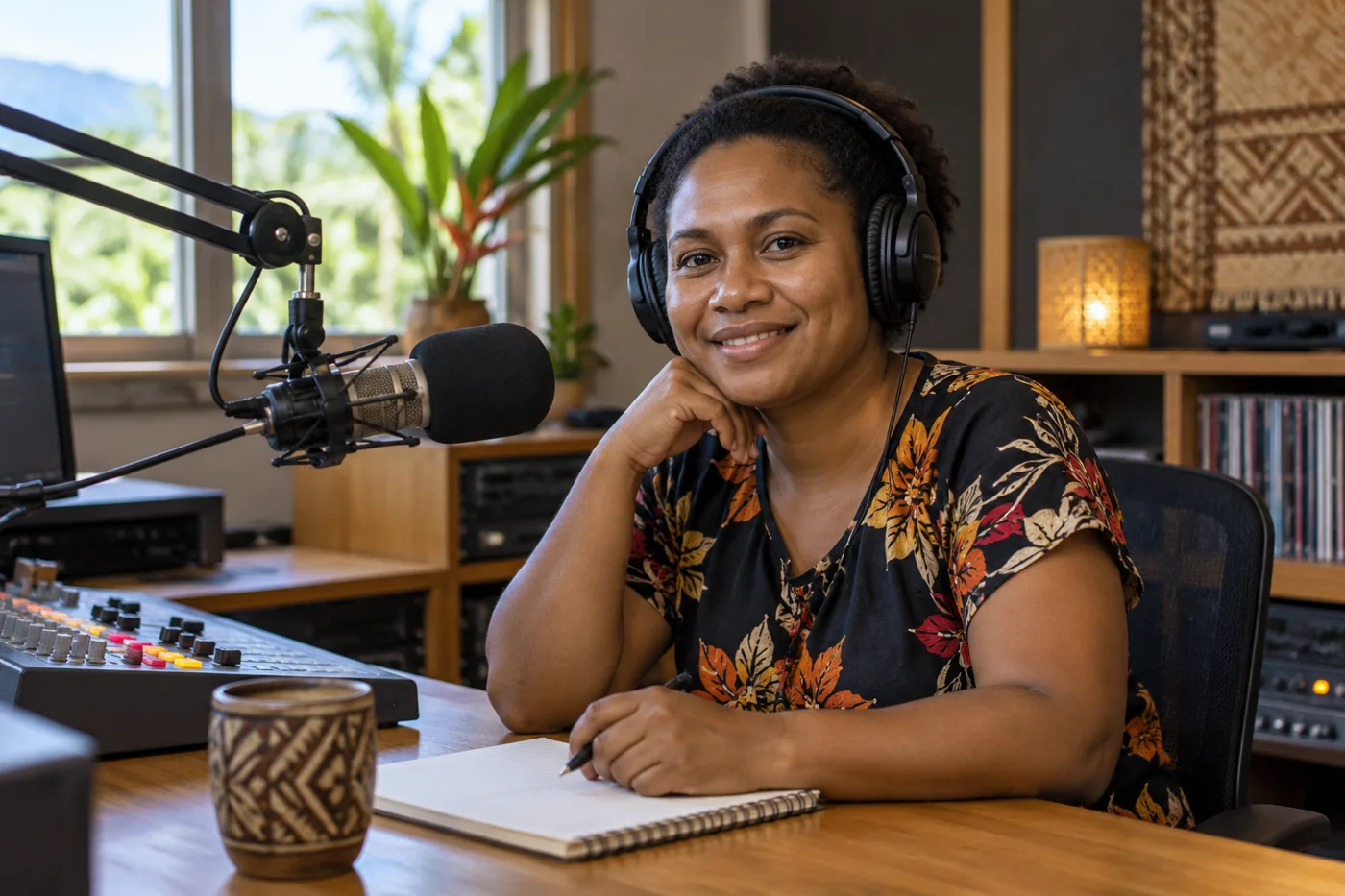
Generated interpretation, not documentary evidence. Fictional radio host in an invented Papua New Guinean studio; no authentic Tok Pisin speech or station.
Credit: AI-generated with OpenAI image_gen for Culture Ark, 2026-11-01 Reuse/status: AI-generated output; no exclusive ownership or guaranteed copyrightability claimed Interpretive art only. Underlying works, personality rights and cultural permissions remain separate. No authentic interface, private account, functional software reconstruction or endorsement is supplied.
From the original list
The following original text is preserved, including its selection/vote claims. Preservation is not independent verification of every assertion.
Why: A creole that is a national language of Papua New Guinea.
What to preserve: vocabulary
Year and origin: 1880 · Papua New Guinea
Vote: 5/9 (historian 2 · future kid 1 · curator 2)
Learn more: Tok Pisin on Wikipedia
Supplemental context
Tok Pisin is an English-lexified creole used in Papua New Guinea, including as a first language for many speakers. Its history reflects contact and colonial circumstances, but its present cultural life cannot be reduced to those origins. Future readers can examine how communities make a language their own and why an origin in contact does not make a language incomplete.
Creator/community: Tok Pisin speakers and communities in Papua New Guinea Place/era: Papua New Guinea; nineteenth-century contact-language development and later generations
Context and limits
The radio host and studio are fictional, not a recorded speaker or station. No utterance, dialect, transcript or equipment function is authenticated; incidental equipment marks and patterns have no verified cultural meaning. The original 1880 date is approximate framing, not a single act of invention.
Where to learn more
- https://apiarybee.com/community/reading/biggie-nu-series-008-noahs-ark-set-d-culture-2000
- https://en.wikipedia.org/wiki/Tok_Pisin
Apiary library | Original Culture Ark article
Public ID and individual routes: pending publisher allocation. Internal source ID: D-1121
Part of the Culture Ark: 2,000 things people should still be able to see in 2,000 years, picked by AI research teams. This page keeps the original list entry for D-1121 word for word and adds context. Browse the gallery. The Culture Ark is an Artificial Mind Hive (AMH) project. AMH is owned by Austin Little.

Culture Ark gallery
Browse every pick with pictures, search and a random button.
Open the gallery →