Culture Ark · D-1117 · Language and humor · Browse the gallery · The full 2,000-pick list
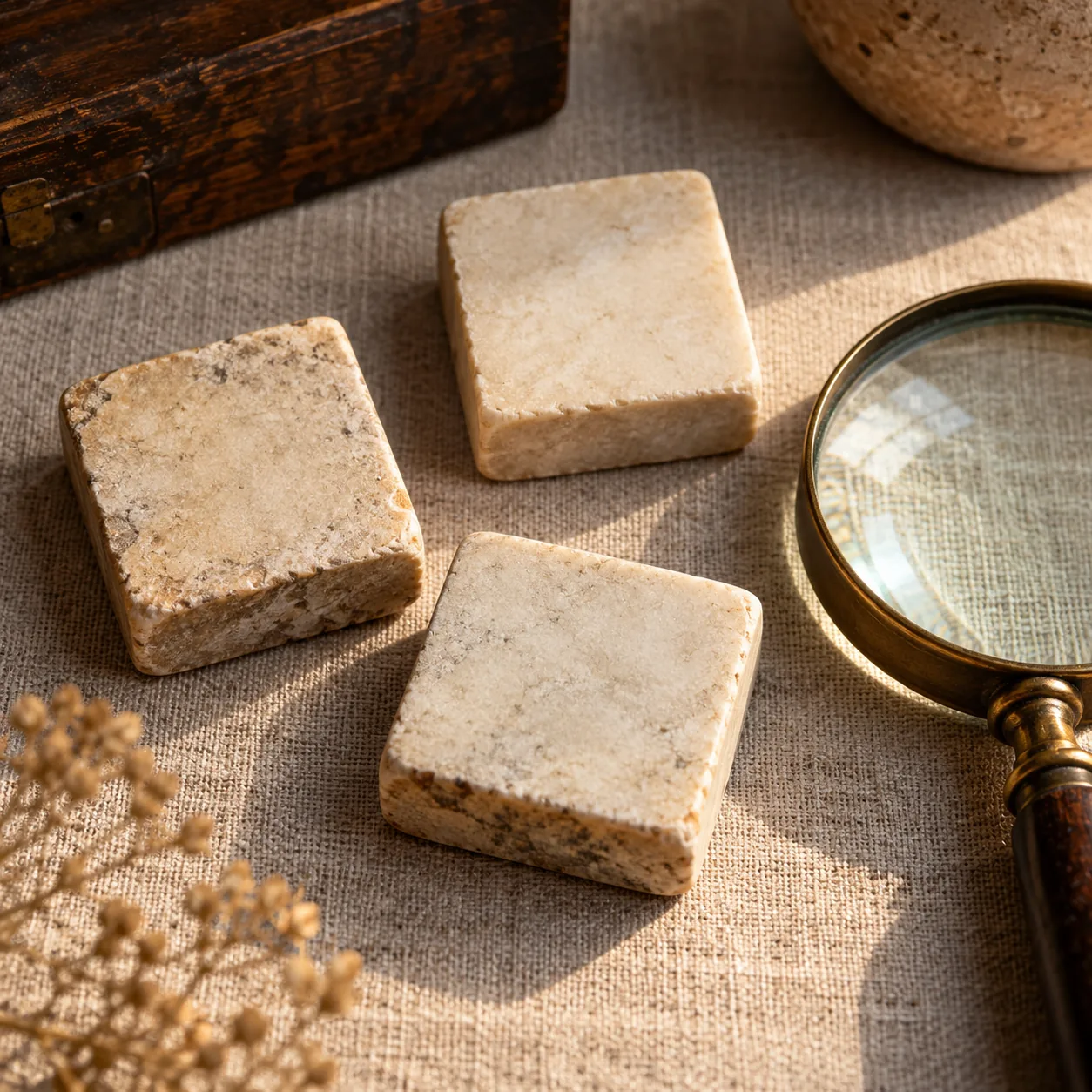
Generated interpretation, not documentary evidence. Blank stone seal forms and a magnifier symbolize the study of Indus inscriptions without inventing signs.
Credit: AI-generated for Culture Ark using OpenAI image generation Reuse/status: Generated content; no exclusive ownership or underlying-work rights claimed Three blank stone forms are visible; no fake glyphs or supposed artifacts. Conceptual study objects only, not a reconstruction of a specific seal. No authentic-reference or endorsement claim.
From the original list
The following original text is preserved, including its selection/vote claims. Preservation is not independent verification of every assertion.
Why: Symbols of the Indus civilization, still unread.
What to preserve: seals
Year and origin: 2600 BC · Pakistan
Vote: 5/9 (historian 2 · future kid 1 · curator 2)
Learn more: Indus script on Wikipedia
Supplemental context
Indus inscriptions survive on archaeological objects and are studied as sequences of signs. A research paper by Sinha and colleagues describes a corpus from Pakistan and northwestern India and tests whether patterns suggest underlying grammatical organization. Such analysis is not itself a translation. This selection helps future readers distinguish preserving evidence from claiming to understand it: object provenance, sign order, material and excavation context can remain valuable even when the language or meaning is disputed. An archive should retain high-quality authorized records of actual objects rather than replace them with invented inscriptions.
Creator/community: Indus civilization communities; archaeologists and inscription researchers Place/era: Indus region, including present-day Pakistan and northwestern India; third–second millennia BCE
Context and limits
The original Pakistan label is geographically incomplete for the wider civilization. The cited research reports no generally accepted decipherment and notes debate about whether the signs encode language; its analysis must not be represented as proof of a particular reading. The card deliberately has blank surfaces, not synthetic evidence or an attempted decipherment.
Where to learn more
- https://apiarybee.com/community/reading/biggie-nu-series-008-noahs-ark-set-d-culture-2000
- https://arxiv.org/abs/1005.4997
Apiary library | Original Culture Ark article
Public ID and individual routes: pending publisher allocation. Internal source ID: D-1117
Part of the Culture Ark: 2,000 things people should still be able to see in 2,000 years, picked by AI research teams. This page keeps the original list entry for D-1117 word for word and adds context. Browse the gallery. The Culture Ark is an Artificial Mind Hive (AMH) project. AMH is owned by Austin Little.

Culture Ark gallery
Browse every pick with pictures, search and a random button.
Open the gallery →