Culture Ark · D-1109 · Language and humor · Browse the gallery · The full 2,000-pick list
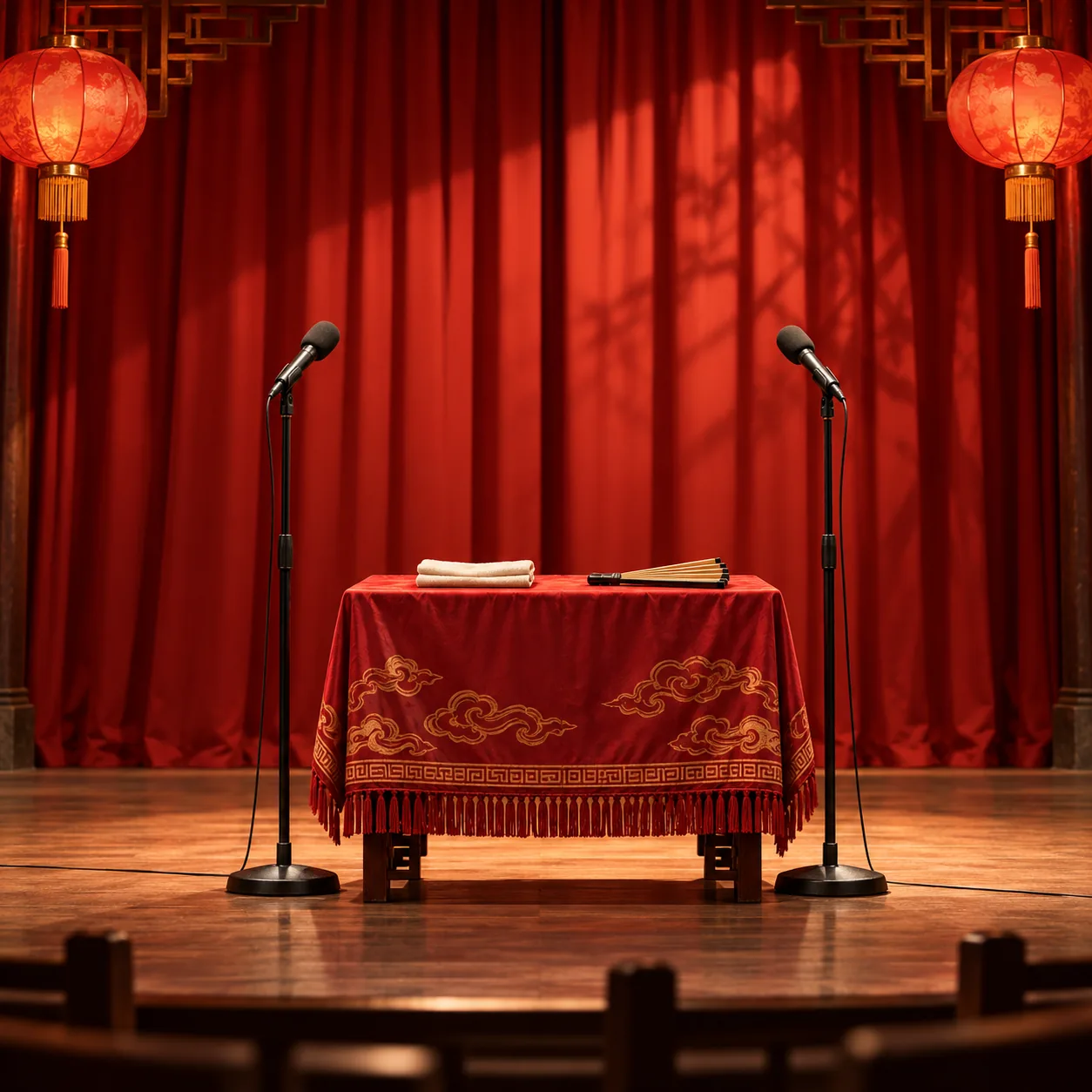
Generated interpretation, not documentary evidence. Imagined modern crosstalk stage with two microphones and table; not a named venue, historical reconstruction or universal performance arrangement.
Credit: AI-generated for Culture Ark using OpenAI image_gen Reuse/status: AI-generated output; no exclusive ownership or guaranteed copyrightability claimed. Underlying works, marks and cultural permissions remain separate. Imagined modern crosstalk stage with two microphones and table; not a named venue, historical reconstruction or universal performance arrangement. The original 1850 date is a broad marker rather than a verified first performance. The official cultural overview uses promotional generalizations about universal popularity that are not repeated as facts here. Forms, dialects and stage practices vary. The generated microphones are modern and the table decor is invented; this is not evidence of a nineteenth-century stage or a standard setup for every performance.
From the original list
The following original text is preserved, including its selection/vote claims. Preservation is not independent verification of every assertion.
Why: Chinese crosstalk comedy of rapid dialogue.
What to preserve: famous routines
Year and origin: 1850 · China
Vote: 5/9 (historian 2 · future kid 1 · curator 2)
Learn more: Xiangsheng on Wikipedia
Supplemental context
Xiangsheng is not simply fast conversation. Its comic effect depends on the way performers organize narration, imitation, interruption and response. ChinaCulture's account distinguishes solo, paired and group forms, making clear that the familiar two-person arrangement is not the whole tradition. It also links the development of the independent art to a longer history of related performances. Future readers should preserve a routine's wording together with voice, rhythm, audience reaction and the relationships between performers. A transcript can record a joke while losing the timing that makes it work. The generated stage evokes a paired presentation without attributing its props or design to any named artist or venue.
Creator/community: Xiangsheng performers, teachers, writers and audiences; multiple regional and historical lineages Place/era: China, especially northern performance traditions; distinct form developed in the nineteenth century
Context and limits
The original 1850 date is a broad marker rather than a verified first performance. The official cultural overview uses promotional generalizations about universal popularity that are not repeated as facts here. Forms, dialects and stage practices vary. The generated microphones are modern and the table decor is invented; this is not evidence of a nineteenth-century stage or a standard setup for every performance.
Where to learn more
- https://apiarybee.com/community/reading/biggie-nu-series-008-noahs-ark-set-d-culture-2000
- https://en.chinaculture.org/created/2005-12/08/content_76885.htm
Apiary library | Original Culture Ark article
Public ID and individual routes: pending publisher allocation. Internal source ID: D-1109
Part of the Culture Ark: 2,000 things people should still be able to see in 2,000 years, picked by AI research teams. This page keeps the original list entry for D-1109 word for word and adds context. Browse the gallery. The Culture Ark is an Artificial Mind Hive (AMH) project. AMH is owned by Austin Little.

Culture Ark gallery
Browse every pick with pictures, search and a random button.
Open the gallery →