Culture Ark · D-1111 · Language and humor · Browse the gallery · The full 2,000-pick list
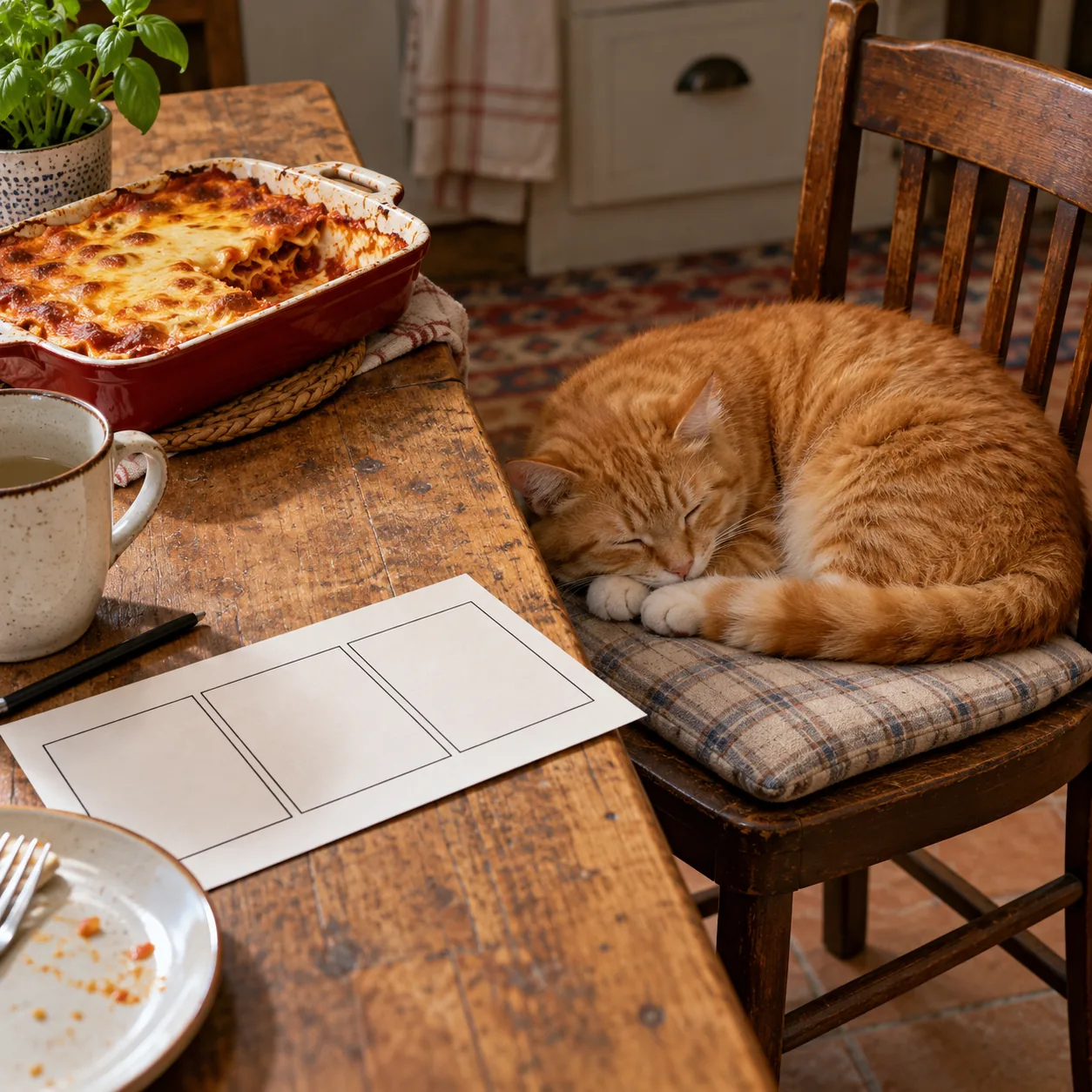
Generated interpretation, not documentary evidence. An ordinary orange tabby beside lasagna and an empty comic-panel template: an interpretive allusion to Garfield.
Credit: AI-generated for Culture Ark using OpenAI image generation Reuse/status: Generated content; no exclusive ownership or underlying-work rights claimed Sleeping cat anatomy, food and three blank panels visually coherent. Not Garfield’s cartoon design; not pet-feeding guidance. No authentic-reference or endorsement claim.
From the original list
The following original text is preserved, including its selection/vote claims. Preservation is not independent verification of every assertion.
Why: A lazy cat who hates Mondays and loves lasagna.
What to preserve: strips, the character
Year and origin: 1978 · United States
Vote: 5/9 (historian 1 · future kid 2 · curator 2)
Learn more: Garfield on Wikipedia
Supplemental context
Garfield began as Jim Davis’s newspaper comic strip. Its publisher’s anniversary interview confirms the 1978 debut and connects its durable appeal with familiar attitudes to eating, work and leisure. A short recurring strip could turn recognizable habits into a character readers met every day. For future readers, this selection can illuminate the economics and rhythms of newspaper entertainment as well as affectionate jokes about domestic life. The strip, its compilation books and screen adaptations are related but different objects; preserving one does not automatically preserve the others.
Creator/community: Jim Davis; newspaper syndication, readers and later adaptation teams Place/era: United States; newspaper strip debuted 19 June 1978
Context and limits
The original entry’s character summary is a playful shorthand, not advice about feeding cats. Original strips and character designs remain distinct copyrighted material; this card is an ordinary cat and food metaphor, not an authentic strip or licensed character image.
Where to learn more
- https://apiarybee.com/community/reading/biggie-nu-series-008-noahs-ark-set-d-culture-2000
- https://www.andrewsmcmeel.com/garfield-celebrates-45th-anniversary/
Apiary library | Original Culture Ark article
Public ID and individual routes: pending publisher allocation. Internal source ID: D-1111
Part of the Culture Ark: 2,000 things people should still be able to see in 2,000 years, picked by AI research teams. This page keeps the original list entry for D-1111 word for word and adds context. Browse the gallery. The Culture Ark is an Artificial Mind Hive (AMH) project. AMH is owned by Austin Little.

Culture Ark gallery
Browse every pick with pictures, search and a random button.
Open the gallery →