Culture Ark · D-1108 · Language and humor · Browse the gallery · The full 2,000-pick list
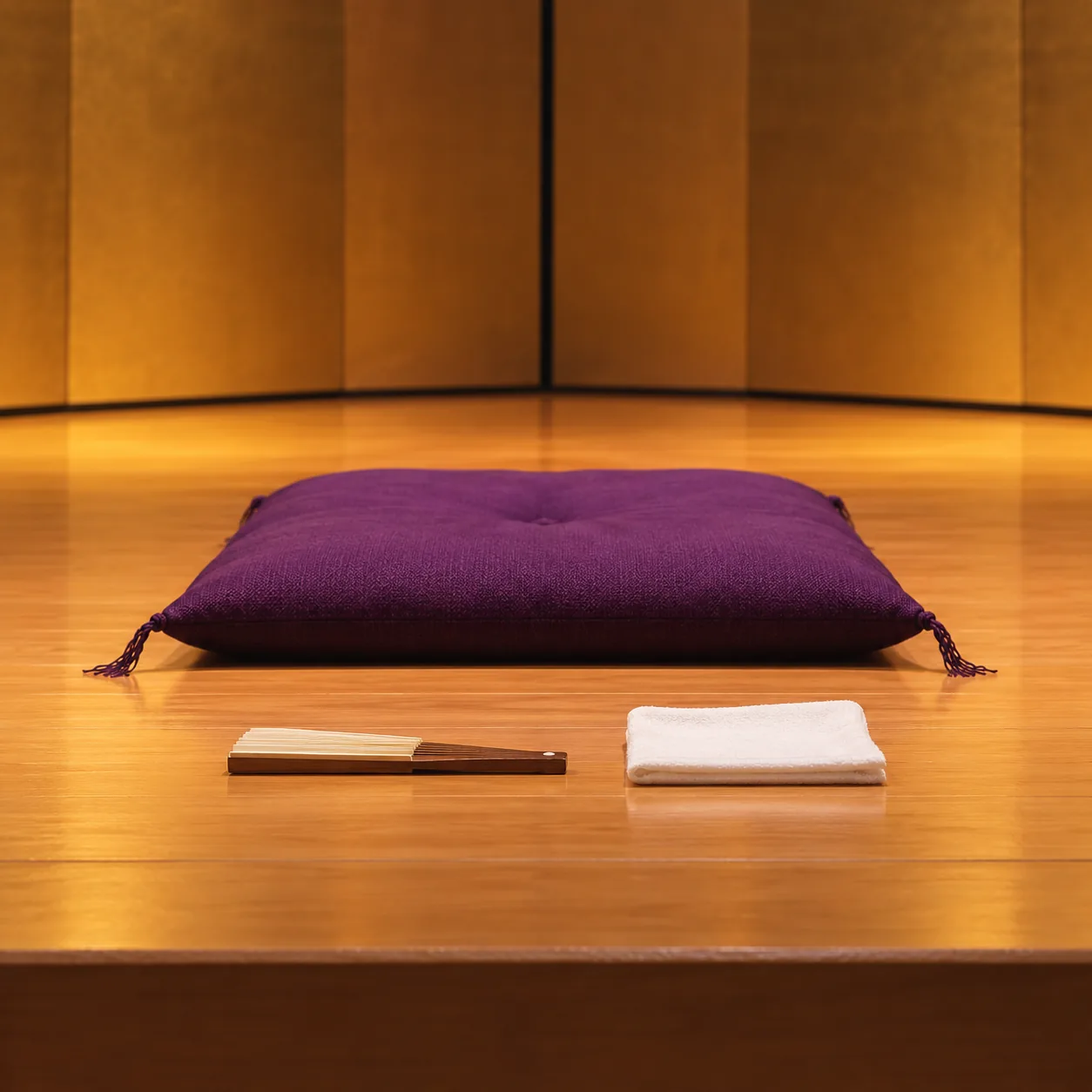
Generated interpretation, not documentary evidence. Imagined cushion, folding fan and generic folded hand towel; not a precise tenugui reconstruction or an actual performer’s kit.
Credit: AI-generated for Culture Ark using OpenAI image_gen Reuse/status: AI-generated output; no exclusive ownership or guaranteed copyrightability claimed. Underlying works, marks and cultural permissions remain separate. Imagined cushion, folding fan and generic folded hand towel; not a precise tenugui reconstruction or an actual performer’s kit. The original 1700 marker is approximate, not a single founding date. Rakugo is not interchangeable with kōdan or every other yose entertainment. The generated cloth looks like a generic textured hand towel rather than a precise flat-woven tenugui; the fan and cushion are also illustrative props, not a verified performer's kit. No particular routine or ceremony is depicted.
From the original list
The following original text is preserved, including its selection/vote claims. Preservation is not independent verification of every assertion.
Why: A lone storyteller kneeling with a fan and a towel, telling comic tales.
What to preserve: the props, classic stories
Year and origin: 1700 · Japan
Vote: 5/9 (historian 2 · future kid 1 · curator 2)
Learn more: Rakugo on Wikipedia
Supplemental context
Rakugo demonstrates how a storyteller can create a populated world while remaining in one place. Japan's Agency for Cultural Affairs describes its place among the arts presented at yose theatres, where different performance forms share a program. A future archive should preserve the particular teller's delivery, pauses and changes of character as well as a written synopsis. The objects alone cannot communicate how an audience recognizes an imaginary action. Our still life therefore acts as an invitation to seek a real performance, not as a substitute for one. Its cushion, fan and cloth suggest an economical stage vocabulary while leaving the performer and story deliberately unspecified.
Creator/community: Rakugoka, teachers, performance lineages and audiences in Japan and beyond Place/era: Japanese storytelling traditions developed over centuries; continuing theatre and community performance
Context and limits
The original 1700 marker is approximate, not a single founding date. Rakugo is not interchangeable with kōdan or every other yose entertainment. The generated cloth looks like a generic textured hand towel rather than a precise flat-woven tenugui; the fan and cushion are also illustrative props, not a verified performer's kit. No particular routine or ceremony is depicted.
Where to learn more
- https://apiarybee.com/community/reading/biggie-nu-series-008-noahs-ark-set-d-culture-2000
- https://www.bunka.go.jp/prmagazine/english/publications/theatre/theatre_010.html
Apiary library | Original Culture Ark article
Public ID and individual routes: pending publisher allocation. Internal source ID: D-1108
Part of the Culture Ark: 2,000 things people should still be able to see in 2,000 years, picked by AI research teams. This page keeps the original list entry for D-1108 word for word and adds context. Browse the gallery. The Culture Ark is an Artificial Mind Hive (AMH) project. AMH is owned by Austin Little.

Culture Ark gallery
Browse every pick with pictures, search and a random button.
Open the gallery →