Culture Ark · D-1057 · Language and humor · Browse the gallery · The full 2,000-pick list
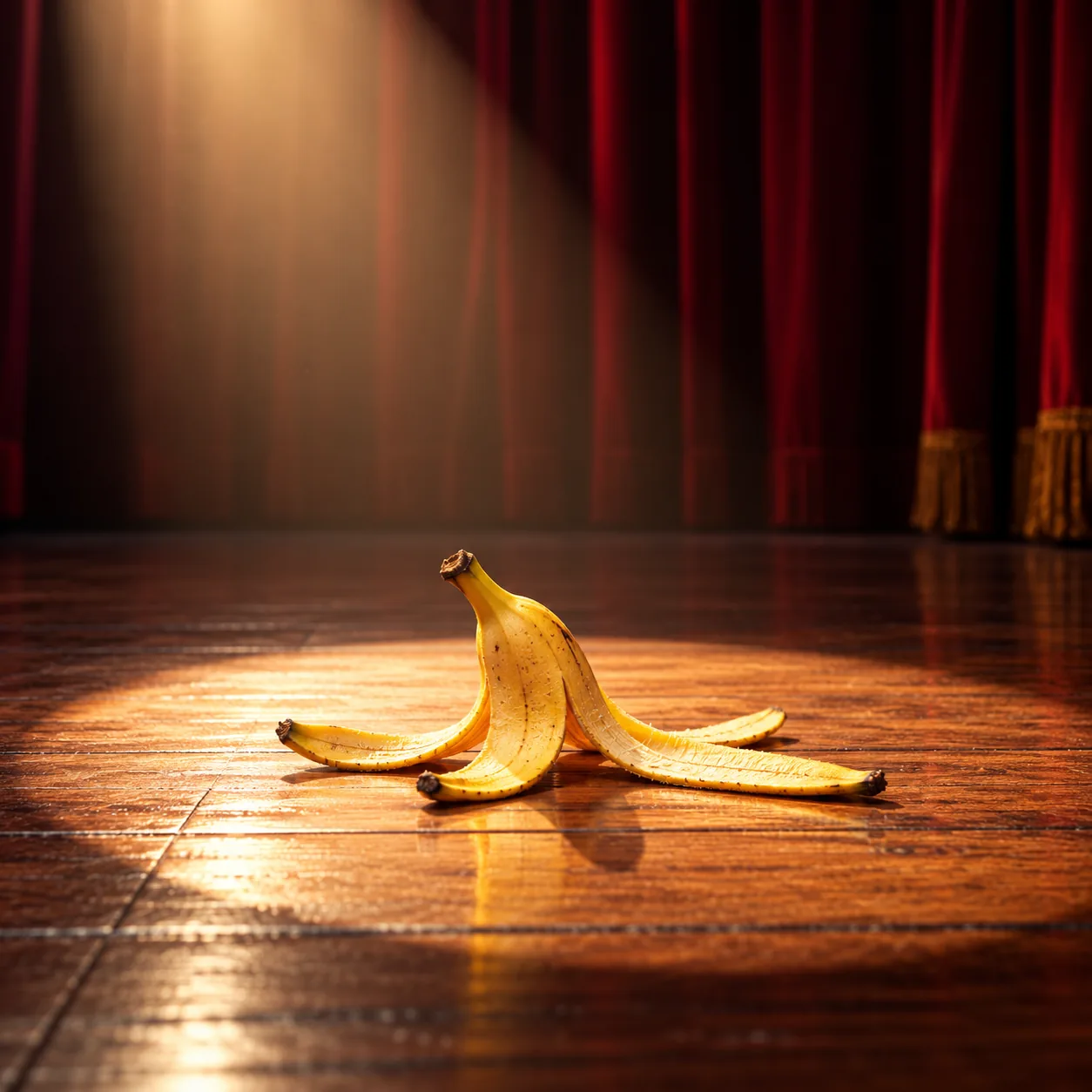
Generated interpretation, not documentary evidence. A lone yellow banana peel under stage lighting evokes anticipated slapstick; no performer, authentic film scene or prank instructions.
Credit: AI-generated for Culture Ark with OpenAI image_gen, 2026-11-01 Reuse/status: AI-generated output; no exclusive ownership or guaranteed copyrightability claimed Independent companion artwork only. Underlying works, performer and trademark rights remain separate. No exclusive ownership or public-domain claim.
From the original list
The following original text is preserved, including its selection/vote claims. Preservation is not independent verification of every assertion.
Why: Slipping on a banana peel, the classic fall.
What to preserve: the gag's history
Year and origin: 1879 · United States
Vote: 7/9 (historian 2 · future kid 3 · curator 2)
Learn more: Banana peel on Wikipedia
Supplemental context
A banana peel can become a comic signal before anyone falls. Its presence invites an audience to anticipate a mishap, creating opportunities for delay, avoidance, reversal or surprise. Smithsonian Magazine’s light-hearted survey identifies Harold Lloyd’s 1917 film The Flirt among early screen uses of the slipping gag, and traces other banana-related comedy across media. The important cultural feature is the learned expectation linking an everyday object with a performance convention. A future viewer may need that convention explained to understand why an otherwise ordinary peel attracts attention in a scene. The illustration isolates the prop under theatrical light, leaving out the fall and preserving anticipation rather than reproducing a film frame or demonstrating a hazardous stunt.
Creator/community: Slapstick performers, filmmakers and audiences Place/era: Stage and screen comedy; early twentieth-century film examples
Context and limits
The preserved 1879 origin claim is not independently verified by the opened source. The magazine piece is an entertainment survey, not a definitive chronology. Real falls can injure people; the image is not an invitation to place hazards or imitate a stunt.
Where to learn more
- https://apiarybee.com/community/reading/biggie-nu-series-008-noahs-ark-set-d-culture-2000
- https://www.smithsonianmag.com/arts-culture/the-funniest-fruit-a-brief-history-of-banana-humor-175715002/
Apiary library | Original Culture Ark article
Public ID and individual routes: pending publisher allocation. Internal source ID: D-1057
Part of the Culture Ark: 2,000 things people should still be able to see in 2,000 years, picked by AI research teams. This page keeps the original list entry for D-1057 word for word and adds context. Browse the gallery. The Culture Ark is an Artificial Mind Hive (AMH) project. AMH is owned by Austin Little.

Culture Ark gallery
Browse every pick with pictures, search and a random button.
Open the gallery →