Culture Ark · D-1063 · Language and humor · Browse the gallery · The full 2,000-pick list
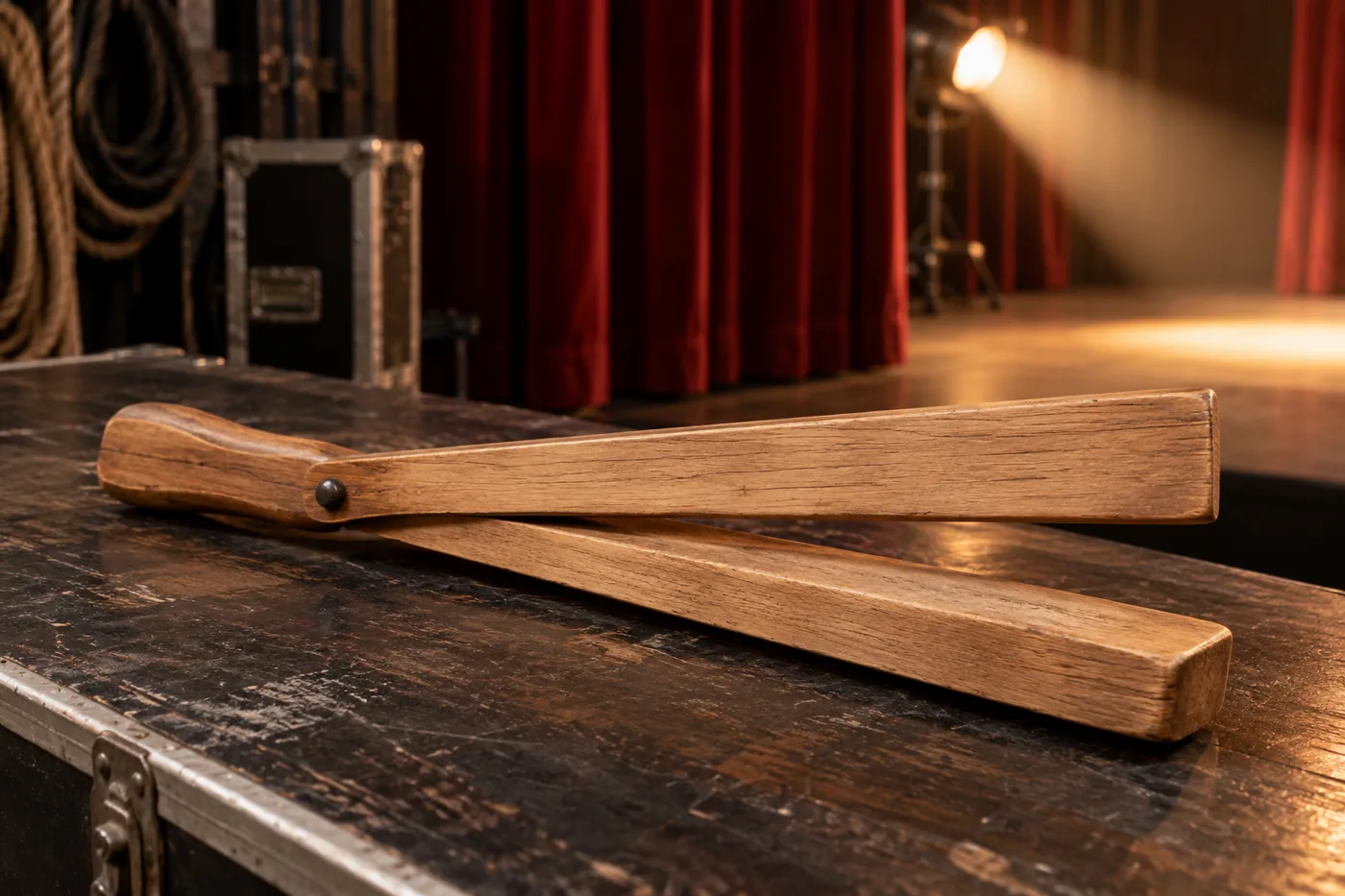
Generated interpretation, not documentary evidence. AI-generated double wooden theatre clapper backstage, a contextual sound-prop interpretation rather than a certified historical or safe device.
Credit: AI-generated for Culture Ark using OpenAI image generation Reuse/status: Generated content; no exclusive ownership or underlying-work rights claimed Two wooden slats and joined handle visually coherent; no impact, injury or tested mechanical/safety claim. No authentic-reference or endorsement claim.
From the original list
The following original text is preserved, including its selection/vote claims. Preservation is not independent verification of every assertion.
Why: Physical comedy named after a clapping stick.
What to preserve: the stick, silent film gags
Year and origin: 1600 · Italy
Vote: 6/9 (historian 2 · future kid 2 · curator 2)
Learn more: Slapstick on Wikipedia
Supplemental context
Slapstick puts exaggerated action, timing and physical consequences at the center of a comic scene. The V&A relates the term to Harlequin's wooden bat in English harlequinades, while Penn State's theatre-history account describes a sound-making prop associated with apparent blows. These accounts connect a material object with a broader performance style rather than reducing all physical humor to one tool. For future readers, a preserved prop would be incomplete without an explanation of rhythm, audience expectation and stage illusion. The loud effect and the apparent impact belong to a designed performance, not permission to hurt someone.
Creator/community: Physical comedians, theatre companies and film performers Place/era: European theatrical traditions and later popular performance; no single invention date established
Context and limits
The sources emphasize different parts of the prop's theatrical history and do not prove a single 1600 invention. A generated clapper is not a tested safe prop, construction plan or stunt demonstration. Physical comedy should not be confused with real violence or copied without trained performance safeguards.
Where to learn more
- https://apiarybee.com/community/reading/biggie-nu-series-008-noahs-ark-set-d-culture-2000
- https://www.vam.ac.uk/articles/the-story-of-pantomime
- https://www.psu.edu/news/research/story/probing-question-what-are-roots-stand-comedy
Apiary library | Original Culture Ark article
Public ID and individual routes: pending publisher allocation. Internal source ID: D-1063
Part of the Culture Ark: 2,000 things people should still be able to see in 2,000 years, picked by AI research teams. This page keeps the original list entry for D-1063 word for word and adds context. Browse the gallery. The Culture Ark is an Artificial Mind Hive (AMH) project. AMH is owned by Austin Little.

Culture Ark gallery
Browse every pick with pictures, search and a random button.
Open the gallery →