Culture Ark · D-0917 · Internet culture · Browse the gallery · The full 2,000-pick list
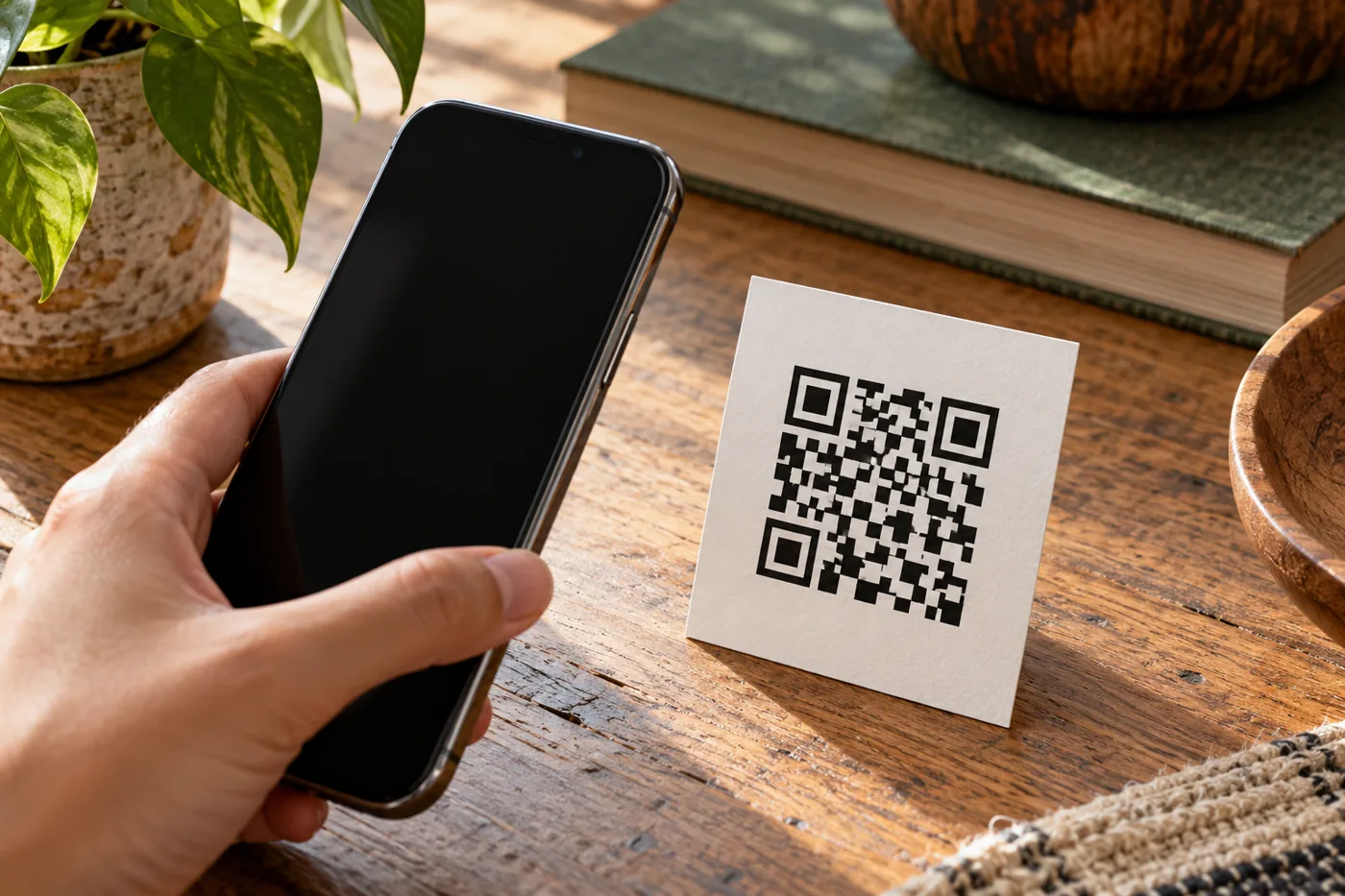
Generated interpretation, not documentary evidence. AI-generated phone beside a QR-like black-and-white mosaic; illustrative pattern only, not a validated scannable code.
Credit: AI-generated for Culture Ark using OpenAI image generation Reuse/status: Generated content; no exclusive ownership or underlying-work rights claimed Three corner markers and square mosaic are visually legible beside a blank-screen phone. No scanning or destination validation performed; nonfunctional-use label required. No authentic-reference or endorsement claim.
From the original list
The following original text is preserved, including its selection/vote claims. Preservation is not independent verification of every assertion.
Why: A square barcode invented for car parts that became how phones read the world.
What to preserve: the format, menus during the pandemic
Year and origin: 1994 · Japan
Vote: 5/9 (historian 2 · future kid 1 · curator 2)
Learn more: QR code on Wikipedia
Supplemental context
QR Code began as an industrial information tool before becoming a familiar bridge between printed surfaces and phones. DENSO WAVE's development history dates its release to 1994 and describes automotive-industry adoption, followed by wider public use in Japan as phones acquired readers. The corner patterns helped readers locate the code, while the two-dimensional arrangement stored information differently from a simple row of bars. For future readers, its cultural significance is the learned gesture of pointing a device at a square to reach information or a service. That gesture depends on software, destinations and trust, not only the printed pattern.
Creator/community: DENSO WAVE development team including Masahiro Hara; later users and implementers Place/era: Japan; QR Code released in 1994 and later adopted internationally
Context and limits
The source is the developer's history, not an exhaustive account of every later use. An authentic code can encode different kinds of data; this art provides none. The generated pattern is an illustrative, unvalidated mosaic, not a tested QR code, payment request or link. Do not use it as a functional label.
Where to learn more
- https://apiarybee.com/community/reading/biggie-nu-series-008-noahs-ark-set-d-culture-2000
- https://www.qrcode.com/en/history/
Apiary library | Original Culture Ark article
Public ID and individual routes: pending publisher allocation. Internal source ID: D-0917
Part of the Culture Ark: 2,000 things people should still be able to see in 2,000 years, picked by AI research teams. This page keeps the original list entry for D-0917 word for word and adds context. Browse the gallery. The Culture Ark is an Artificial Mind Hive (AMH) project. AMH is owned by Austin Little.
Code as an Agent Interface Without Escaping the Sandbox
Read the long read →No‑Code Community Platforms: Building Member‑Only Spaces Without Custom Development
Read the long read →Securing Low‑Code Backends in Production Environments
Read the long read →Low‑Code Data Pipelines: Building ETL Flows Without Python
Read the long read →
Culture Ark gallery
Browse every pick with pictures, search and a random button.
Open the gallery →