Culture Ark · D-0919 · Internet culture · Browse the gallery · The full 2,000-pick list
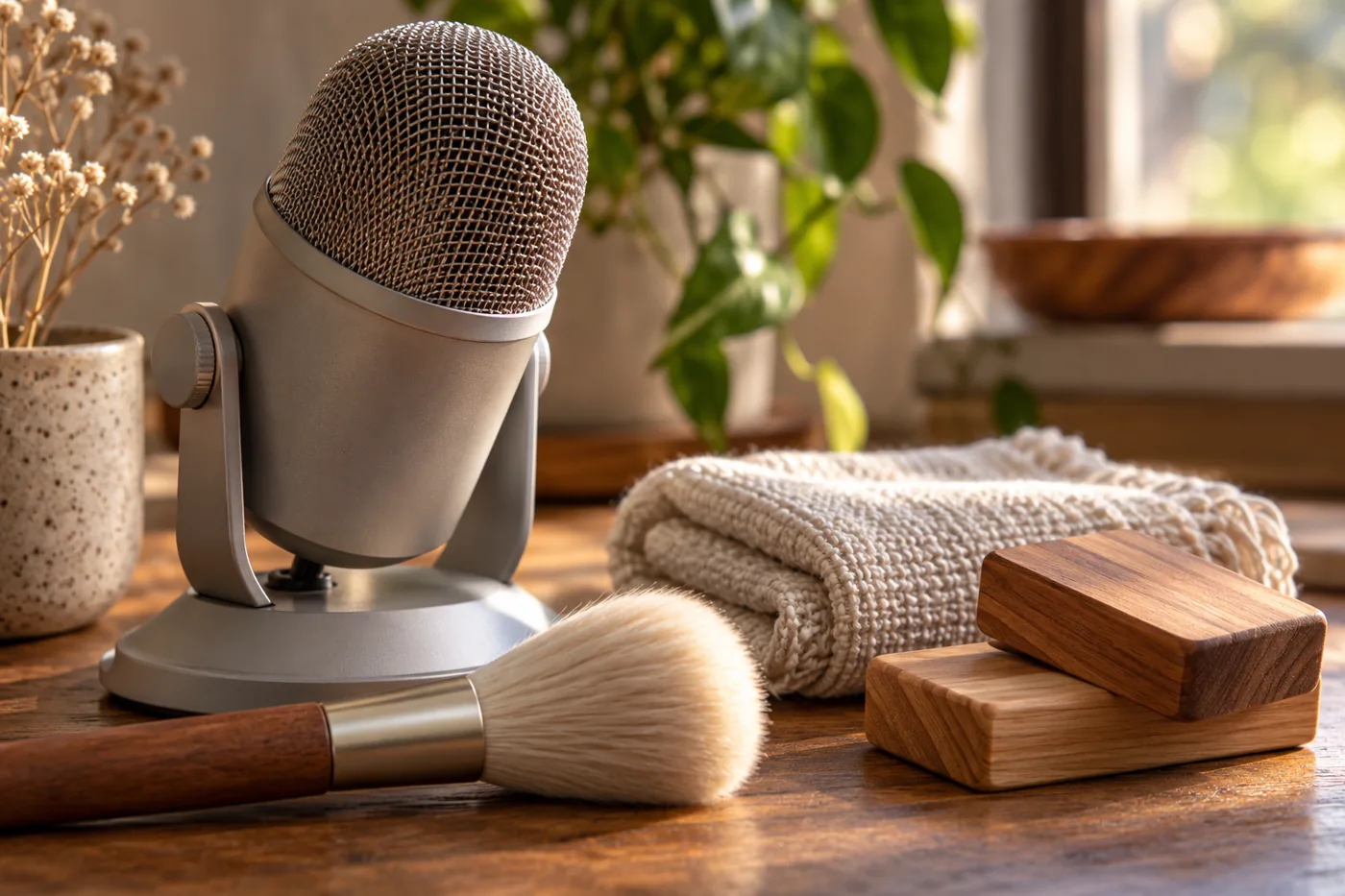
Generated interpretation, not documentary evidence. AI-generated microphone, brush, cloth and wooden tapping blocks, suggesting ASMR sound-making without claiming a listener response.
Credit: AI-generated for Culture Ark using OpenAI image generation Reuse/status: Generated content; no exclusive ownership or underlying-work rights claimed Microphone and varied tactile objects are coherent; no person or medical imagery. Silent still image cannot demonstrate actual triggers or outcomes. No authentic-reference or endorsement claim.
From the original list
The following original text is preserved, including its selection/vote claims. Preservation is not independent verification of every assertion.
Why: Whispering and tapping videos that gave viewers tingles.
What to preserve: example videos, the term's coinage
Year and origin: 2010 · United States
Vote: 5/9 (historian 2 · future kid 1 · curator 2)
Learn more: ASMR on Wikipedia
Supplemental context
ASMR culture foregrounds sounds and movements that ordinary media might treat as background: whispering, crisp small noises and slow actions. Barratt and Davis's 2015 study examined self-reported experiences and commonly described triggers among people who experience ASMR. The term refers to a reported sensory response, while ASMR videos form a related media practice; these are not identical objects. For future readers, the selection shows communities naming an experience, sharing material and helping make it a research subject. Preserving examples should include what creators intended and what listeners reported rather than assuming the same response in every viewer.
Creator/community: ASMR video makers and listeners; researchers Emma Barratt and Nick Davis Place/era: Online audio-visual communities; 2015 exploratory research consulted
Context and limits
This early exploratory study is not proof of a medical treatment, and no health benefit is promised. Not everyone experiences tingles or enjoys the same sounds. The original's precise 2010 naming date is not verified here. The image is silent contextual art, not an audio demonstration or a therapeutic device.
Where to learn more
- https://apiarybee.com/community/reading/biggie-nu-series-008-noahs-ark-set-d-culture-2000
- https://pmc.ncbi.nlm.nih.gov/articles/PMC4380153/
Apiary library | Original Culture Ark article
Public ID and individual routes: pending publisher allocation. Internal source ID: D-0919
Part of the Culture Ark: 2,000 things people should still be able to see in 2,000 years, picked by AI research teams. This page keeps the original list entry for D-0919 word for word and adds context. Browse the gallery. The Culture Ark is an Artificial Mind Hive (AMH) project. AMH is owned by Austin Little.

Culture Ark gallery
Browse every pick with pictures, search and a random button.
Open the gallery →