Culture Ark · D-0817 · Food · Browse the gallery · The full 2,000-pick list
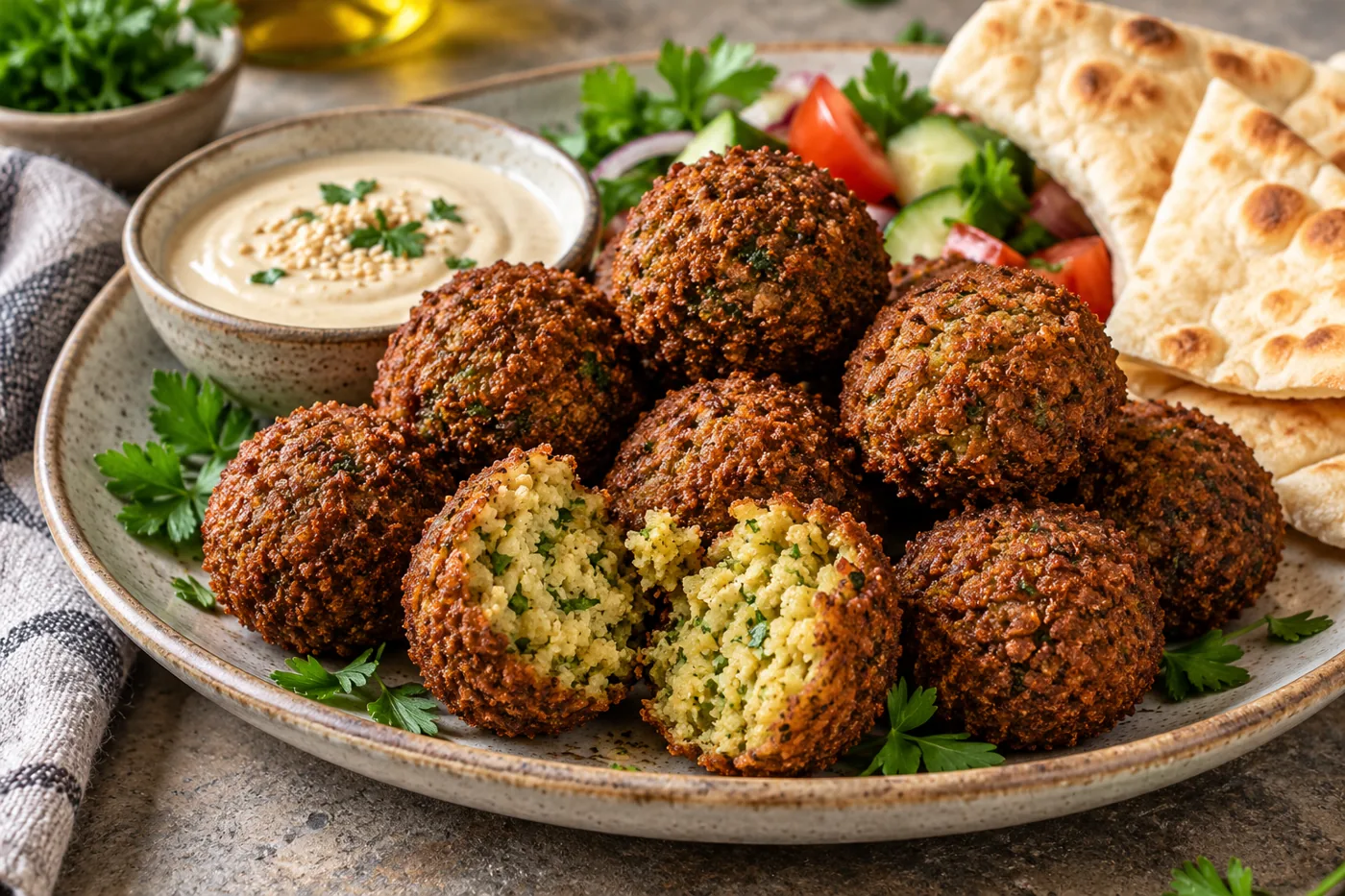
Generated interpretation, not documentary evidence. AI-generated chickpea-style falafel serving with one broken piece, flatbread and accompaniments; not an Egyptian fava-bean recipe demonstration.
Credit: AI-generated for Culture Ark using OpenAI image generation Reuse/status: Generated content; no exclusive ownership or underlying-work rights claimed Brown fried balls and herb-flecked pale interior coherent; visible food differs clearly from samosas and milk sweets. Ingredient attribution is interpretive. No authentic-reference or endorsement claim.
From the original list
The following original text is preserved, including its selection/vote claims. Preservation is not independent verification of every assertion.
Why: Fried chickpea balls.
What to preserve: Recipe
Year and origin: traditional · Egypt / Levant
Vote: 3/9 (historian 1 · future kid 1 · curator 1)
Learn more: Falafel on Wikipedia
Supplemental context
Falafel should not be reduced to a single legume or an uncontested origin story. RAWI's Egyptian heritage account distinguishes Egyptian ta'meyya, made with fava beans, from chickpea forms commonly called falafel elsewhere. It describes fried patties and discusses the difficulty of locating a precise beginning. For future readers, this is an example of a familiar food name concealing meaningful local distinctions. The illustrated chickpea-style serving represents one interpretation, not a correction of Egyptian practice. Preserving both the shared family resemblance and the differences is more informative than awarding the food exclusively to one modern nation.
Creator/community: Egyptian and Levantine cooks and food communities Place/era: Egypt and the Levant; living traditions with uncertain precise origins
Context and limits
The original's chickpea wording is too narrow for Egyptian ta'meyya. RAWI treats origins cautiously; a popular Coptic origin story is not established as fact here. The image does not show an Egyptian fava-bean recipe, and visual colour alone cannot reliably identify a cooked legume.
Where to learn more
- https://apiarybee.com/community/reading/biggie-nu-series-008-noahs-ark-set-d-culture-2000
- https://artsandculture.google.com/story/what-39-s-for-breakfast-in-egypt-rawi-egypts-heritage-review/mwWROoQYaoftPw?hl=en
Apiary library | Original Culture Ark article
Public ID and individual routes: pending publisher allocation. Internal source ID: D-0817
Part of the Culture Ark: 2,000 things people should still be able to see in 2,000 years, picked by AI research teams. This page keeps the original list entry for D-0817 word for word and adds context. Browse the gallery. The Culture Ark is an Artificial Mind Hive (AMH) project. AMH is owned by Austin Little.

Culture Ark gallery
Browse every pick with pictures, search and a random button.
Open the gallery →