Culture Ark · D-0761 · Food · Browse the gallery · The full 2,000-pick list
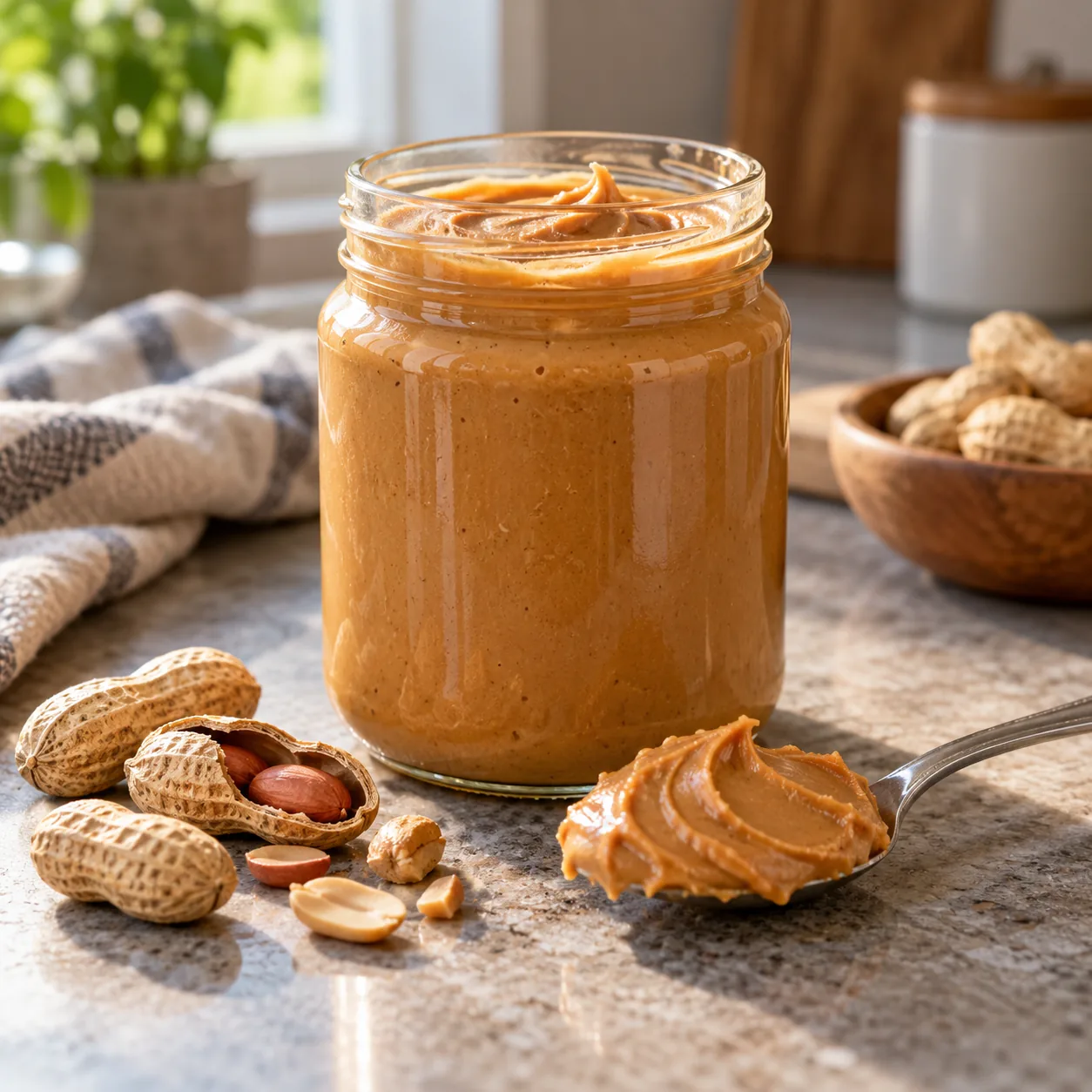
Generated interpretation, not documentary evidence. Plain jar of imagined peanut butter, spoon and peanuts; not a brand, historical container or process diagram.
Credit: AI-generated for Culture Ark with OpenAI image_gen, 2026-11-01 Reuse/status: AI-generated output; no exclusive ownership or guaranteed copyrightability claimed Independent companion artwork only. Underlying works, performer and trademark rights remain separate. No exclusive ownership or public-domain claim.
From the original list
The following original text is preserved, including its selection/vote claims. Preservation is not independent verification of every assertion.
Why: Ground peanuts in every lunchbox.
What to preserve: Process
Year and origin: 1890s · United States
Vote: 4/9 (historian 1 · future kid 2 · curator 1)
Learn more: Peanut butter on Wikipedia
Supplemental context
Peanut butter connects a simple physical transformation, grinding peanuts into a spread, with a much more complex history of commercial food. The National Peanut Board’s account identifies a version associated with John Harvey Kellogg in 1895 and discusses its later promotion at the 1904 St. Louis fair. That account is an industry overview, not proof that one person first thought of grinding peanuts. For future readers, the selection can illuminate how processing, packaging and household habits make a food familiar. Its association with lunchboxes is culturally revealing but not universal. A plain jar is therefore shown as a companion to everyday consumption rather than as an authenticated early package or manufacturing demonstration.
Creator/community: Multiple food makers and inventors; later manufacturers and households Place/era: United States commercialization in the late nineteenth and twentieth centuries
Context and limits
The original every-lunchbox wording is rhetorical, not a universal fact. No inventor monopoly, nutritional recommendation or allergy guidance is asserted; the source’s problematic ancient chronology is not relied upon.
Where to learn more
- https://apiarybee.com/community/reading/biggie-nu-series-008-noahs-ark-set-d-culture-2000
- https://nationalpeanutboard.org/articles/history-peanuts-peanut-butter/
Apiary library | Original Culture Ark article
Public ID and individual routes: pending publisher allocation. Internal source ID: D-0761
Part of the Culture Ark: 2,000 things people should still be able to see in 2,000 years, picked by AI research teams. This page keeps the original list entry for D-0761 word for word and adds context. Browse the gallery. The Culture Ark is an Artificial Mind Hive (AMH) project. AMH is owned by Austin Little.

Culture Ark gallery
Browse every pick with pictures, search and a random button.
Open the gallery →