Culture Ark · D-0764 · Food · Browse the gallery · The full 2,000-pick list
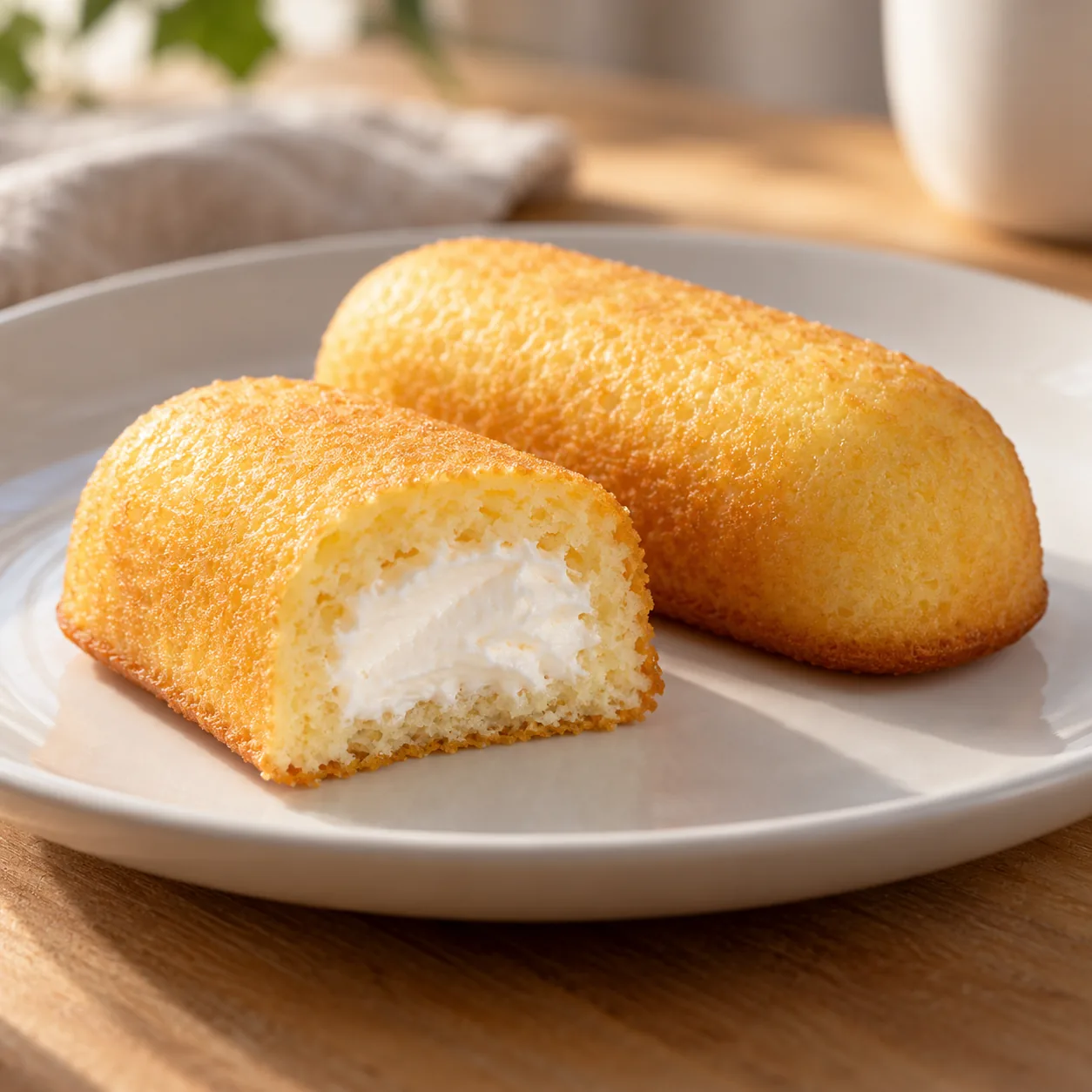
Generated interpretation, not documentary evidence. Two imagined golden filled sponge cakes on a plate, one cut open; unbranded companion, not actual Twinkies.
Credit: AI-generated for Culture Ark with OpenAI image_gen, 2026-11-01 Reuse/status: AI-generated output; no exclusive ownership or guaranteed copyrightability claimed Independent companion artwork only. Underlying works, performer and trademark rights remain separate. No exclusive ownership or public-domain claim.
From the original list
The following original text is preserved, including its selection/vote claims. Preservation is not independent verification of every assertion.
Why: A cake said to survive anything.
What to preserve: Snack
Year and origin: 1930 · United States
Vote: 4/9 (historian 1 · future kid 2 · curator 1)
Learn more: Twinkie on Wikipedia
Supplemental context
Hostess’s own history dates the arrival of Twinkies sponge cakes to 1930 and credits James Alexander Dewar. It describes an original banana-flavored filling and the later popularity of vanilla-flavored filling. Those changes show why a brand name should not be mistaken for a permanently unchanging food. The original entry’s joke about surviving anything belongs to popular lore, not preservation science. For future readers, the selection offers a way to study packaged snacks, familiarity and the stories people tell about industrial food. The image isolates a generic cream-filled sponge-cake form while leaving the branded package and historical advertising to their actual sources and separate rights holders.
Creator/community: James Alexander Dewar; Hostess and later snack consumers Place/era: United States, brand introduction in 1930
Context and limits
The survival claim is a joke, not evidence of indefinite shelf life or safe consumption. The artwork does not establish formulation, storage instructions or product identity; no authentic package is reproduced.
Where to learn more
- https://apiarybee.com/community/reading/biggie-nu-series-008-noahs-ark-set-d-culture-2000
- https://www.hostesscakes.com/our-story
Apiary library | Original Culture Ark article
Public ID and individual routes: pending publisher allocation. Internal source ID: D-0764
Part of the Culture Ark: 2,000 things people should still be able to see in 2,000 years, picked by AI research teams. This page keeps the original list entry for D-0764 word for word and adds context. Browse the gallery. The Culture Ark is an Artificial Mind Hive (AMH) project. AMH is owned by Austin Little.

Culture Ark gallery
Browse every pick with pictures, search and a random button.
Open the gallery →