Culture Ark · D-0767 · Food · Browse the gallery · The full 2,000-pick list
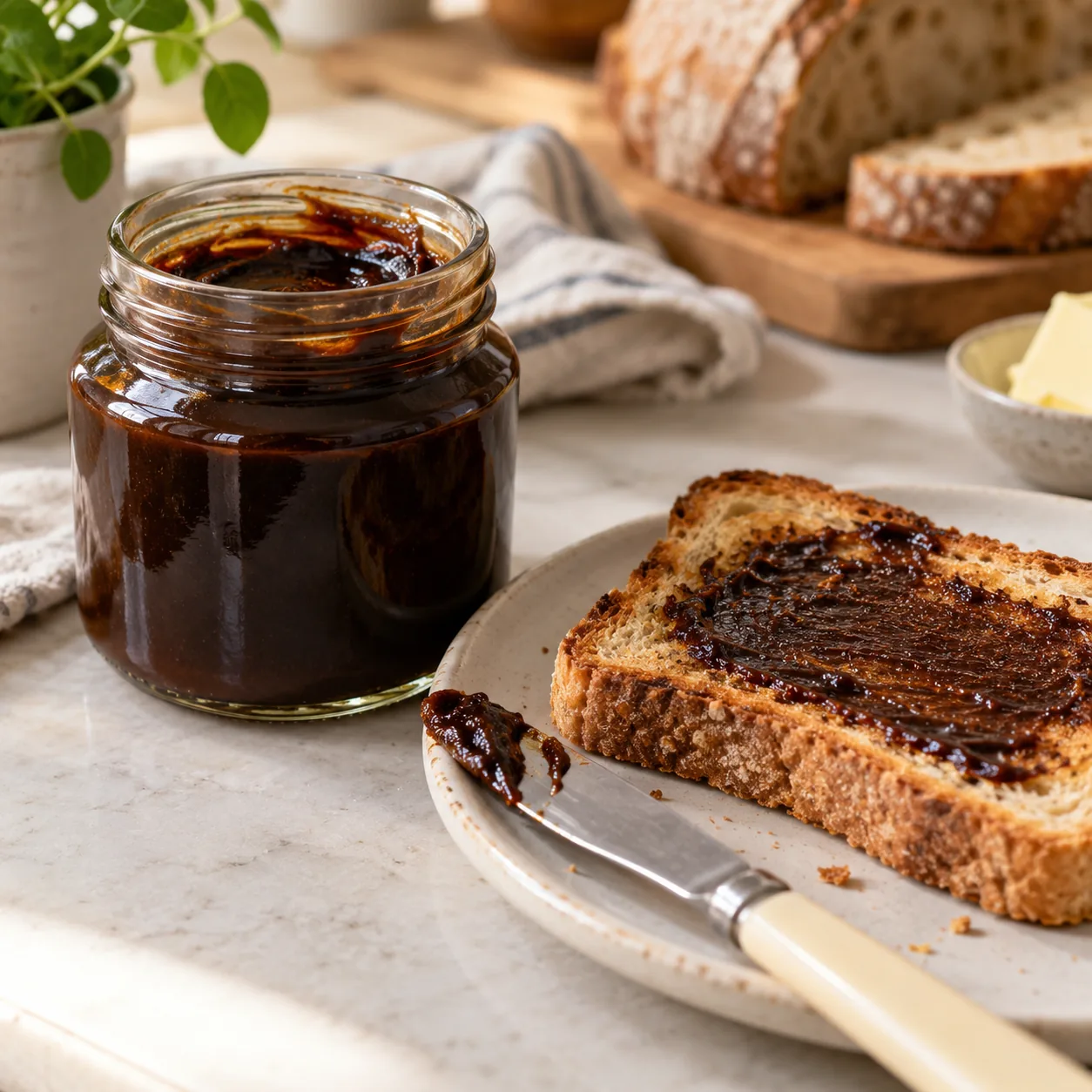
Generated interpretation, not documentary evidence. Unlabelled jar of dark spread beside toast and a knife; conceptual companion, not an authentic Vegemite jar.
Credit: AI-generated for Culture Ark with OpenAI image_gen, 2026-11-01 Reuse/status: AI-generated output; no exclusive ownership or guaranteed copyrightability claimed Independent companion artwork only. Underlying works, performer and trademark rights remain separate. No exclusive ownership or public-domain claim.
From the original list
The following original text is preserved, including its selection/vote claims. Preservation is not independent verification of every assertion.
Why: Yeast spread.
What to preserve: Jar
Year and origin: 1922 · Australia
Vote: 4/9 (historian 1 · future kid 1 · curator 2)
Learn more: Vegemite on Wikipedia
Supplemental context
The National Museum of Australia identifies chemist Cyril P. Callister’s work for Fred Walker and dates Vegemite to 1923. The brand’s account also emphasizes its arrival in shops that year, although its own retrospective wording contains an earlier-development implication. This helps explain why the original 1922 label should not be silently equated with a verified retail launch date. The museum treats the yeast spread as a symbol that appears in songs, souvenirs and memories of home. For future readers, this selection can reveal how a manufactured food becomes attached to national identity without being enjoyed by every member of a nation. The jar shown is deliberately unlabelled and imaginary.
Creator/community: Cyril P. Callister, Fred Walker and later Australian consumers Place/era: Melbourne, Australia; early development and 1923 retail history
Context and limits
Original 1922 retained; opened museum and brand sources support 1923 introduction, with development chronology not fully resolved here. Do not infer ingredients or dietary suitability from the artwork.
Where to learn more
- https://apiarybee.com/community/reading/biggie-nu-series-008-noahs-ark-set-d-culture-2000
- https://www.nma.gov.au/exhibitions/defining-symbols-australia/vegemite
- https://vegemite.com.au/heritage/the-vegemite-story/
Apiary library | Original Culture Ark article
Public ID and individual routes: pending publisher allocation. Internal source ID: D-0767
Part of the Culture Ark: 2,000 things people should still be able to see in 2,000 years, picked by AI research teams. This page keeps the original list entry for D-0767 word for word and adds context. Browse the gallery. The Culture Ark is an Artificial Mind Hive (AMH) project. AMH is owned by Austin Little.

Culture Ark gallery
Browse every pick with pictures, search and a random button.
Open the gallery →