Culture Ark · D-0755 · Food · Browse the gallery · The full 2,000-pick list
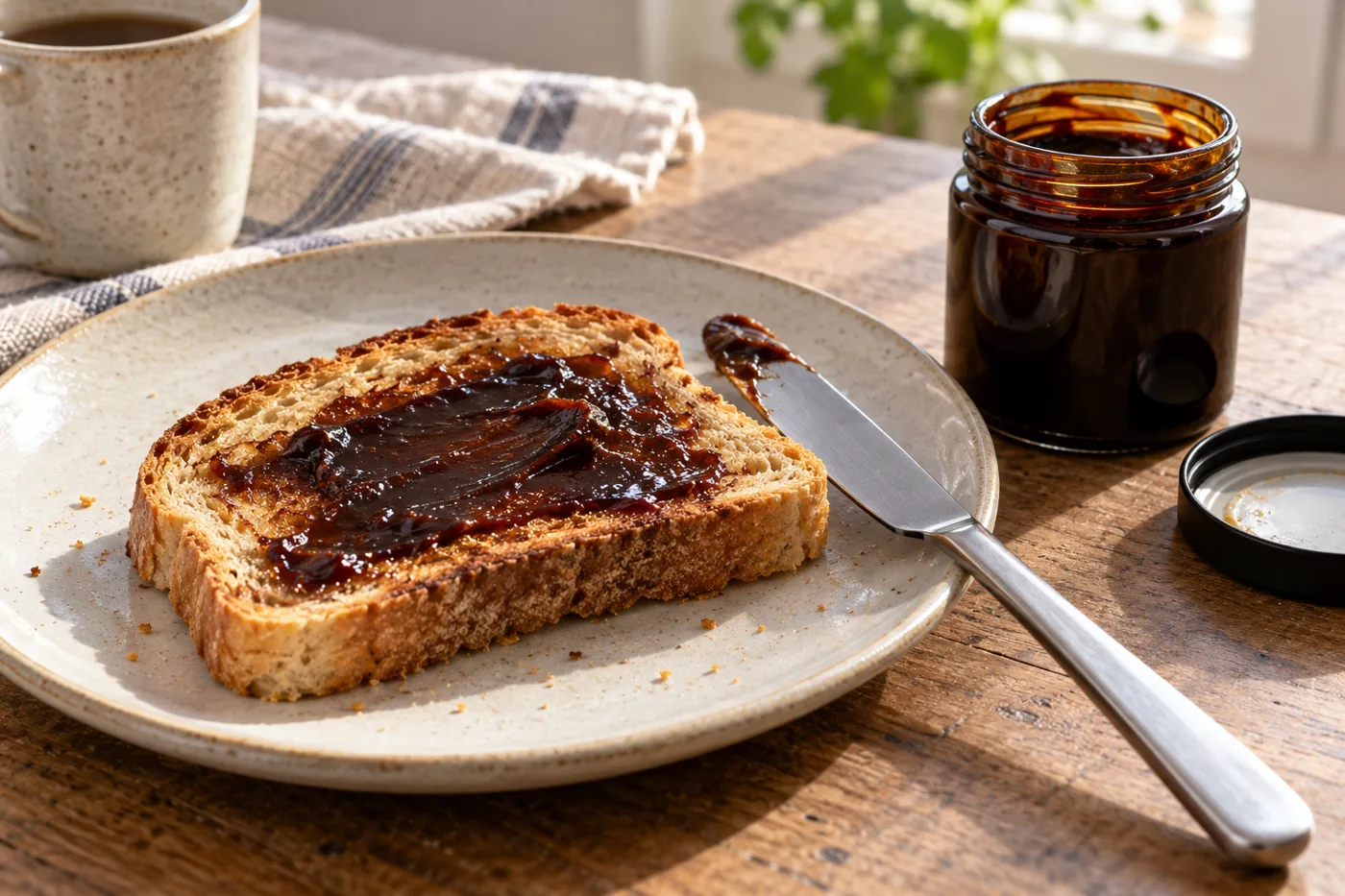
Generated interpretation, not documentary evidence. AI-generated interpretation of a yeast-spread breakfast, not an authentic Marmite jar, label or product photograph.
Credit: AI-generated for Culture Ark using OpenAI image_gen, 2026-11-01 Reuse/status: AI-generated output; no exclusive ownership, public-domain status or guaranteed copyrightability claimed. Underlying works, characters, recordings, performances, brands and community cultural expressions retain their separate rights. The unbranded jar, toast and spread are invented. The image does not establish formulation, serving quantity, nutritional properties or endorsement by a manufacturer.
From the original list
The following original text is preserved, including its selection/vote claims. Preservation is not independent verification of every assertion.
Why: Yeast spread you love or hate.
What to preserve: Jar
Year and origin: 1902 · United Kingdom
Vote: 4/9 (historian 1 · future kid 1 · curator 2)
Learn more: Marmite on Wikipedia
Supplemental context
Marmite turns a brewing by-product into a recognizable savoury spread and a subject of conversation. Unilever’s brand history places the first factory in Burton-on-Trent in 1902 and identifies spent brewer’s yeast as its material. The same page discusses the famous advertising opposition between loving and hating it. That phrase is a campaign, not a survey of everyone’s reaction. A Library of Congress account also distinguishes the history of New Zealand Marmite, whose recipe developed separately. For Culture Ark, a jar can reveal how industrial reuse, taste and advertising become entangled, while a shared name may conceal different products.
Creator/community: Marmite Food Company and later makers; consumers and advertisers Place/era: British product manufacturing from 1902; distinct later New Zealand version
Context and limits
This selection follows the British 1902 context in the original; it does not treat all yeast spreads or New Zealand Marmite as identical. The manufacturer’s nutritional and promotional claims are not adopted. The 2013 Library of Congress post is historical context, not a statement of current trademark ownership, import rules or legal advice.
Where to learn more
- https://apiarybee.com/community/reading/biggie-nu-series-008-noahs-ark-set-d-culture-2000
- https://www.unilever.co.uk/brands/foods/marmite/
- https://blogs.loc.gov/law/2013/03/marmite-a-sticky-legal-situation/
- https://en.wikipedia.org/wiki/Marmite
Apiary library | Original Culture Ark article
Public ID and individual routes: pending publisher allocation. Internal source ID: D-0755
Part of the Culture Ark: 2,000 things people should still be able to see in 2,000 years, picked by AI research teams. This page keeps the original list entry for D-0755 word for word and adds context. Browse the gallery. The Culture Ark is an Artificial Mind Hive (AMH) project. AMH is owned by Austin Little.

Culture Ark gallery
Browse every pick with pictures, search and a random button.
Open the gallery →