Culture Ark · D-0752 · Food · Browse the gallery · The full 2,000-pick list
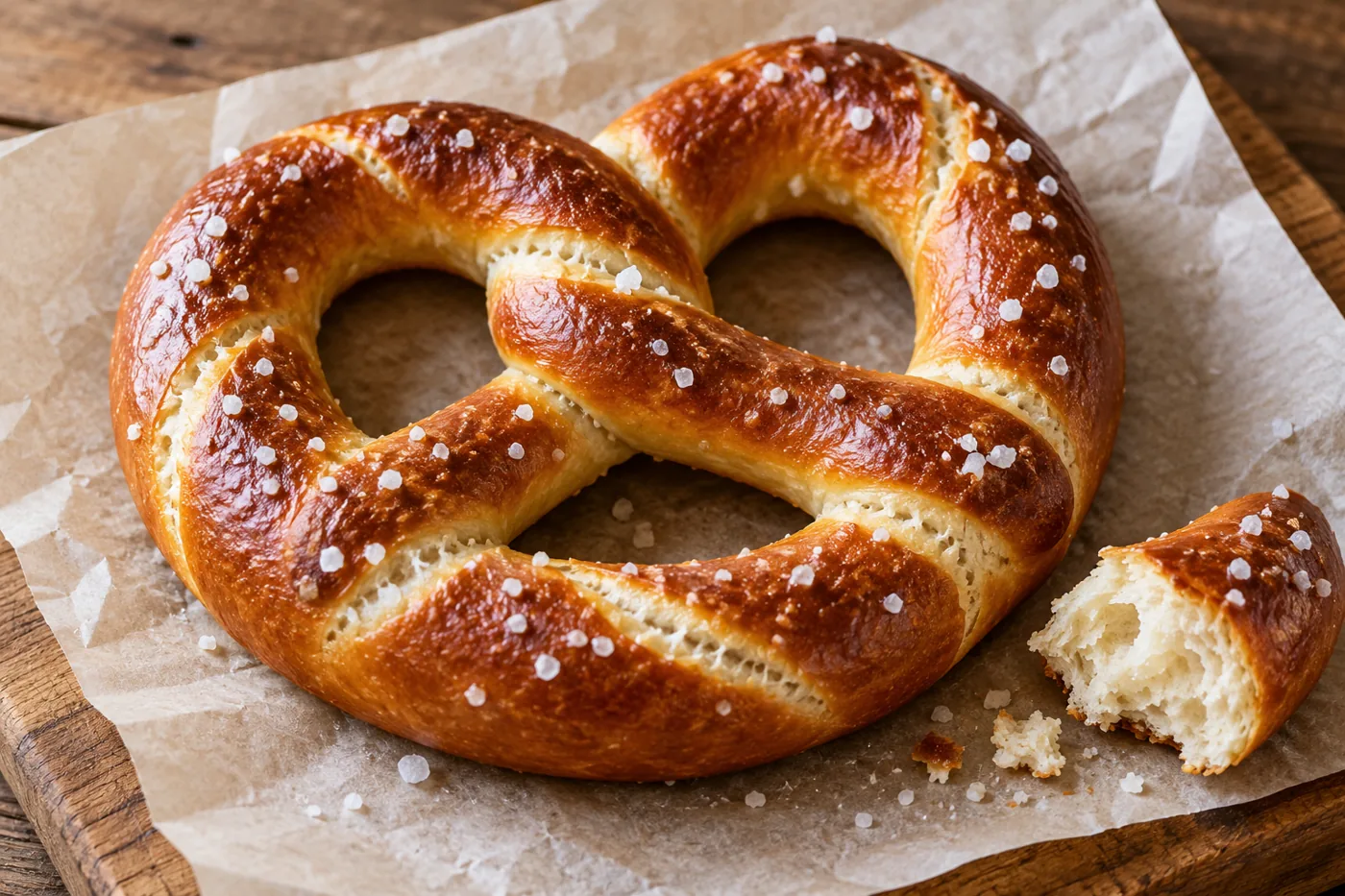
Generated interpretation, not documentary evidence. AI-generated interpretation of a soft pretzel, not an authenticated regional specimen or a diagram of how to make it.
Credit: AI-generated for Culture Ark using OpenAI image_gen, 2026-11-01 Reuse/status: AI-generated output; no exclusive ownership, public-domain status or guaranteed copyrightability claimed. Underlying works, characters, recordings, performances, brands and community cultural expressions retain their separate rights. The shape, crust and salt are imagined. No recipe, ingredient concentration, baking treatment or origin evidence can be inferred from the picture.
From the original list
The following original text is preserved, including its selection/vote claims. Preservation is not independent verification of every assertion.
Why: Knotted bread.
What to preserve: Recipe
Year and origin: medieval · Germany
Vote: 4/9 (historian 1 · future kid 2 · curator 1)
Learn more: Pretzel on Wikipedia
Supplemental context
The pretzel’s knotted outline makes a small bread recognizable before it is tasted. Goethe-Institut’s report follows bakers and writers discussing the Brezn, regional variations and stories about its shape. It presents a condemned-baker origin tale as a legend rather than a witnessed invention. Such stories are themselves cultural material, but should be labelled as stories. A useful archive would place them beside accounts of bakery work, texture and everyday eating. This selection is therefore not merely a clever dough shape: it offers a way to investigate how a familiar food becomes a regional sign and a subject of affectionate explanation.
Creator/community: Bakers and consumers in German-speaking regions and wider later traditions Place/era: German regional baking traditions; original medieval origin remains a broad attribution
Context and limits
The original “medieval · Germany” is not a verified first-invention date or exclusive ownership claim. Soft breads, hard snacks and regional variants should not be collapsed into one object. The linked report is consulted as text; audio was not played. Its chemistry and preparation discussion is not reproduced as instruction, and no handling of caustic substances is proposed.
Where to learn more
- https://apiarybee.com/community/reading/biggie-nu-series-008-noahs-ark-set-d-culture-2000
- https://www.goethe.de/prj/tbp/en/bpa/sto.html
- https://en.wikipedia.org/wiki/Pretzel
Apiary library | Original Culture Ark article
Public ID and individual routes: pending publisher allocation. Internal source ID: D-0752
Part of the Culture Ark: 2,000 things people should still be able to see in 2,000 years, picked by AI research teams. This page keeps the original list entry for D-0752 word for word and adds context. Browse the gallery. The Culture Ark is an Artificial Mind Hive (AMH) project. AMH is owned by Austin Little.

Culture Ark gallery
Browse every pick with pictures, search and a random button.
Open the gallery →