Culture Ark · D-0709 · Food · Browse the gallery · The full 2,000-pick list
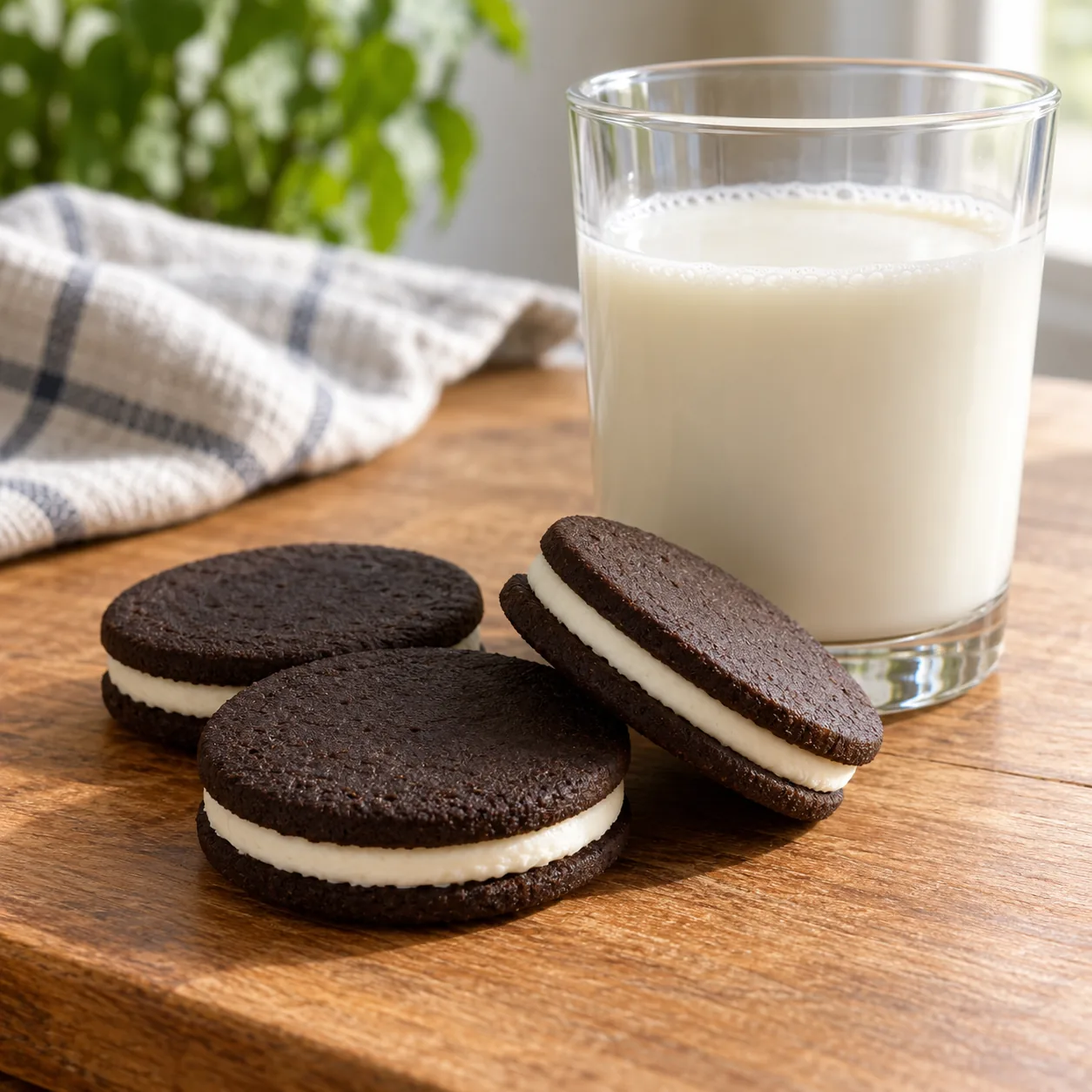
Generated interpretation, not documentary evidence. Three plain dark sandwich biscuits and milk; unbranded format metaphor, not actual Oreo products.
Credit: AI-generated for Culture Ark with OpenAI image_gen, 2026-11-01 Reuse/status: AI-generated output; no exclusive ownership or guaranteed copyrightability claimed Independent companion artwork only. Underlying works, performer and trademark rights remain separate. No exclusive ownership or public-domain claim.
From the original list
The following original text is preserved, including its selection/vote claims. Preservation is not independent verification of every assertion.
Why: The best-selling cookie.
What to preserve: Cookie
Year and origin: 1912 · United States
Vote: 5/9 (historian 1 · future kid 2 · curator 2)
Learn more: Oreo on Wikipedia
Supplemental context
The brand owner’s history dates Oreo’s United States introduction to 1912 and describes later changes in naming, formats and flavors. Its presentation also emphasizes ways of eating the biscuit, showing how advertising can turn an ordinary snack into a recognizable small ritual. This is useful cultural evidence, but it is corporate self-description rather than independent proof of universal consumer behavior. Future readers can examine packaging, repetition, childhood memory and international adaptation alongside the physical sandwich-cookie form. The original best-selling claim should be read with that source perspective in mind. Any unbranded companion image is an interpretive reference to the format, not an authentic branded product, historical package or endorsement.
Creator/community: National Biscuit Company and later brand producers and consumers Place/era: United States, introduced 1912; later international adaptations
Context and limits
Best-selling is a manufacturer claim here, not an independently audited current ranking. Recipes, ingredients and availability vary by market and time. Trademark rights and actual advertising-image rights are separate.
Where to learn more
- https://apiarybee.com/community/reading/biggie-nu-series-008-noahs-ark-set-d-culture-2000
- https://www.mondelezinternational.com/our-brands/oreo/
Apiary library | Original Culture Ark article
Public ID and individual routes: pending publisher allocation. Internal source ID: D-0709
Part of the Culture Ark: 2,000 things people should still be able to see in 2,000 years, picked by AI research teams. This page keeps the original list entry for D-0709 word for word and adds context. Browse the gallery. The Culture Ark is an Artificial Mind Hive (AMH) project. AMH is owned by Austin Little.

Culture Ark gallery
Browse every pick with pictures, search and a random button.
Open the gallery →