Culture Ark · D-0713 · Food · Browse the gallery · The full 2,000-pick list
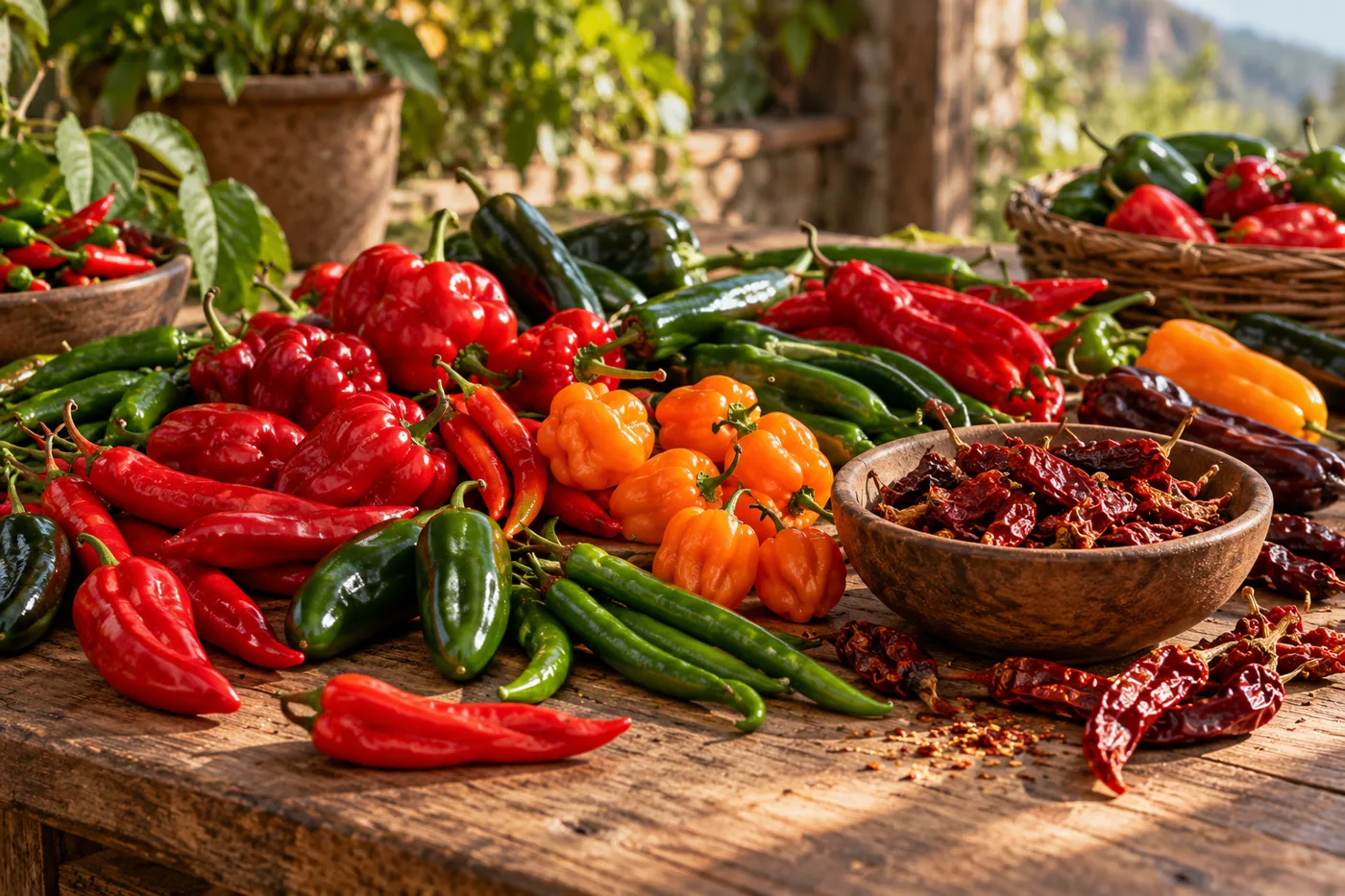
Generated interpretation, not documentary evidence. Invented assortment of fresh and dried chili peppers; no verified cultivar labels or heat measurements.
Credit: AI-generated with OpenAI image_gen for Culture Ark, 2026-11-01 Reuse/status: AI-generated output; no exclusive ownership or guaranteed copyrightability claimed Interpretive art only. Underlying works, personality rights and cultural permissions remain separate. No score, choreography or technical reconstruction is supplied.
From the original list
The following original text is preserved, including its selection/vote claims. Preservation is not independent verification of every assertion.
Why: Heat from the Americas spread worldwide.
What to preserve: Varieties
Year and origin: c. 7500 BC · Americas
Vote: 5/9 (historian 2 · future kid 1 · curator 2)
Learn more: Chili pepper on Wikipedia
Supplemental context
Chili peppers originated in the Americas and became important to many cuisines far beyond them. Different cultivated forms carry distinct flavors and uses rather than simply degrees of heat. Future readers can study how ingredients move through trade and migration while retaining the importance of the communities that cultivated them.
Creator/community: Indigenous American growers and cooks; later cultivating and culinary communities worldwide Place/era: Americas; long domestication histories and later worldwide circulation
Context and limits
The varied peppers are invented visual examples, not a verified botanical collection or identification guide. Color and shape cannot establish a cultivar or heat rating. The early date in the original text should not imply one simultaneous domestication event for all peppers.
Where to learn more
- https://apiarybee.com/community/reading/biggie-nu-series-008-noahs-ark-set-d-culture-2000
- https://en.wikipedia.org/wiki/Chili_pepper
Apiary library | Original Culture Ark article
Public ID and individual routes: pending publisher allocation. Internal source ID: D-0713
Part of the Culture Ark: 2,000 things people should still be able to see in 2,000 years, picked by AI research teams. This page keeps the original list entry for D-0713 word for word and adds context. Browse the gallery. The Culture Ark is an Artificial Mind Hive (AMH) project. AMH is owned by Austin Little.

Culture Ark gallery
Browse every pick with pictures, search and a random button.
Open the gallery →