Culture Ark · D-0710 · Food · Browse the gallery · The full 2,000-pick list
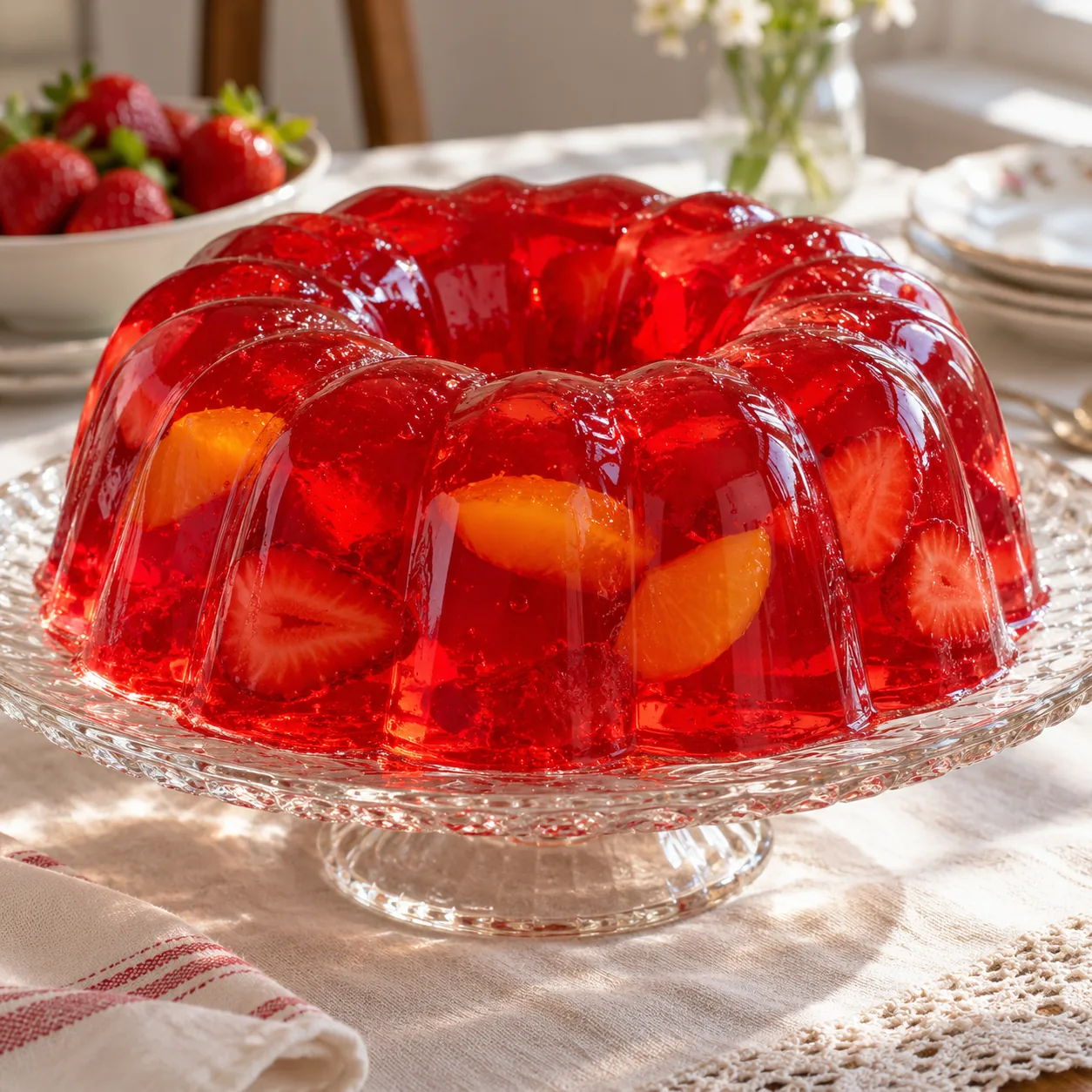
Generated interpretation, not documentary evidence. A red ring-shaped gelatin dish with imagined fruit pieces on a glass stand; not an authenticated Jell-O recipe or advertisement.
Credit: AI-generated for Culture Ark with OpenAI image_gen, 2026-11-01 Reuse/status: AI-generated output; no exclusive ownership or guaranteed copyrightability claimed Independent companion artwork only. Underlying works, performer and trademark rights remain separate. No exclusive ownership or public-domain claim.
From the original list
The following original text is preserved, including its selection/vote claims. Preservation is not independent verification of every assertion.
Why: Wobbly gelatin.
What to preserve: Salads
Year and origin: 1897 · United States
Vote: 5/9 (historian 2 · future kid 2 · curator 1)
Learn more: Jell-O on Wikipedia
Supplemental context
The University of Michigan’s culinary-history exhibit dates the Jell-O trademark to 1897 and examines the elaborate advertising surrounding molded gelatin. Its collection-based interpretation shows that the food was marketed through imagined domestic settings and ideas about class and race, not merely through instructions for mixing a dessert. This gives future readers a way to study how convenience products enter household routines and aspirations. The original interest in salads can be retained while distinguishing the brand from gelatin as a much older ingredient category. A colorful molded dish is a useful visual companion, but it is not an authentic historical recipe, package illustration or evidence that all households ate the same foods.
Creator/community: Pearle and May Wait; later manufacturers, advertisers and domestic cooks Place/era: United States; brand history from 1897 and later gelatin-mold culture
Context and limits
1897 dates this brand history, not the invention of gelatin. The artwork must not reproduce archived advertising or imply an actual Jell-O formulation. Dietary composition cannot be inferred from appearance.
Where to learn more
- https://apiarybee.com/community/reading/biggie-nu-series-008-noahs-ark-set-d-culture-2000
- https://apps.lib.umich.edu/online-exhibits/exhibits/show/jell-o
- https://digitalsc.lib.vt.edu/exhibits/show/gelatine/jello-company
Apiary library | Original Culture Ark article
Public ID and individual routes: pending publisher allocation. Internal source ID: D-0710
Part of the Culture Ark: 2,000 things people should still be able to see in 2,000 years, picked by AI research teams. This page keeps the original list entry for D-0710 word for word and adds context. Browse the gallery. The Culture Ark is an Artificial Mind Hive (AMH) project. AMH is owned by Austin Little.

Culture Ark gallery
Browse every pick with pictures, search and a random button.
Open the gallery →