Culture Ark · D-0669 · Food · Browse the gallery · The full 2,000-pick list
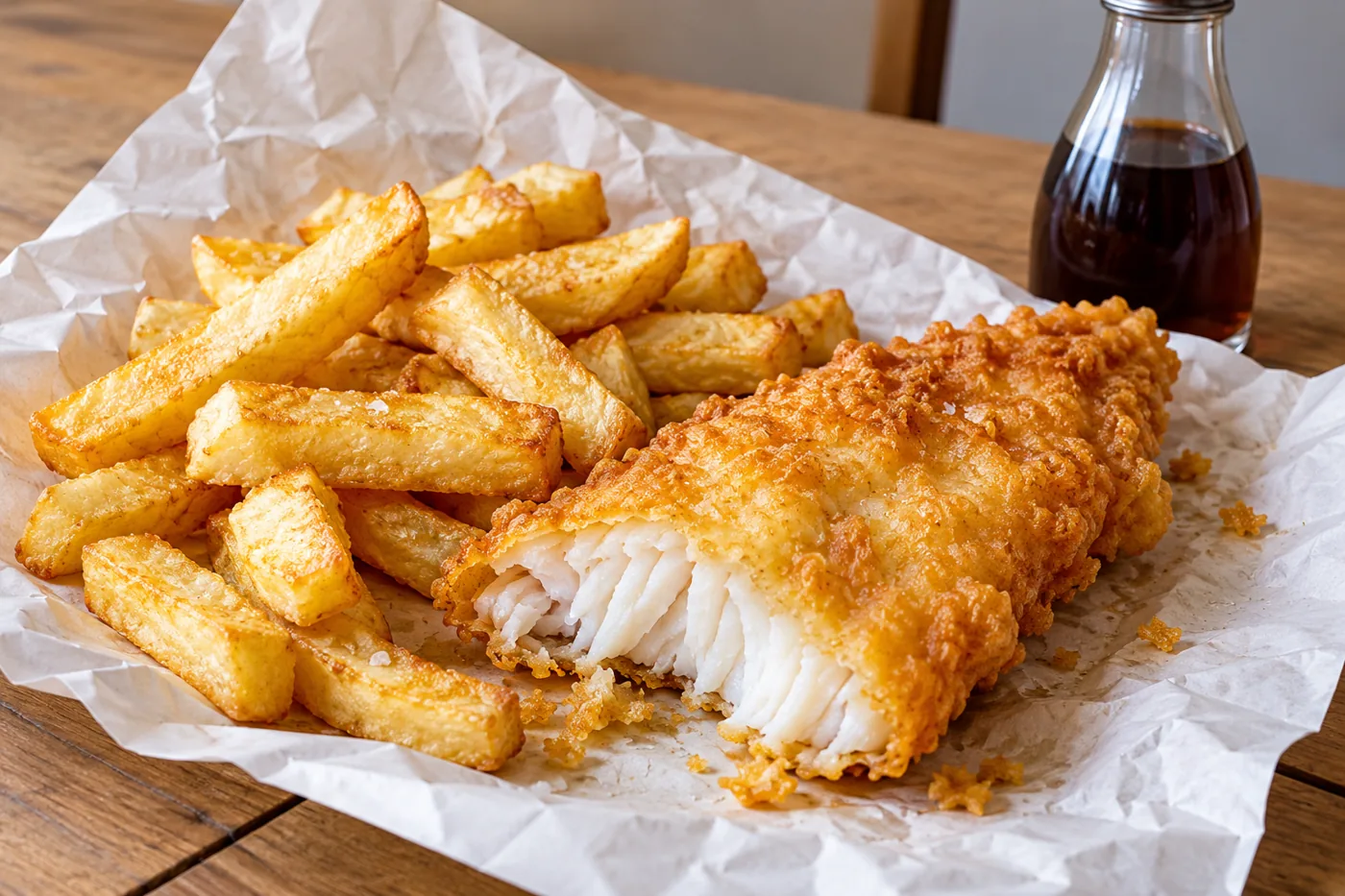
Generated interpretation, not documentary evidence. Invented battered fish and thick chips on blank wrapping paper beside vinegar.
Credit: AI-generated for Culture Ark using OpenAI image generation Reuse/status: Generated content; no exclusive ownership or underlying-work rights claimed Fish flakes, batter, chips and unprinted paper inspected; no reproduced newspaper or identifiable shop. Generic serving, not species certification or historical recipe. No authentic-reference or endorsement claim.
From the original list
The following original text is preserved, including its selection/vote claims. Preservation is not independent verification of every assertion.
Why: The working-class meal of Britain.
What to preserve: Recipe, newspaper wrap
Year and origin: 1860s · England
Vote: 6/9 (historian 2 · future kid 2 · curator 2)
Learn more: Fish and chips on Wikipedia
Supplemental context
Fish and chips shows how a dish described as national can have histories of migration, trade and urban work. London Museum discusses Jewish fried-fish traditions, nineteenth-century fish supply and Joseph Malin's 1860 shop in Bethnal Green. It links the meal's accessibility to its place in working-class London life. Future readers can examine the shop as much as the plate: cold storage, selling practices and takeaway packaging helped shape how people ate. Preserving these details keeps an everyday food from becoming only a nostalgic picture of batter and potatoes.
Creator/community: Fish-frying and chip-shop communities, including Jewish migrant contributors Place/era: Britain; nineteenth-century combined-shop history, London example around 1860
Context and limits
The museum qualifies Malin's wider British priority, so London's account should not erase competing regional origin claims. Working-class association does not describe every eater. Newspaper wrapping is historical context, not a recommendation for present-day food contact; the illustration uses blank paper. Species, frying fat and side dishes vary. No exact 1860 recipe or nutritional claim is supplied.
Where to learn more
- https://apiarybee.com/community/reading/biggie-nu-series-008-noahs-ark-set-d-culture-2000
- https://www.londonmuseum.org.uk/collections/london-stories/how-london-got-hooked-on-fish-chips/
Apiary library | Original Culture Ark article
Public ID and individual routes: pending publisher allocation. Internal source ID: D-0669
Part of the Culture Ark: 2,000 things people should still be able to see in 2,000 years, picked by AI research teams. This page keeps the original list entry for D-0669 word for word and adds context. Browse the gallery. The Culture Ark is an Artificial Mind Hive (AMH) project. AMH is owned by Austin Little.

Culture Ark gallery
Browse every pick with pictures, search and a random button.
Open the gallery →