Culture Ark · D-0507 · Games · Browse the gallery · The full 2,000-pick list
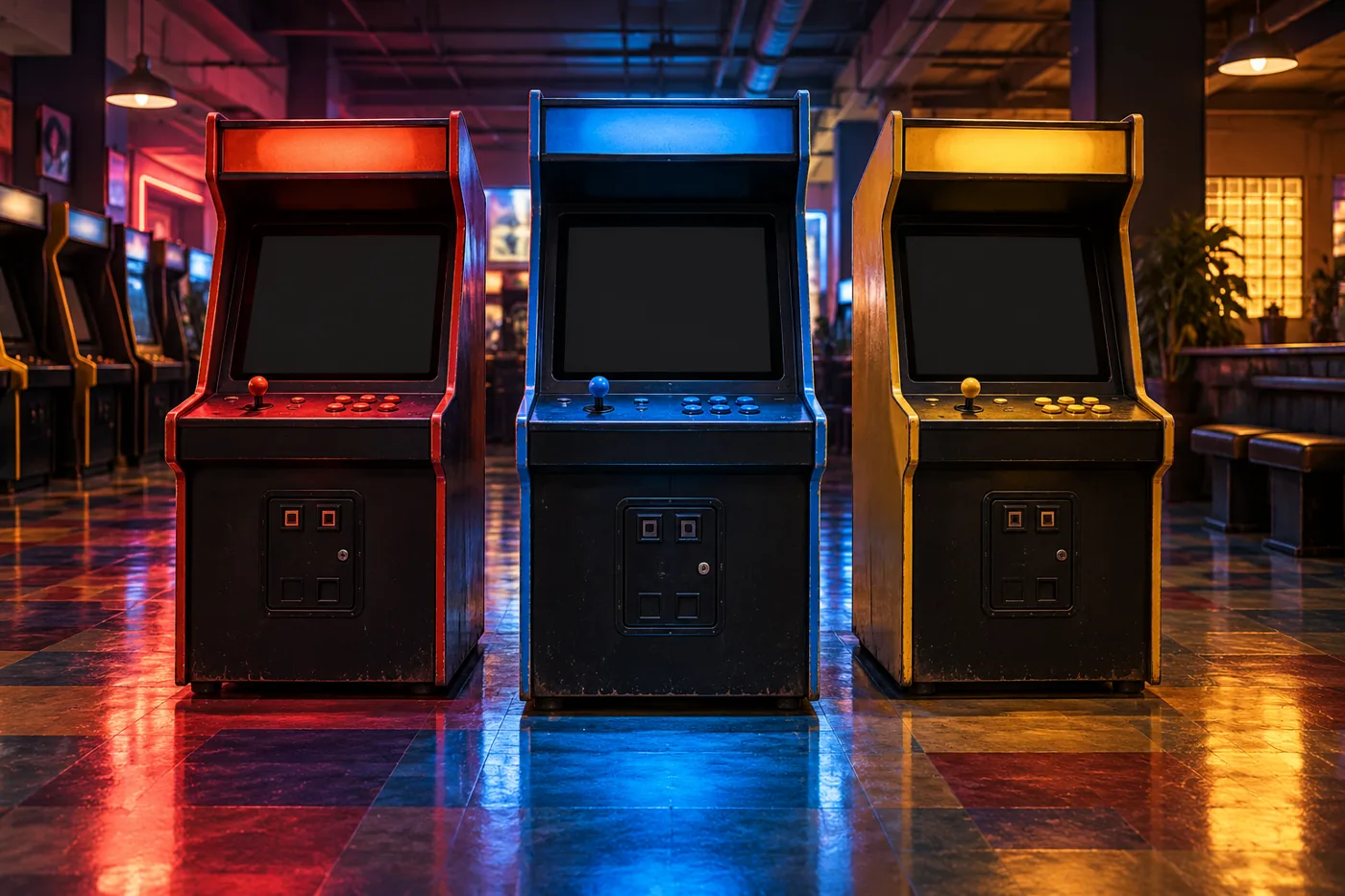
Generated interpretation, not documentary evidence. Invented blank-screen cabinets in an empty arcade; social-space context, not authentic games or venue.
Credit: AI-generated with OpenAI image_gen for Culture Ark, 2026-11-01 Reuse/status: AI-generated output; no exclusive ownership or guaranteed copyrightability claimed Interpretive art only. Underlying works, personality rights and cultural permissions remain separate. No score, choreography or technical reconstruction is supplied.
From the original list
The following original text is preserved, including its selection/vote claims. Preservation is not independent verification of every assertion.
Why: Coin-operated games that built a youth culture.
What to preserve: Cabinets, arcades
Year and origin: 1971 · United States
Vote: 6/9 (historian 2 · future kid 2 · curator 2)
Learn more: Arcade video game on Wikipedia
Supplemental context
Arcade video games join screen-based interaction with physical cabinets and shared locations. Computer Space was an early commercial example in 1971. Future readers should preserve how controls, payment, sound and spectators shaped play, not only the graphics or software isolated from their surroundings.
Creator/community: Game designers, cabinet makers, operators and arcade players Place/era: Commercial arcade video games from the early 1970s, with international cultures of play
Context and limits
The room and cabinets are invented and do not document one period, country or business. Blank screens avoid pretending to preserve a game. The original youth-culture phrase should not erase adult players or the differences between local arcade communities.
Where to learn more
- https://apiarybee.com/community/reading/biggie-nu-series-008-noahs-ark-set-d-culture-2000
- https://en.wikipedia.org/wiki/Arcade_video_game
Apiary library | Original Culture Ark article
Public ID and individual routes: pending publisher allocation. Internal source ID: D-0507
Part of the Culture Ark: 2,000 things people should still be able to see in 2,000 years, picked by AI research teams. This page keeps the original list entry for D-0507 word for word and adds context. Browse the gallery. The Culture Ark is an Artificial Mind Hive (AMH) project. AMH is owned by Austin Little.

Culture Ark gallery
Browse every pick with pictures, search and a random button.
Open the gallery →