Culture Ark · D-0458 · Games · Browse the gallery · The full 2,000-pick list
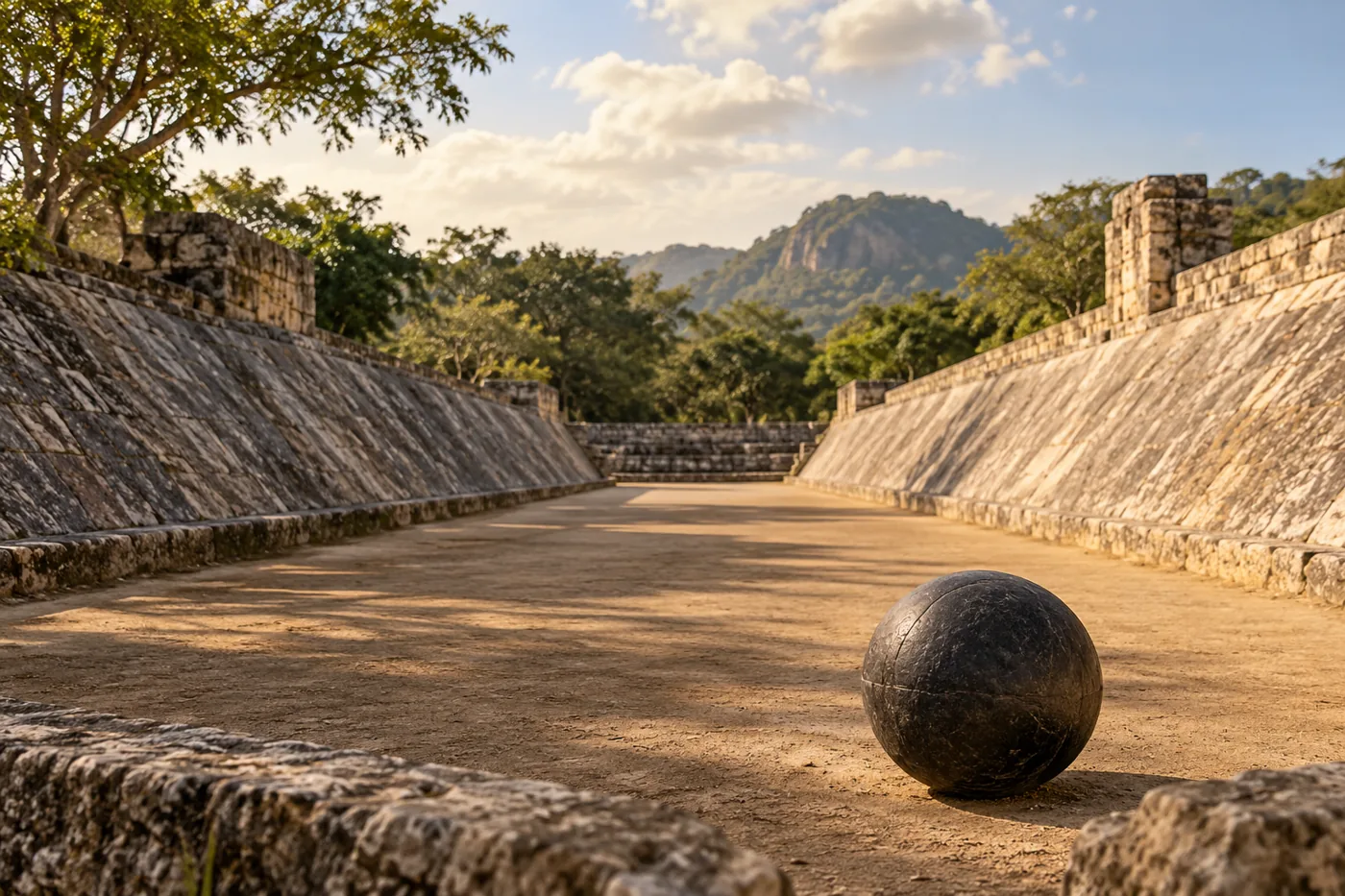
Generated interpretation, not documentary evidence. Invented ballcourt-and-rubber-ball scene, not a specific archaeological site, ritual reconstruction or scale reference.
Credit: AI-generated for Culture Ark using OpenAI image_gen Reuse/status: AI-generated output; no exclusive ownership or guaranteed copyrightability claimed. Underlying works, marks and cultural permissions remain separate. Invented ballcourt-and-rubber-ball scene, not a specific archaeological site, ritual reconstruction or scale reference. Early rubber balls and early courts are different evidence; the original circa 1650 BCE should not imply a proven founding year. Do not assert that every loser, winner or player was sacrificed. The generated court and ball are generic interpretations, not a named excavation, accurate scale model or reconstruction of a specific community's ritual.
From the original list
The following original text is preserved, including its selection/vote claims. Preservation is not independent verification of every assertion.
Why: A rubber-ball game with ritual and sometimes deadly stakes.
What to preserve: Courts, rubber balls, carvings
Year and origin: c. 1650 BC · Mesoamerica
Vote: 8/9 (historian 3 · future kid 2 · curator 3)
Learn more: Mesoamerican ballgame on Wikipedia
Supplemental context
Mesoamerican ballgames were not a single sport with one rulebook. The Metropolitan Museum describes varied games using rubber balls and reconstructs their histories from courts, equipment, images and texts. Its essay links play with social and symbolic activity while noting that the relationship between sacrifice and particular games remains uncertain. Future readers can learn how archaeology combines different kinds of evidence and why a dramatic image should not be mistaken for a universal rule. Preserving this tradition means attending to regional variation and living continuities rather than reducing many communities to a single violent spectacle.
Creator/community: Many Mesoamerican communities, including Maya, Gulf Coast and central Mexican traditions Place/era: Mesoamerica; ancient evidence and varied later continuities
Context and limits
Early rubber balls and early courts are different evidence; the original circa 1650 BCE should not imply a proven founding year. Do not assert that every loser, winner or player was sacrificed. The generated court and ball are generic interpretations, not a named excavation, accurate scale model or reconstruction of a specific community's ritual.
Where to learn more
- https://apiarybee.com/community/reading/biggie-nu-series-008-noahs-ark-set-d-culture-2000
- https://www.metmuseum.org/essays/the-mesoamerican-ballgame
Apiary library | Original Culture Ark article
Public ID and individual routes: pending publisher allocation. Internal source ID: D-0458
Part of the Culture Ark: 2,000 things people should still be able to see in 2,000 years, picked by AI research teams. This page keeps the original list entry for D-0458 word for word and adds context. Browse the gallery. The Culture Ark is an Artificial Mind Hive (AMH) project. AMH is owned by Austin Little.

Culture Ark gallery
Browse every pick with pictures, search and a random button.
Open the gallery →