Culture Ark · D-0407 · Film and TV · Browse the gallery · The full 2,000-pick list
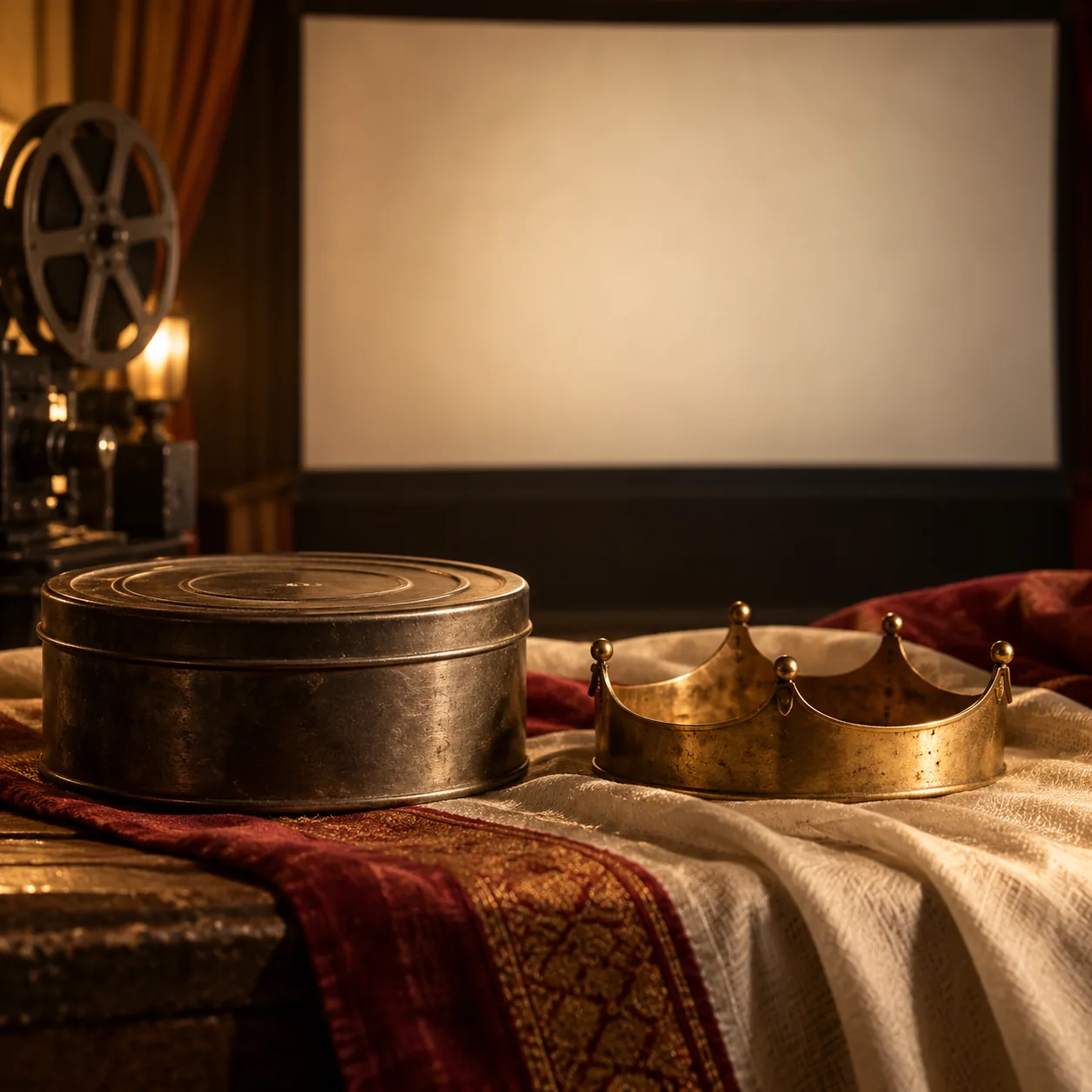
Generated interpretation, not documentary evidence. A generic crown-like stage circlet and closed film can before a blank screen evoke mythological silent cinema; not original props or a film frame.
Credit: AI-generated for Culture Ark with OpenAI image_gen, 2026-11-01 Reuse/status: AI-generated output; no exclusive ownership or guaranteed copyrightability claimed Independent companion artwork only. Underlying works, performer and trademark rights remain separate. No exclusive ownership or public-domain claim.
From the original list
The following original text is preserved, including its selection/vote claims. Preservation is not independent verification of every assertion.
Why: India's first full-length feature film.
What to preserve: The film
Year and origin: 1913 · India
Vote: 4/9 (historian 2 · future kid 1 · curator 1)
Learn more: Raja Harishchandra on Wikipedia
Supplemental context
Raja Harishchandra is a landmark of Indian silent cinema associated with Dadasaheb Phalke. India’s National Museum of Indian Cinema commemorated it in a 2023 screening announcement, describing a mythological story shaped in part by Phalke’s interest in Raja Ravi Varma’s paintings. NFAI’s digitization list separately catalogs the title as a silent work dated 1913. For future viewers, the selection opens questions about adapting familiar stories to a new screen medium and about how institutions remember cinematic beginnings. A catalog entry for digitized material should not, however, be read as proof that every surviving copy is complete or that all version questions are settled. The historical work and later retellings need separate identifiers.
Creator/community: Dhundiraj Govind Phalke and collaborators Place/era: India under British colonial rule; 1913 silent feature
Context and limits
“First full-length Indian feature” is the official commemorative characterization, not a claim that no earlier moving pictures existed in India. Surviving-material completeness and version attribution require archive-specific verification. The generated crown is a generic theatrical symbol, not the film’s costume or a reconstruction of Indian royal regalia.
Where to learn more
- https://apiarybee.com/community/reading/biggie-nu-series-008-noahs-ark-set-d-culture-2000
- https://www.pib.gov.in/PressReleasePage.aspx?PRID=1920738&lang=2®=48
- https://nfai.nfdcindia.com/pdf/Digitized%20and%20Restored%20Films_16-12-2016.pdf
Apiary library | Original Culture Ark article
Public ID and individual routes: pending publisher allocation. Internal source ID: D-0407
Part of the Culture Ark: 2,000 things people should still be able to see in 2,000 years, picked by AI research teams. This page keeps the original list entry for D-0407 word for word and adds context. Browse the gallery. The Culture Ark is an Artificial Mind Hive (AMH) project. AMH is owned by Austin Little.

Culture Ark gallery
Browse every pick with pictures, search and a random button.
Open the gallery →