Culture Ark · D-0409 · Film and TV · Browse the gallery · The full 2,000-pick list
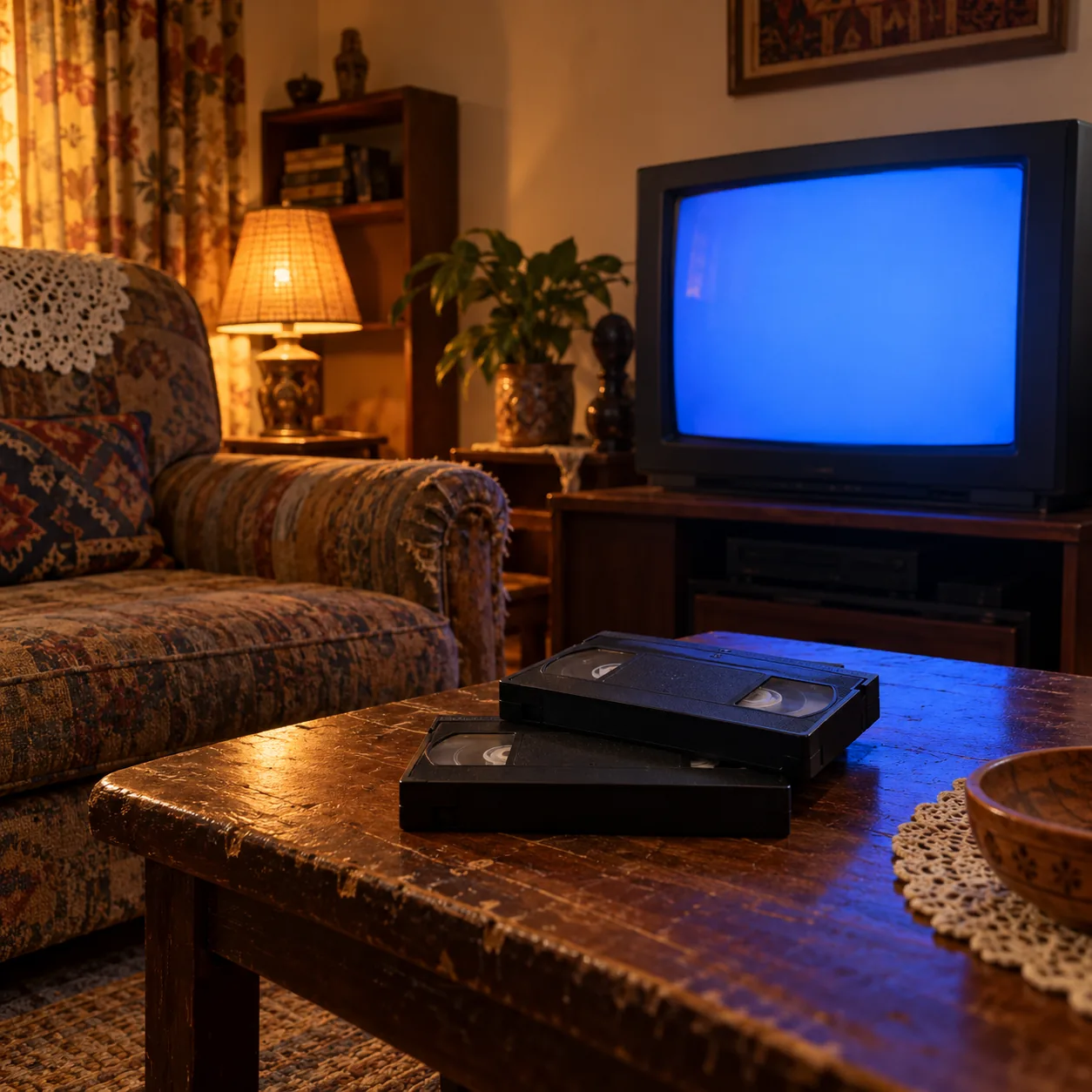
Generated interpretation, not documentary evidence. Two unlabeled VHS cassettes and a blank blue television in a fictional room evoke home-video circulation; not a film scene, cover or historical household.
Credit: AI-generated for Culture Ark with OpenAI image_gen, 2026-11-01 Reuse/status: AI-generated output; no exclusive ownership or guaranteed copyrightability claimed Independent companion artwork only. Underlying works, performer and trademark rights remain separate. No exclusive ownership or public-domain claim.
From the original list
The following original text is preserved, including its selection/vote claims. Preservation is not independent verification of every assertion.
Why: The film that started Nollywood.
What to preserve: The film
Year and origin: 1992 · Nigeria
Vote: 4/9 (historian 2 · future kid 1 · curator 1)
Learn more: Living in Bondage on Wikipedia
Supplemental context
Living in Bondage is selected here as the 1992 Nigerian film, not a later sequel or the entire industry often called Nollywood. Hyde Park Picture House’s screening record credits Chris Obi Rapu, identifies the language as Igbo and describes a businessman seeking advancement through supernatural means. Its program emphasizes the film’s importance to direct-to-home-video circulation and the memories of audiences who encountered such works outside conventional cinemas. For future viewers, that makes distribution and viewing equipment part of the cultural history, alongside performance and story. The drama’s moral fears should be read as fiction and social imagination rather than evidence that its supernatural actions occurred. A preserved edition should specify which part and release version it contains.
Creator/community: Chris Obi Rapu and the 1992 production team Place/era: Nigeria; Igbo-language home-video film, 1992 original selection
Context and limits
The original phrase “started Nollywood” is a compressed milestone claim, not proof that Nigerian filmmaking began in 1992. This entry concerns the 1992 original; multipart releases and later continuation titles require separate version checks. The room and unlabeled tapes are imagined, not authentic artifacts or representative of every Nigerian home.
Where to learn more
- https://apiarybee.com/community/reading/biggie-nu-series-008-noahs-ark-set-d-culture-2000
- https://hpph.co.uk/films/living-in-bondage
Apiary library | Original Culture Ark article
Public ID and individual routes: pending publisher allocation. Internal source ID: D-0409
Part of the Culture Ark: 2,000 things people should still be able to see in 2,000 years, picked by AI research teams. This page keeps the original list entry for D-0409 word for word and adds context. Browse the gallery. The Culture Ark is an Artificial Mind Hive (AMH) project. AMH is owned by Austin Little.

Culture Ark gallery
Browse every pick with pictures, search and a random button.
Open the gallery →