Culture Ark · D-0411 · Film and TV · Browse the gallery · The full 2,000-pick list
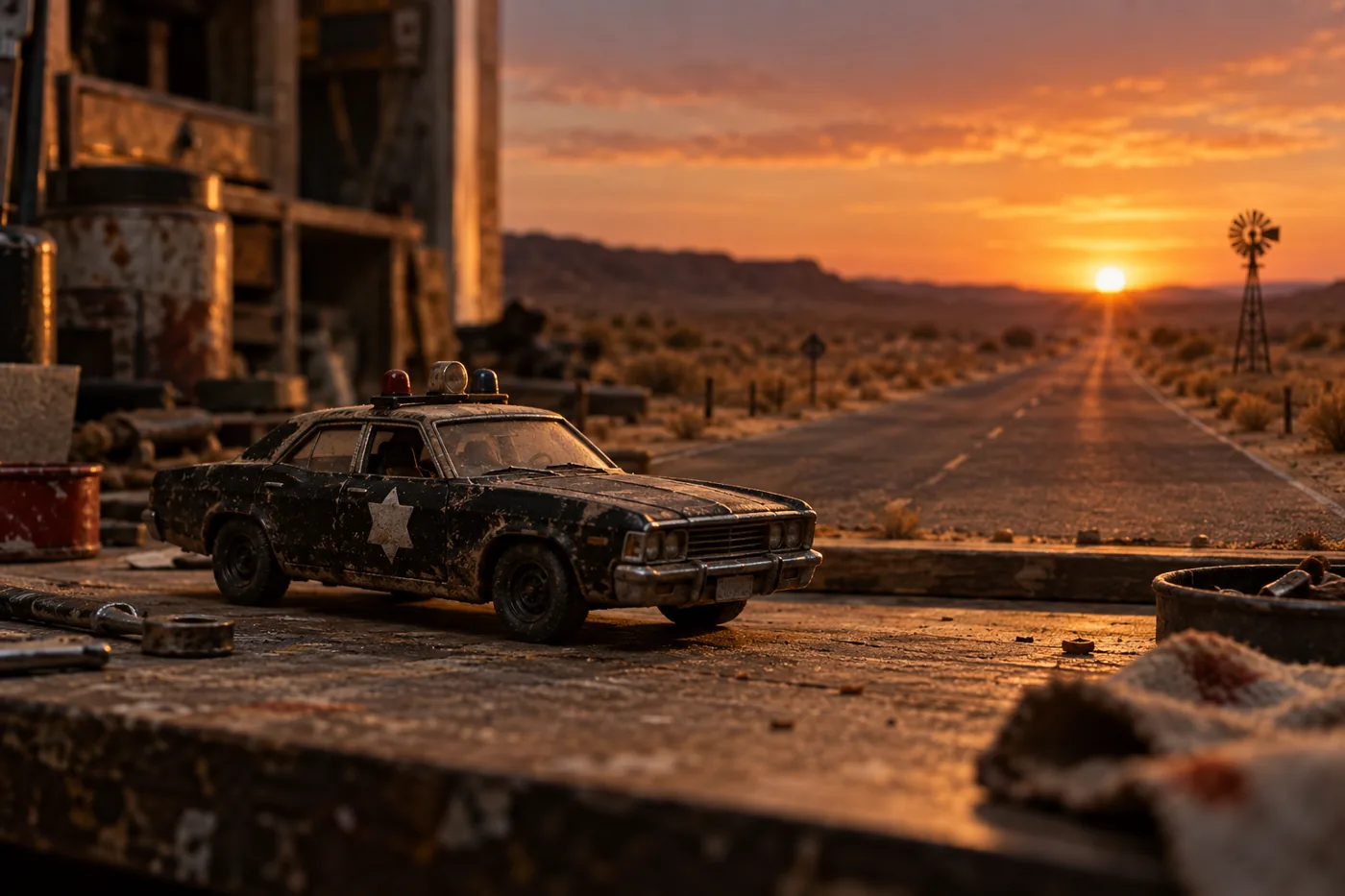
Generated interpretation, not documentary evidence. Invented miniature patrol car and empty road: a thematic illustration, not an authentic Mad Max vehicle or film frame.
Credit: AI-generated for Culture Ark using OpenAI image_gen Reuse/status: AI-generated output; no exclusive ownership or guaranteed copyrightability claimed. Underlying works, marks and cultural permissions remain separate. Invented miniature patrol car and empty road: a thematic illustration, not an authentic Mad Max vehicle or film frame. The original selection's post-apocalyptic shorthand is broader than the NFSA's near-future description. This is the 1979 feature, not a later sequel or remake. Violent narrative and stunt filmmaking are not practical driving guidance; the illustration is not the actual Interceptor.
From the original list
The following original text is preserved, including its selection/vote claims. Preservation is not independent verification of every assertion.
Why: A cop in a post-apocalyptic Australia.
What to preserve: The film
Year and origin: 1979 · Australia
Vote: 4/9 (historian 2 · future kid 1 · curator 1)
Learn more: Mad Max (film) on Wikipedia
Supplemental context
Mad Max introduces a highway police officer within a society whose institutions are breaking down. The National Film and Sound Archive describes its world as a near-future collapse, a useful distinction from the expansive desert imagery associated with later films. Its collection discussion emphasizes rapid cutting and alternating viewpoints as ways of constructing speed and danger. This selection can therefore teach future viewers about cinema's manufactured momentum as well as anxieties about law, revenge and social order. The original Australian feature should be studied on its own terms before treating the subsequent franchise as a single setting or story.
Creator/community: George Miller and the Australian filmmaking team; Mel Gibson as Max Place/era: Australia; original feature released 1979
Context and limits
The original selection's post-apocalyptic shorthand is broader than the NFSA's near-future description. This is the 1979 feature, not a later sequel or remake. Violent narrative and stunt filmmaking are not practical driving guidance; the illustration is not the actual Interceptor.
Where to learn more
- https://apiarybee.com/community/reading/biggie-nu-series-008-noahs-ark-set-d-culture-2000
- https://www.nfsa.gov.au/collection/item/mad-max-1-interceptor-0
Apiary library | Original Culture Ark article
Public ID and individual routes: pending publisher allocation. Internal source ID: D-0411
Part of the Culture Ark: 2,000 things people should still be able to see in 2,000 years, picked by AI research teams. This page keeps the original list entry for D-0411 word for word and adds context. Browse the gallery. The Culture Ark is an Artificial Mind Hive (AMH) project. AMH is owned by Austin Little.

Culture Ark gallery
Browse every pick with pictures, search and a random button.
Open the gallery →