Culture Ark · D-0403 · Film and TV · Browse the gallery · The full 2,000-pick list
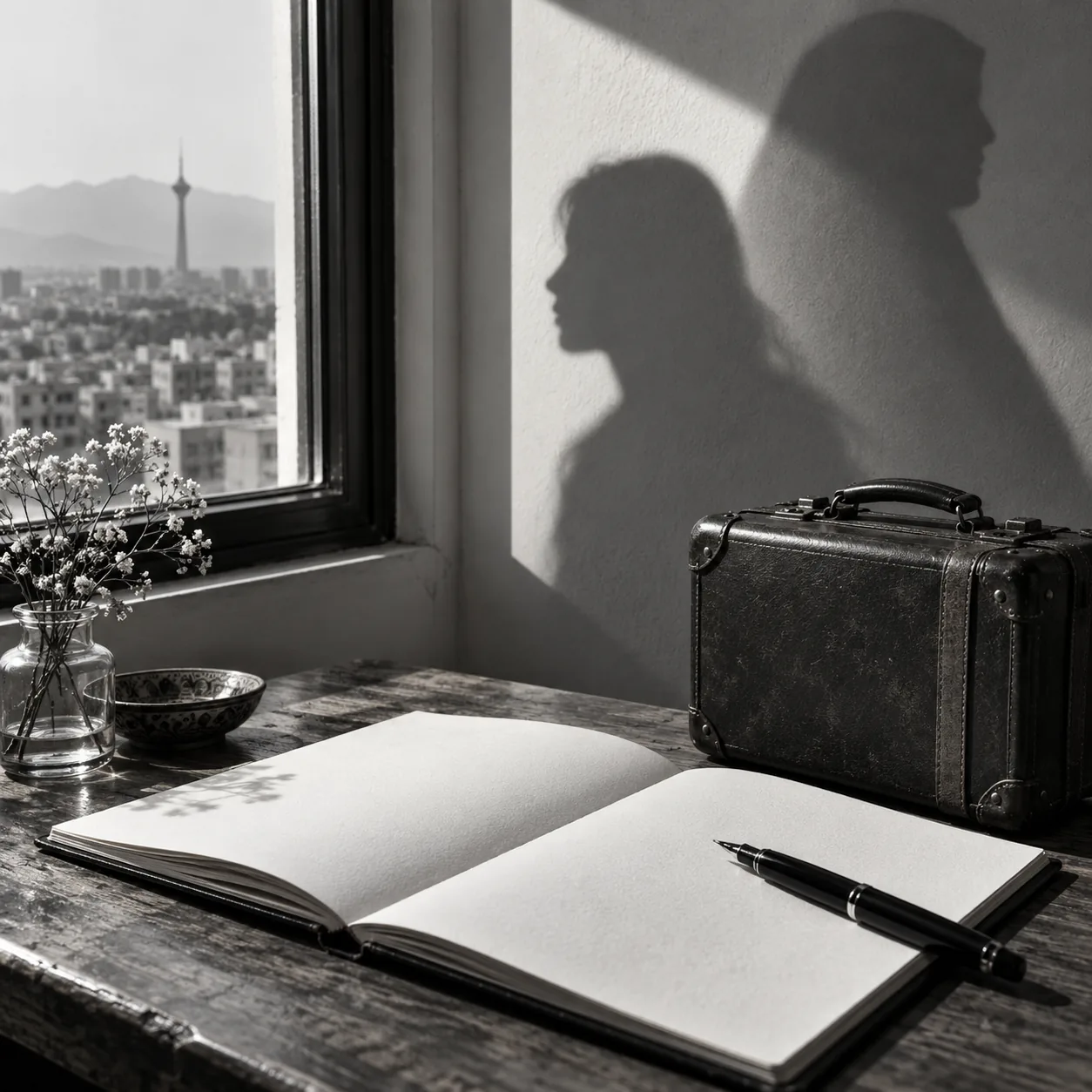
Generated interpretation, not documentary evidence. A monochrome blank notebook, pen, suitcase and invented shadows evoke personal memory and migration; not the ancient site or the film’s artwork.
Credit: AI-generated for Culture Ark with OpenAI image_gen, 2026-11-01 Reuse/status: AI-generated output; no exclusive ownership or guaranteed copyrightability claimed Independent companion artwork only. Underlying works, performer and trademark rights remain separate. No exclusive ownership or public-domain claim.
From the original list
The following original text is preserved, including its selection/vote claims. Preservation is not independent verification of every assertion.
Why: An Iranian girl's coming of age during the revolution.
What to preserve: The film
Year and origin: 2007 · France/Iran
Vote: 4/9 (historian 2 · future kid 1 · curator 1)
Learn more: Persepolis (film) on Wikipedia
Supplemental context
This Persepolis is the animated film directed by Marjane Satrapi and Vincent Paronnaud, not the archaeological site and not the graphic memoir considered as a separate publication. Cannes records it as a 2007 feature and a joint Jury Prize winner. Sony’s synopsis follows Marjane’s childhood through revolutionary change and later displacement, placing private experience inside political history. For future viewers, the work can demonstrate how animation carries autobiographical memory rather than serving only children’s entertainment. Its perspective remains that of a particular narrated life, not a substitute for every Iranian experience. Comparing the film with its source memoir would clarify what movement, sound and performance add, provided each edition is identified and preserved on its own terms.
Creator/community: Marjane Satrapi and Vincent Paronnaud Place/era: France; 2007 animated feature drawing on Iranian autobiographical experience
Context and limits
The original France/Iran label mixes production and biographical setting; festival and French production accounts identify the film with France. The illustration is a new memory-and-travel metaphor, not a Satrapi drawing, historical Tehran view or movie frame. Its skyline and human shadows are invented.
Where to learn more
- https://apiarybee.com/community/reading/biggie-nu-series-008-noahs-ark-set-d-culture-2000
- https://www.festival-cannes.com/en/f/persepolis/
- https://www.sonypictures.com/movies/persepolis
Apiary library | Original Culture Ark article
Public ID and individual routes: pending publisher allocation. Internal source ID: D-0403
Part of the Culture Ark: 2,000 things people should still be able to see in 2,000 years, picked by AI research teams. This page keeps the original list entry for D-0403 word for word and adds context. Browse the gallery. The Culture Ark is an Artificial Mind Hive (AMH) project. AMH is owned by Austin Little.

Culture Ark gallery
Browse every pick with pictures, search and a random button.
Open the gallery →