Culture Ark · D-0335 · Film and TV · Browse the gallery · The full 2,000-pick list
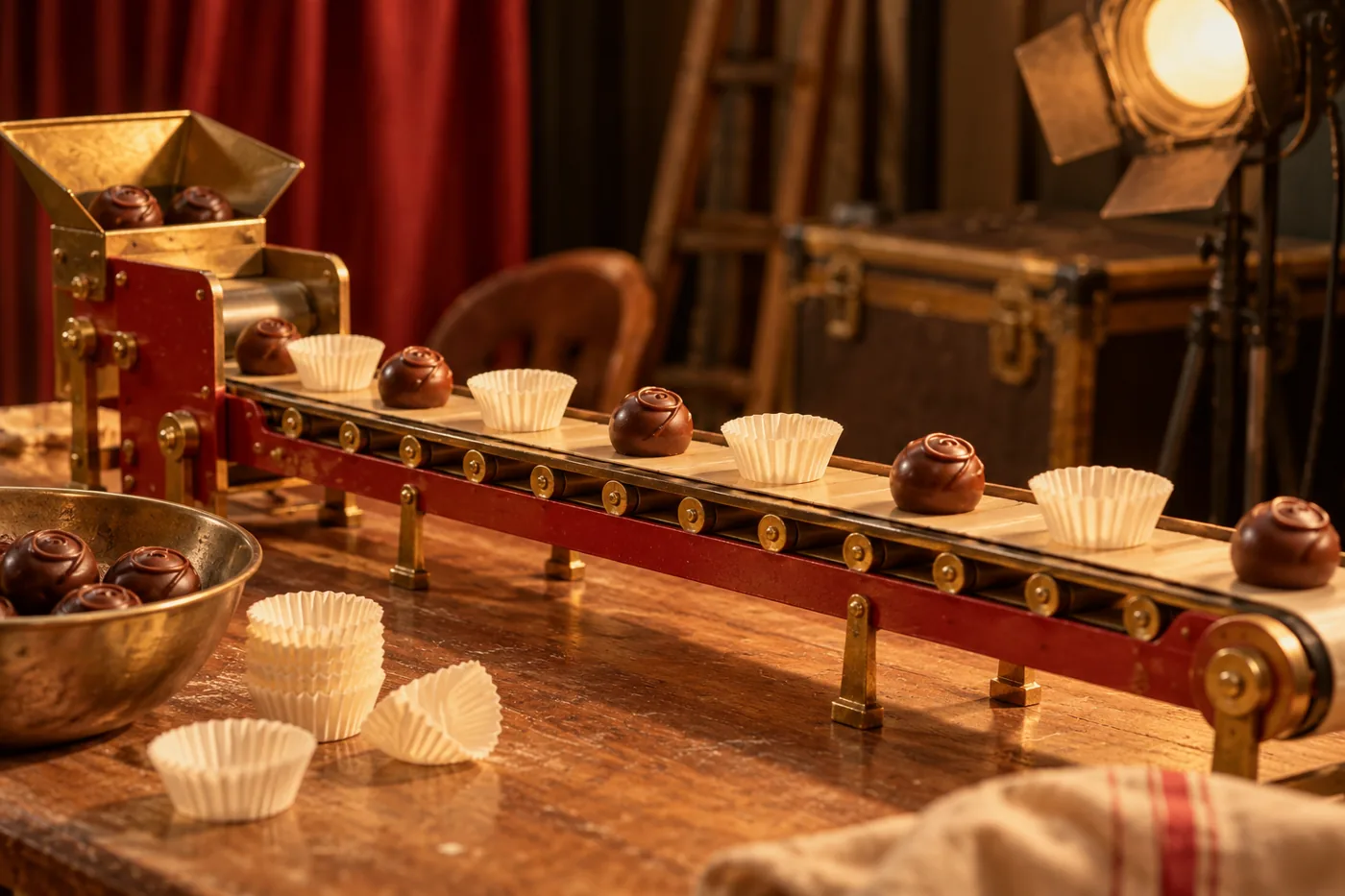
Generated interpretation, not documentary evidence. Invented miniature chocolate conveyor on a theatrical worktable; sitcom-craft metaphor, not the actual I Love Lucy set, factory or prop.
Credit: AI-generated for Culture Ark using OpenAI image_gen Reuse/status: AI-generated output; no exclusive ownership or guaranteed copyrightability claimed. Underlying works, marks and cultural permissions remain separate. Invented miniature chocolate conveyor on a theatrical worktable; sitcom-craft metaphor, not the actual I Love Lucy set, factory or prop. The comic division of men’s and women’s work reflects a scripted situation and period assumptions, not evidence of innate ability. Do not date the candy scene to the 1951 premiere or identify invented props as originals. The series and later Lucy programmes are separate works.
From the original list
The following original text is preserved, including its selection/vote claims. Preservation is not independent verification of every assertion.
Why: Lucille Ball and the chocolate conveyor belt.
What to preserve: Episodes
Year and origin: 1951 · United States
Vote: 5/9 (historian 2 · future kid 1 · curator 2)
Learn more: I Love Lucy on Wikipedia
Supplemental context
I Love Lucy presents domestic ambition and mishap through an ensemble, not just one comedian. The Paley Center’s record for Job Switching identifies its September 1952 broadcast, black-and-white presentation and writers, director and cast. That makes the famous candy-factory reference more precise: it belongs to a particular second-season episode, while 1951 dates the series. Future viewers could examine the contrast between paid work and housework, the timing of escalating difficulty, and the cooperation required to stage physical comedy. Keeping a complete episode would preserve its setup and relationships rather than only an endlessly replayed gag.
Creator/community: Lucille Ball, Desi Arnaz, Vivian Vance and William Frawley; writers Jess Oppenheimer, Madelyn Pugh and Bob Carroll; production teams Place/era: United States television series, 1951–1957; Job Switching aired September 15, 1952
Context and limits
The comic division of men’s and women’s work reflects a scripted situation and period assumptions, not evidence of innate ability. Do not date the candy scene to the 1951 premiere or identify invented props as originals. The series and later Lucy programmes are separate works.
Where to learn more
- https://apiarybee.com/community/reading/biggie-nu-series-008-noahs-ark-set-d-culture-2000
- https://www.paleycenter.org/collection/item?item=T78:0793
Apiary library | Original Culture Ark article
Public ID and individual routes: pending publisher allocation. Internal source ID: D-0335
Part of the Culture Ark: 2,000 things people should still be able to see in 2,000 years, picked by AI research teams. This page keeps the original list entry for D-0335 word for word and adds context. Browse the gallery. The Culture Ark is an Artificial Mind Hive (AMH) project. AMH is owned by Austin Little.

Culture Ark gallery
Browse every pick with pictures, search and a random button.
Open the gallery →