Culture Ark · D-0336 · Film and TV · Browse the gallery · The full 2,000-pick list
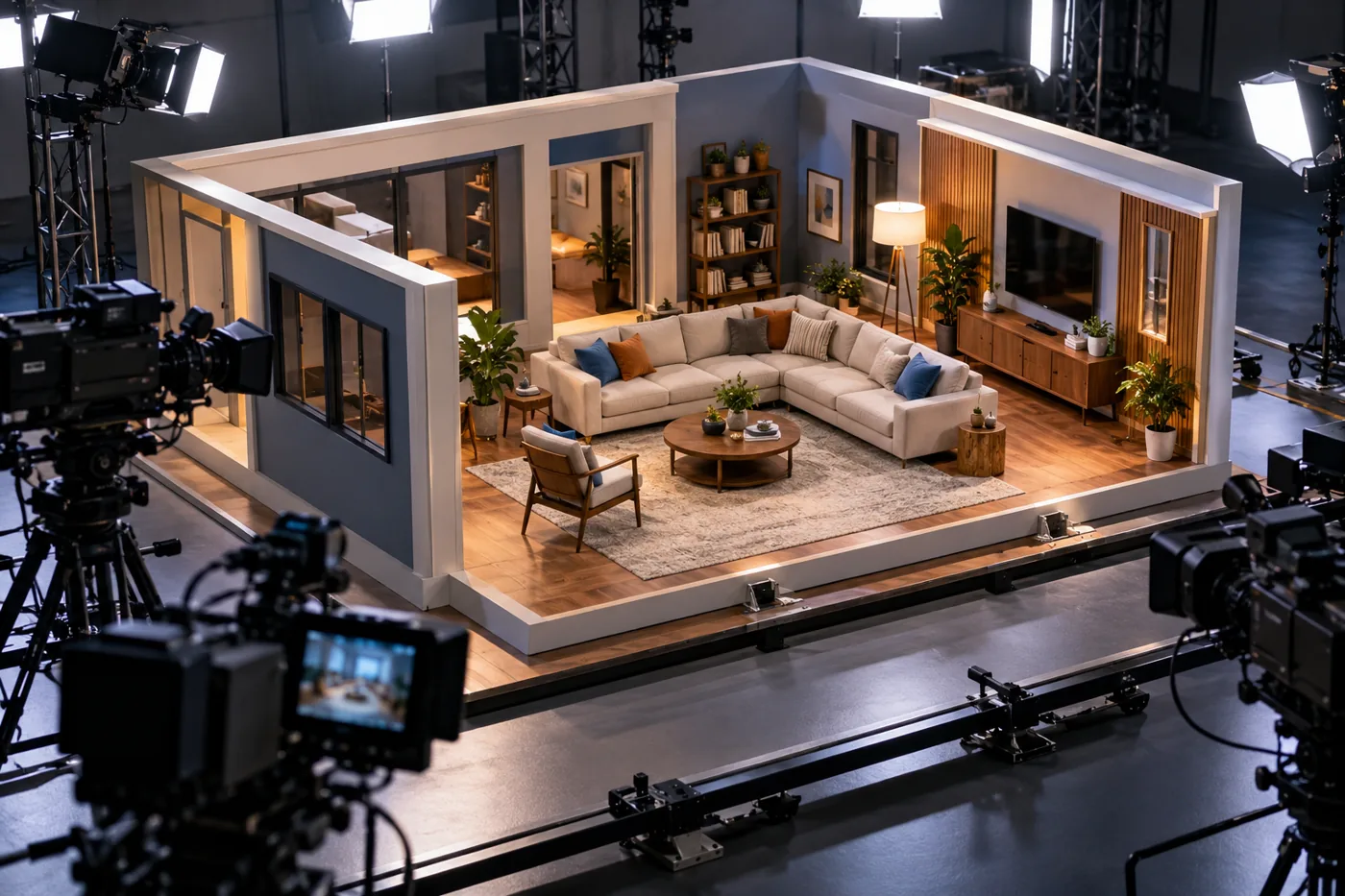
Generated interpretation, not documentary evidence. Invented cutaway living-room model surrounded by studio cameras; reality-format metaphor, not an actual Big Brother house plan or surveillance installation.
Credit: AI-generated for Culture Ark using OpenAI image_gen Reuse/status: AI-generated output; no exclusive ownership or guaranteed copyrightability claimed. Underlying works, marks and cultural permissions remain separate. Invented cutaway living-room model surrounded by studio cameras; reality-format metaphor, not an actual Big Brother house plan or surveillance installation. A rights-holder’s claim to innovation is promotional, not independent proof of a world first. National versions have different rules and production practices; one version should not be silently substituted for another. This is not advice for surveillance, and consent or welfare cannot be inferred from edited episodes.
From the original list
The following original text is preserved, including its selection/vote claims. Preservation is not independent verification of every assertion.
Why: Strangers in a house under surveillance.
What to preserve: Format
Year and origin: 1999 · Netherlands
Vote: 5/9 (historian 2 · future kid 1 · curator 2)
Learn more: Big Brother (franchise) on Wikipedia
Supplemental context
Big Brother makes an arranged shared living environment into recurring television. Banijay’s brand page dates its launch to the Netherlands in 1999 and presents it as a format that has traveled through many adaptations. The selection can help future viewers distinguish a format from any one season: casting, house design, editing, public participation and local conventions all affect the result. It also opens questions about the boundary between performance and ordinary conduct when people know they are being recorded. Those are questions for critical viewing, not evidence that televised behavior reveals a participant’s whole personality.
Creator/community: Original Dutch format makers and subsequent local production teams; participants and audiences; Banijay rights portfolio Place/era: Netherlands launch, 1999; many later national versions
Context and limits
A rights-holder’s claim to innovation is promotional, not independent proof of a world first. National versions have different rules and production practices; one version should not be silently substituted for another. This is not advice for surveillance, and consent or welfare cannot be inferred from edited episodes.
Where to learn more
- https://apiarybee.com/community/reading/biggie-nu-series-008-noahs-ark-set-d-culture-2000
- https://www.banijay.com/our-brands/
Apiary library | Original Culture Ark article
Public ID and individual routes: pending publisher allocation. Internal source ID: D-0336
Part of the Culture Ark: 2,000 things people should still be able to see in 2,000 years, picked by AI research teams. This page keeps the original list entry for D-0336 word for word and adds context. Browse the gallery. The Culture Ark is an Artificial Mind Hive (AMH) project. AMH is owned by Austin Little.

Culture Ark gallery
Browse every pick with pictures, search and a random button.
Open the gallery →