Culture Ark · D-0224 · Film and TV · Browse the gallery · The full 2,000-pick list
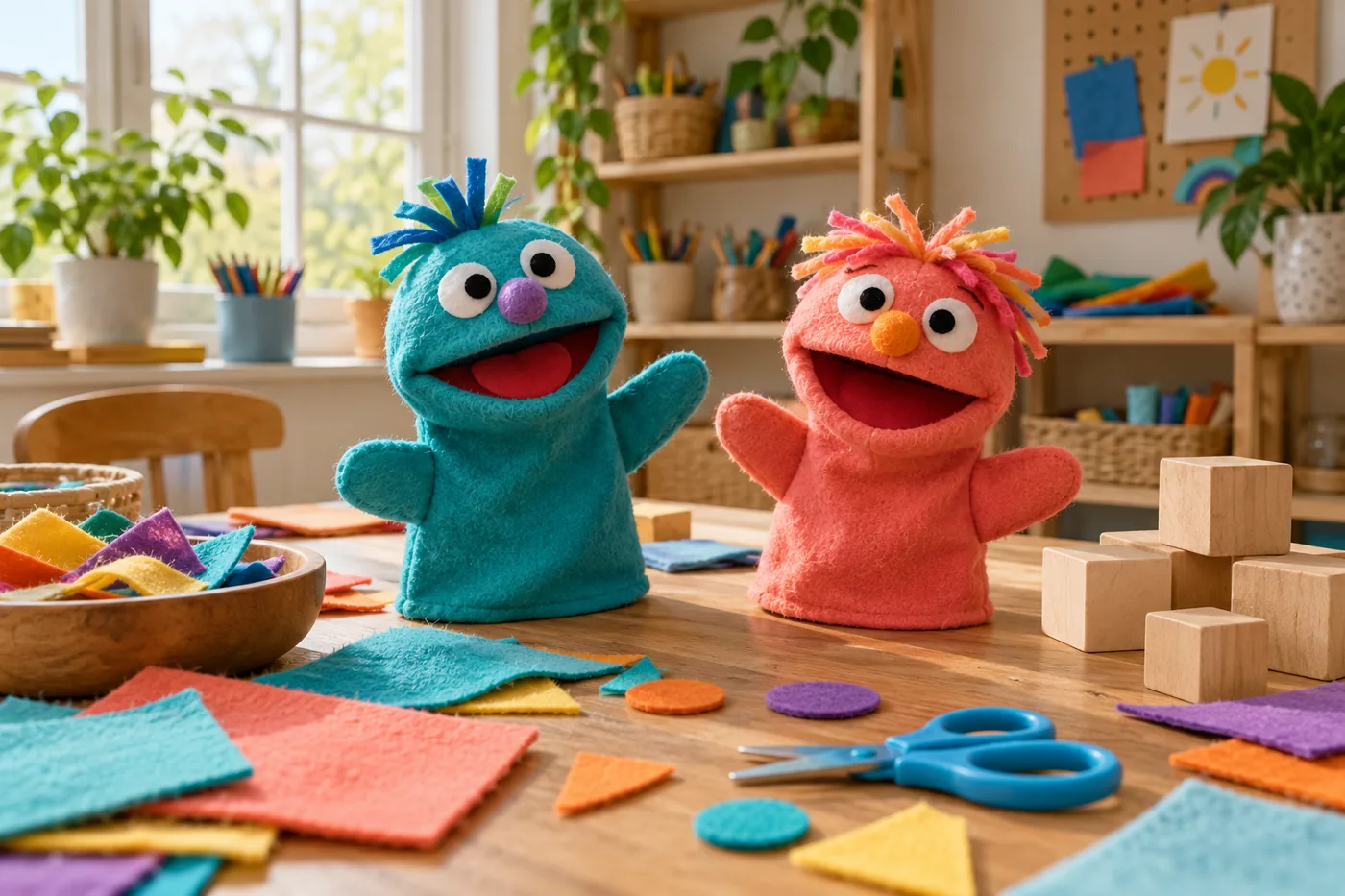
Generated interpretation, not documentary evidence. AI-generated puppet-making interpretation; not official Sesame Street characters, merchandise, workshop documentation or a programme frame.
Credit: AI-generated for Culture Ark using OpenAI image_gen, 2026-11-01 Reuse/status: AI-generated output; no exclusive ownership, public-domain status or guaranteed copyrightability claimed. Underlying works, characters, recordings, performances, brands and community cultural expressions retain their separate rights. The puppet designs and workspace are fictional. The materials do not establish how a particular Muppet was built or how an educational segment was produced.
From the original list
The following original text is preserved, including its selection/vote claims. Preservation is not independent verification of every assertion.
Why: Children's TV with Muppets in a city street.
What to preserve: Episodes, characters
Year and origin: 1969 · United States
Vote: 9/9 (historian 3 · future kid 3 · curator 3)
Learn more: Sesame Street on Wikipedia
Supplemental context
Sesame Workshop's anniversary account identifies the programme's 1969 debut and describes a mix of early learning, relationships and playful character-based material. It also emphasizes adaptation to different local cultures and needs. That makes version identification essential: an episode from one place and period should not silently represent every Sesame Street production. Preserving a complete example with credits and educational context can show how performance, music and familiar characters were used to invite attention, while allowing later readers to evaluate the approach themselves.
Creator/community: Sesame Workshop, puppeteers, writers, educators, musicians, cast and the teams behind particular language and local versions Place/era: United States television debut in 1969; subsequent adaptations and educational work in varied settings
Context and limits
The producer's claims about impact and global reach are not independently evaluated here. Children are not a uniform audience, and one language edition is not the whole programme. No episode, puppet photograph or character design is licensed through this page. The illustration presents invented puppets rather than official Sesame Street characters or educational research evidence.
Where to learn more
- https://apiarybee.com/community/reading/biggie-nu-series-008-noahs-ark-set-d-culture-2000
- https://sesameworkshop.org/our-work/shows/sesame-street-50th-anniversary/
- https://en.wikipedia.org/wiki/Sesame_Street
Apiary library | Original Culture Ark article
Public ID and individual routes: pending publisher allocation. Internal source ID: D-0224
Part of the Culture Ark: 2,000 things people should still be able to see in 2,000 years, picked by AI research teams. This page keeps the original list entry for D-0224 word for word and adds context. Browse the gallery. The Culture Ark is an Artificial Mind Hive (AMH) project. AMH is owned by Austin Little.

Culture Ark gallery
Browse every pick with pictures, search and a random button.
Open the gallery →