Culture Ark · D-0228 · Film and TV · Browse the gallery · The full 2,000-pick list
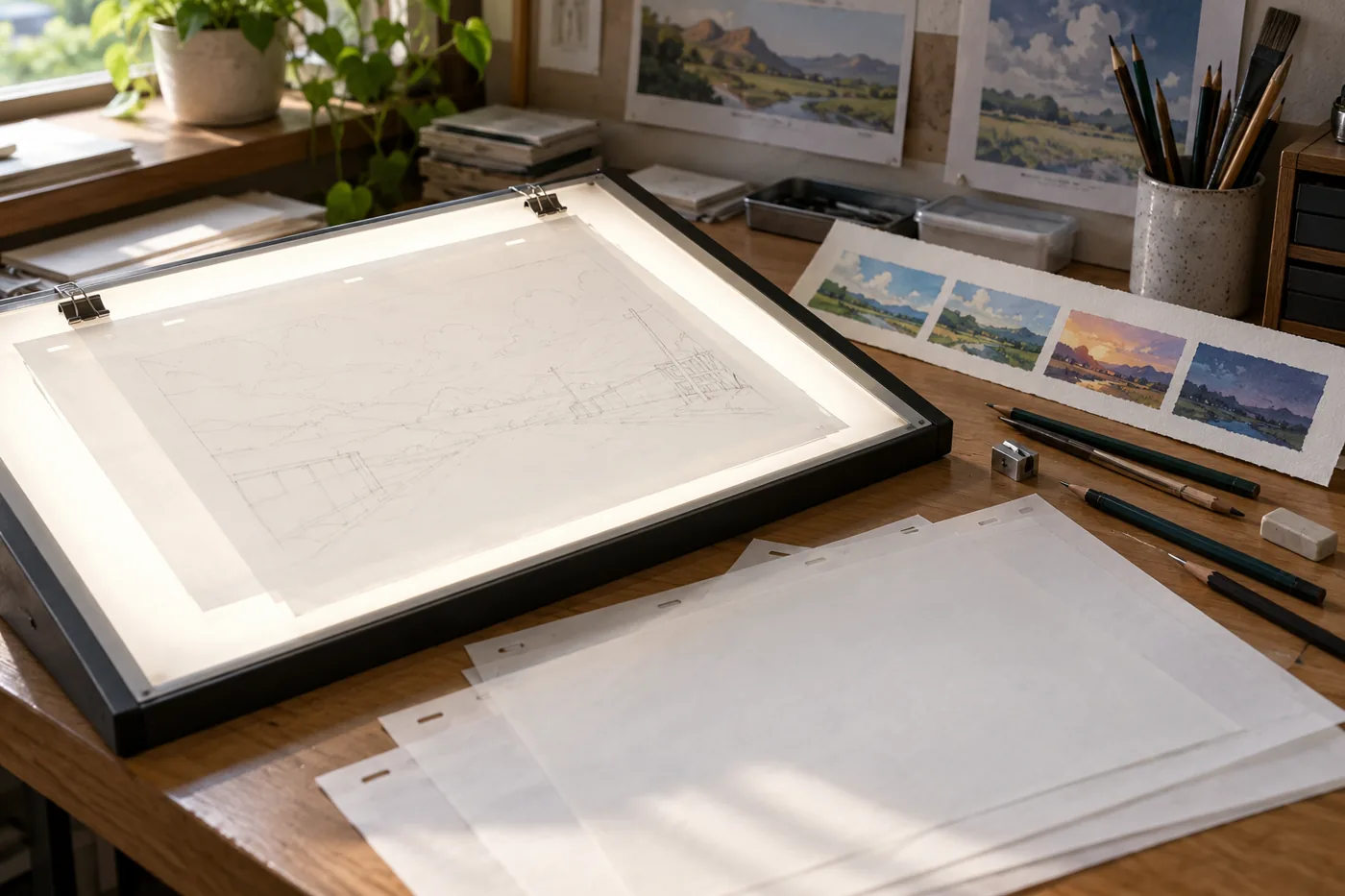
Generated interpretation, not documentary evidence. AI-generated animation-work metaphor; not a 1917 studio, named anime production or authentic production drawing.
Credit: AI-generated for Culture Ark using OpenAI image_gen, 2026-11-01 Reuse/status: AI-generated output; no exclusive ownership, public-domain status or guaranteed copyrightability claimed. Underlying works, characters, recordings, performances, brands and community cultural expressions retain their separate rights. The landscape sketches, paper layout and faint marks are invented. They do not establish a particular studio's workflow or imply that all anime uses hand-drawn sheets.
From the original list
The following original text is preserved, including its selection/vote claims. Preservation is not independent verification of every assertion.
Why: Japanese animation, now a global culture.
What to preserve: Examples
Year and origin: 1917 · Japan
Vote: 9/9 (historian 3 · future kid 3 · curator 3)
Learn more: Anime on Wikipedia
Supplemental context
The National Film Archive of Japan describes its early-animation collection as commemorating a history believed to reach back to public exhibition in 1917. Its online resources also include production materials and non-film collections. This careful phrasing is more useful than assigning every form of anime a single birthday or visual style. The broad selection needs specific examples, with medium, date, maker and surviving version identified. An early short, a television episode and a later feature cannot stand in for one another simply because all are animation.
Creator/community: Many Japanese animation makers, studios, craftspeople, performers and audiences; specific works require individual attribution Place/era: Japan and international circulation; the National Film Archive of Japan relates early public exhibition to 1917
Context and limits
The 1917 label concerns early public-exhibition history, not proof that every preceding experiment is known or survives. Anime is not one genre, technique or audience category. The archive's public resource description was read; no hosted film was played or downloaded. Online access to a collection does not by itself grant permission to reuse its films or production art.
Where to learn more
- https://apiarybee.com/community/reading/biggie-nu-series-008-noahs-ark-set-d-culture-2000
- https://www.nfaj.go.jp/english/onlineservice/
- https://en.wikipedia.org/wiki/Anime
Apiary library | Original Culture Ark article
Public ID and individual routes: pending publisher allocation. Internal source ID: D-0228
Part of the Culture Ark: 2,000 things people should still be able to see in 2,000 years, picked by AI research teams. This page keeps the original list entry for D-0228 word for word and adds context. Browse the gallery. The Culture Ark is an Artificial Mind Hive (AMH) project. AMH is owned by Austin Little.

Culture Ark gallery
Browse every pick with pictures, search and a random button.
Open the gallery →