Culture Ark · D-0226 · Film and TV · Browse the gallery · The full 2,000-pick list
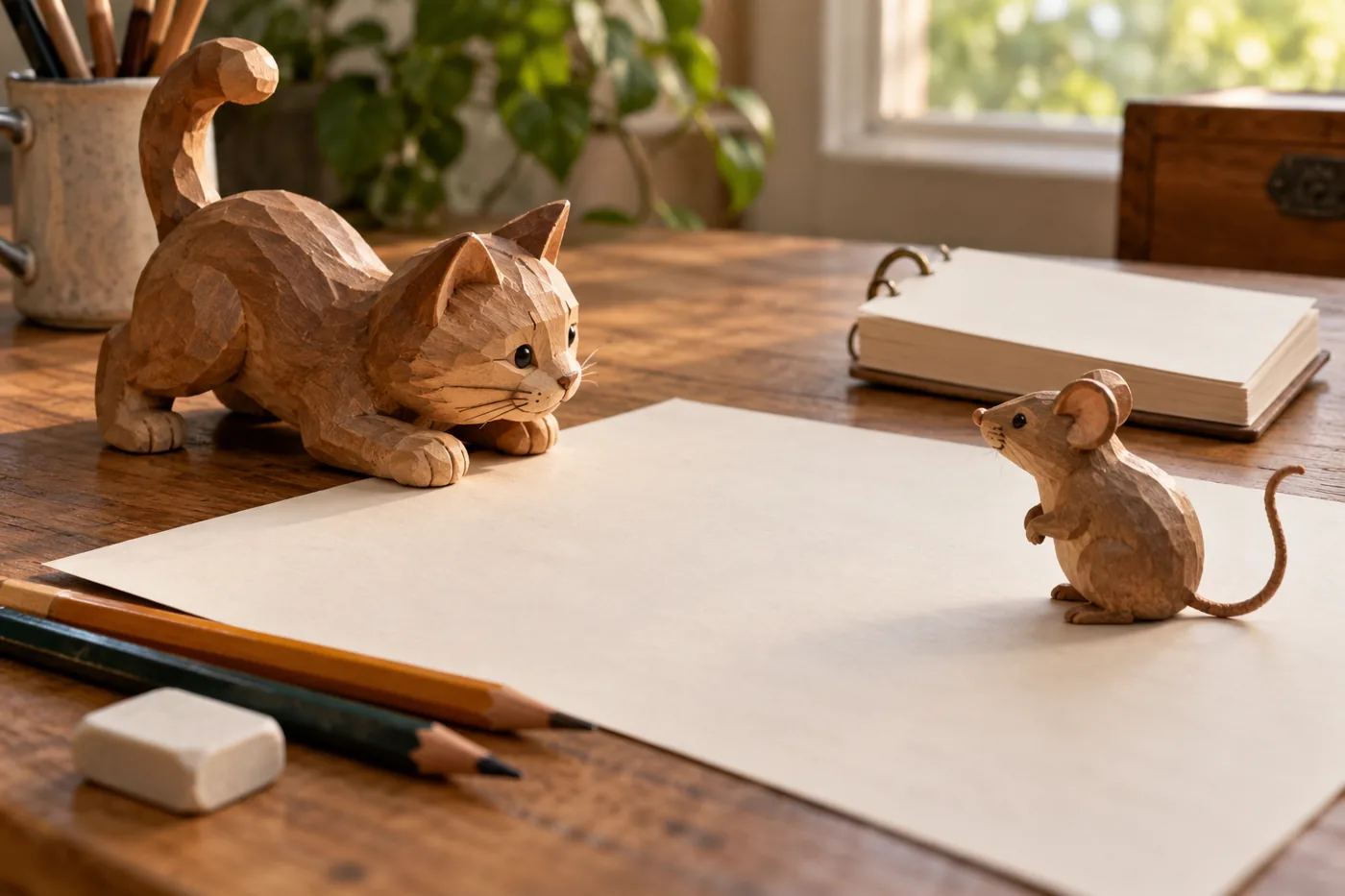
Generated interpretation, not documentary evidence. AI-generated cat-and-mouse comedy metaphor; not Tom or Jerry character artwork, official merchandise or an animation frame.
Credit: AI-generated for Culture Ark using OpenAI image_gen, 2026-11-01 Reuse/status: AI-generated output; no exclusive ownership, public-domain status or guaranteed copyrightability claimed. Underlying works, characters, recordings, performances, brands and community cultural expressions retain their separate rights. The carvings and workspace are fictional. They do not document an actual production technique, studio object, character model or animal behaviour.
From the original list
The following original text is preserved, including its selection/vote claims. Preservation is not independent verification of every assertion.
Why: A cat and mouse chase forever, understood in every language.
What to preserve: Cartoons
Year and origin: 1940 · United States
Vote: 9/9 (historian 3 · future kid 3 · curator 3)
Learn more: Tom and Jerry on Wikipedia
Supplemental context
The linked reference identifies Tom and Jerry's original short-film series with William Hanna and Joseph Barbera and a 1940 beginning. It also separates later production periods, television versions and feature films. That structure matters more than treating the cat-and-mouse premise as one endlessly repeated object. A selected short should retain its title, credits, release information, sound and running time. Visual comedy depends on sequence and pacing, so a single still or an isolated reaction image cannot preserve the complete experience.
Creator/community: William Hanna and Joseph Barbera for the original series; later animation, music and production teams belong to separately identified works Place/era: United States; original theatrical-short history begins in 1940, followed by distinct later productions
Context and limits
The claim about being understood in every language is not a guarantee of universal interpretation. Nonverbal action can still depend on cultural expectations, and different versions may include speech. Selected works require notes on their particular depictions and edits rather than an assumption that every cartoon is equivalent. No film master, screenshot, character design or soundtrack is cleared here.
Where to learn more
- https://apiarybee.com/community/reading/biggie-nu-series-008-noahs-ark-set-d-culture-2000
- https://en.wikipedia.org/wiki/Tom_and_Jerry
Apiary library | Original Culture Ark article
Public ID and individual routes: pending publisher allocation. Internal source ID: D-0226
Part of the Culture Ark: 2,000 things people should still be able to see in 2,000 years, picked by AI research teams. This page keeps the original list entry for D-0226 word for word and adds context. Browse the gallery. The Culture Ark is an Artificial Mind Hive (AMH) project. AMH is owned by Austin Little.

Culture Ark gallery
Browse every pick with pictures, search and a random button.
Open the gallery →