Culture Ark · D-0220 · Film and TV · Browse the gallery · The full 2,000-pick list
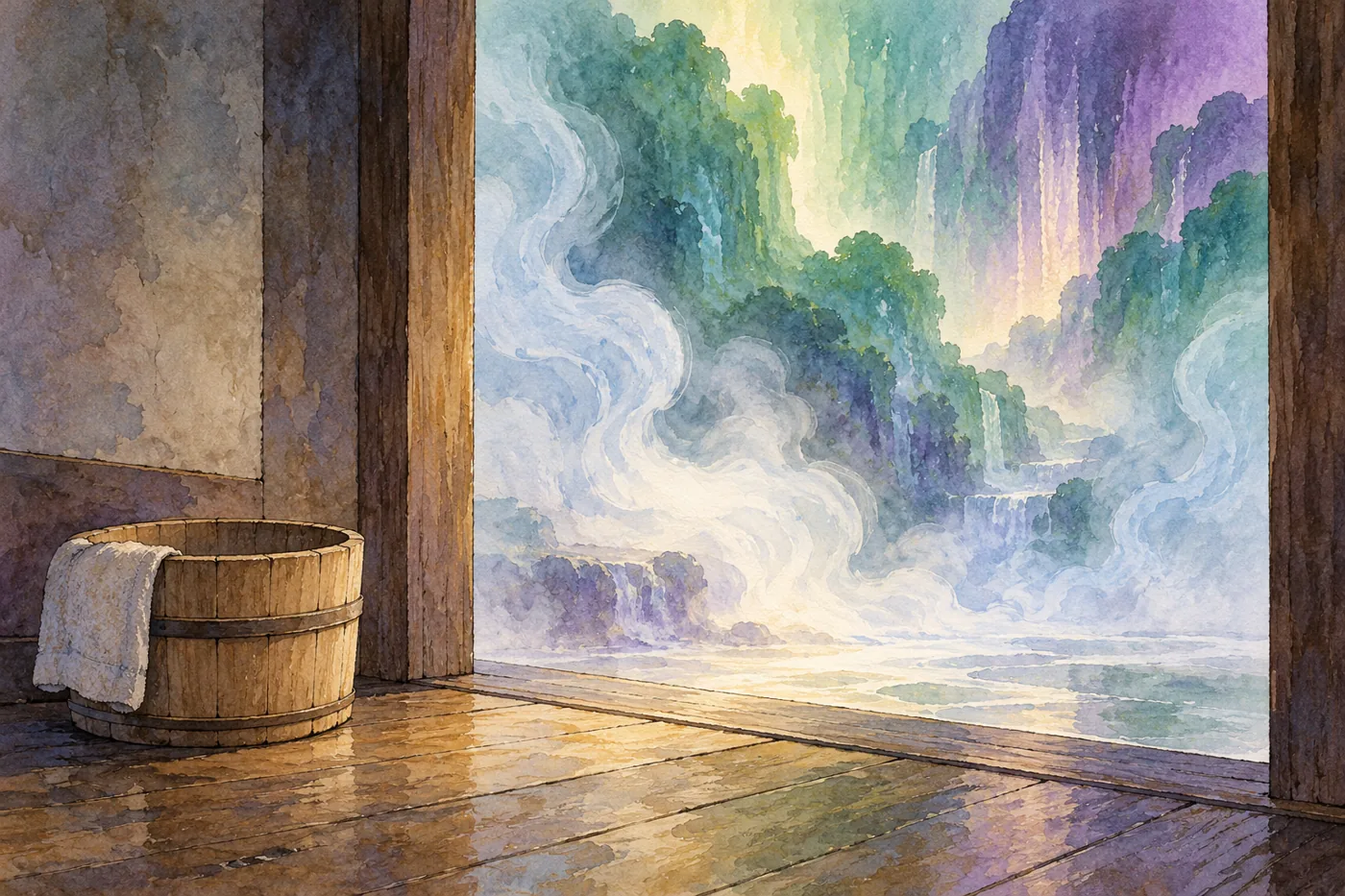
Generated interpretation, not documentary evidence. Original generated watercolor of a bucket and towel at an invented steaming threshold; a metaphor for work and entering an unfamiliar world, not Spirited Away imagery or Japanese ritual evidence.
Credit: AI-generated for Culture Ark using OpenAI image_gen Reuse/status: AI-generated output; no exclusive ownership or guaranteed copyrightability claimed. Underlying works, marks and cultural permissions remain separate. Original generated watercolor of a bucket and towel at an invented steaming threshold; a metaphor for work and entering an unfamiliar world, not Spirited Away imagery or Japanese ritual evidence. The original box-office duration is preserved but is not independently reverified by the studio work record; it should be treated as a dated reception claim, not a current ranking. A fantasy bathhouse is not ethnographic evidence for all Japanese beliefs or bathing customs. The watercolor is an independent thematic illustration, not a Ghibli frame, copied style, character or location.
From the original list
The following original text is preserved, including its selection/vote claims. Preservation is not independent verification of every assertion.
Why: A girl working in a spirit bathhouse, Japan's highest-grossing film for 19 years.
What to preserve: The film
Year and origin: 2001 · Japan
Vote: 9/9 (historian 3 · future kid 3 · curator 3)
Learn more: Spirited Away on Wikipedia
Supplemental context
Spirited Away combines a child's experience of an unfamiliar world with the collective work of feature animation. Studio Ghibli's own record credits Hayao Miyazaki for original story, screenplay and direction, Toshio Suzuki as producer and Joe Hisaishi for music, and dates the Japanese release to 20 July 2001. Those credits help a future archive move beyond the director's name alone. The film can invite questions about work, identity, responsibility and belonging, while its production record offers a separate route into how images, voices and music were organized into an animated feature.
Creator/community: Hayao Miyazaki, original story, screenplay and direction; Toshio Suzuki, producer; Joe Hisaishi, music; Studio Ghibli cast and production teams Place/era: Japan, theatrical release 20 July 2001; fantasy story world distinct from documentary Japanese life
Context and limits
The original box-office duration is preserved but is not independently reverified by the studio work record; it should be treated as a dated reception claim, not a current ranking. A fantasy bathhouse is not ethnographic evidence for all Japanese beliefs or bathing customs. The watercolor is an independent thematic illustration, not a Ghibli frame, copied style, character or location.
Where to learn more
- https://apiarybee.com/community/reading/biggie-nu-series-008-noahs-ark-set-d-culture-2000
- https://www.ghibli.jp/works/chihiro/
Apiary library | Original Culture Ark article
Public ID and individual routes: pending publisher allocation. Internal source ID: D-0220
Part of the Culture Ark: 2,000 things people should still be able to see in 2,000 years, picked by AI research teams. This page keeps the original list entry for D-0220 word for word and adds context. Browse the gallery. The Culture Ark is an Artificial Mind Hive (AMH) project. AMH is owned by Austin Little.

Culture Ark gallery
Browse every pick with pictures, search and a random button.
Open the gallery →