Culture Ark · D-0218 · Film and TV · Browse the gallery · The full 2,000-pick list
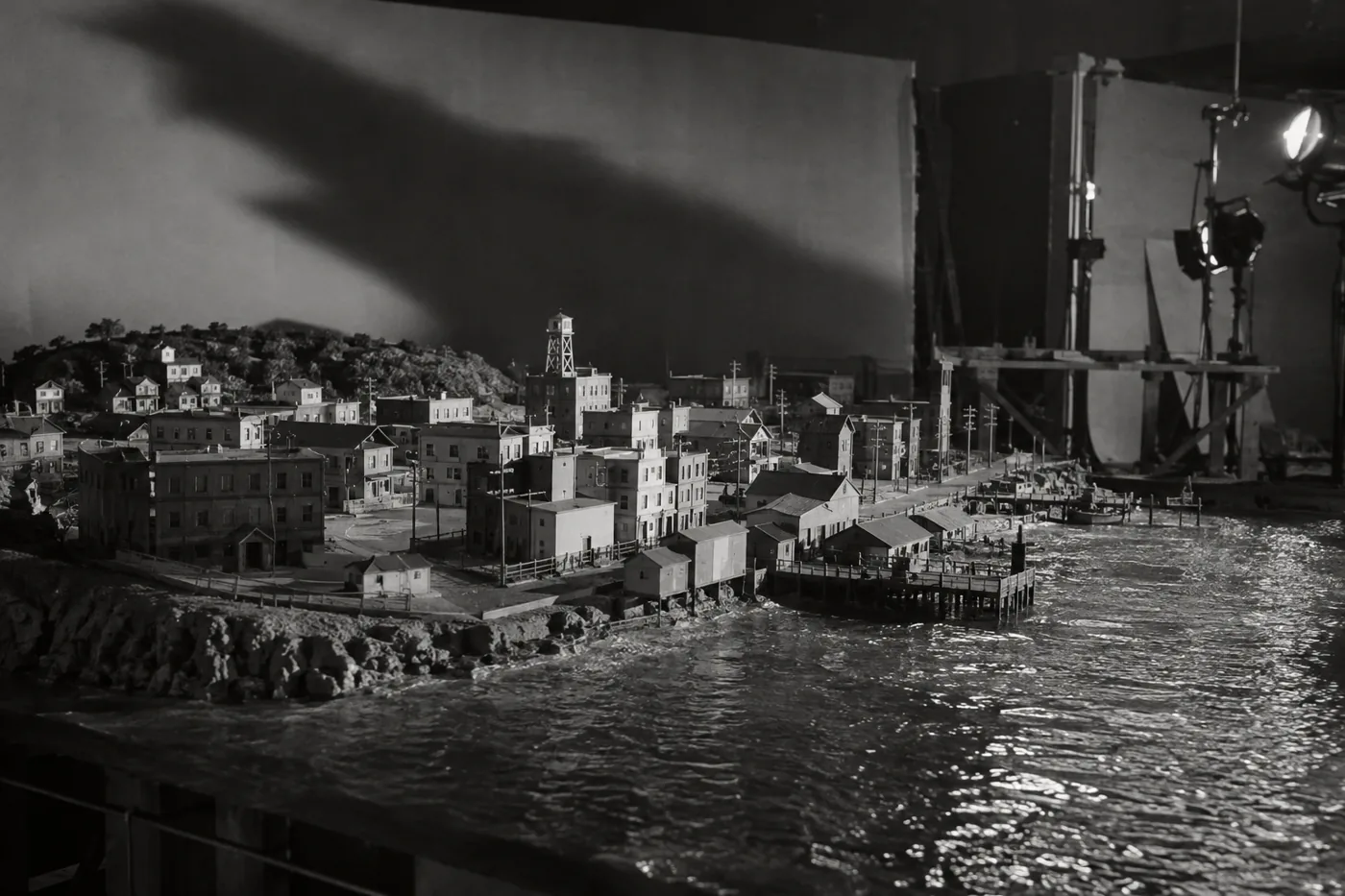
Generated interpretation, not documentary evidence. Invented monochrome miniature coastal city and looming abstract shadow in an effects workshop; not Godzilla footage, an original set or evidence of historical destruction.
Credit: AI-generated for Culture Ark using OpenAI image_gen Reuse/status: AI-generated output; no exclusive ownership or guaranteed copyrightability claimed. Underlying works, marks and cultural permissions remain separate. Invented monochrome miniature coastal city and looming abstract shadow in an effects workshop; not Godzilla footage, an original set or evidence of historical destruction. The original Hiroshima shorthand is incomplete: the cited museum also discusses Cold War testing, including Castle Bravo. This is historical interpretation of fiction, not documentary footage of a nuclear event. Later films and localized versions should not be substituted silently for the 1954 Japanese work. The generated miniature city is not an actual Toho set or destroyed real neighborhood.
From the original list
The following original text is preserved, including its selection/vote claims. Preservation is not independent verification of every assertion.
Why: A radioactive monster born of Hiroshima's trauma.
What to preserve: The film, suit, roar
Year and origin: 1954 · Japan
Vote: 9/9 (historian 3 · future kid 3 · curator 3)
Learn more: Godzilla (1954 film) on Wikipedia
Supplemental context
The 1954 Godzilla can be watched as both monster cinema and an engagement with historical fear. Toho's official film listing identifies the original separately from the many later films and credits Ishirō Honda and Akira Ifukube. The National WWII Museum's interpretation connects Honda and Eiji Tsuburaya's production choices not only to wartime experience but also to contemporary nuclear testing. Future viewers could examine how a fictional creature gives visible form to anxieties that are difficult to represent directly, while studying the collaborative craft that makes an impossible event convincing on screen.
Creator/community: Ishirō Honda, director; Eiji Tsuburaya, special-effects collaborator; Akira Ifukube, composer; Toho cast and production teams Place/era: Japan, 1954 original film; postwar and Cold War nuclear anxieties; later franchise works are separate
Context and limits
The original Hiroshima shorthand is incomplete: the cited museum also discusses Cold War testing, including Castle Bravo. This is historical interpretation of fiction, not documentary footage of a nuclear event. Later films and localized versions should not be substituted silently for the 1954 Japanese work. The generated miniature city is not an actual Toho set or destroyed real neighborhood.
Where to learn more
- https://apiarybee.com/community/reading/biggie-nu-series-008-noahs-ark-set-d-culture-2000
- https://godzilla.com/en-gb/blogs/movies
- https://www.nationalww2museum.org/war/articles/godzilla-and-world-war-ii-long-live-king-monsters
Apiary library | Original Culture Ark article
Public ID and individual routes: pending publisher allocation. Internal source ID: D-0218
Part of the Culture Ark: 2,000 things people should still be able to see in 2,000 years, picked by AI research teams. This page keeps the original list entry for D-0218 word for word and adds context. Browse the gallery. The Culture Ark is an Artificial Mind Hive (AMH) project. AMH is owned by Austin Little.

Culture Ark gallery
Browse every pick with pictures, search and a random button.
Open the gallery →