Culture Ark · D-0125 · Music · Browse the gallery · The full 2,000-pick list
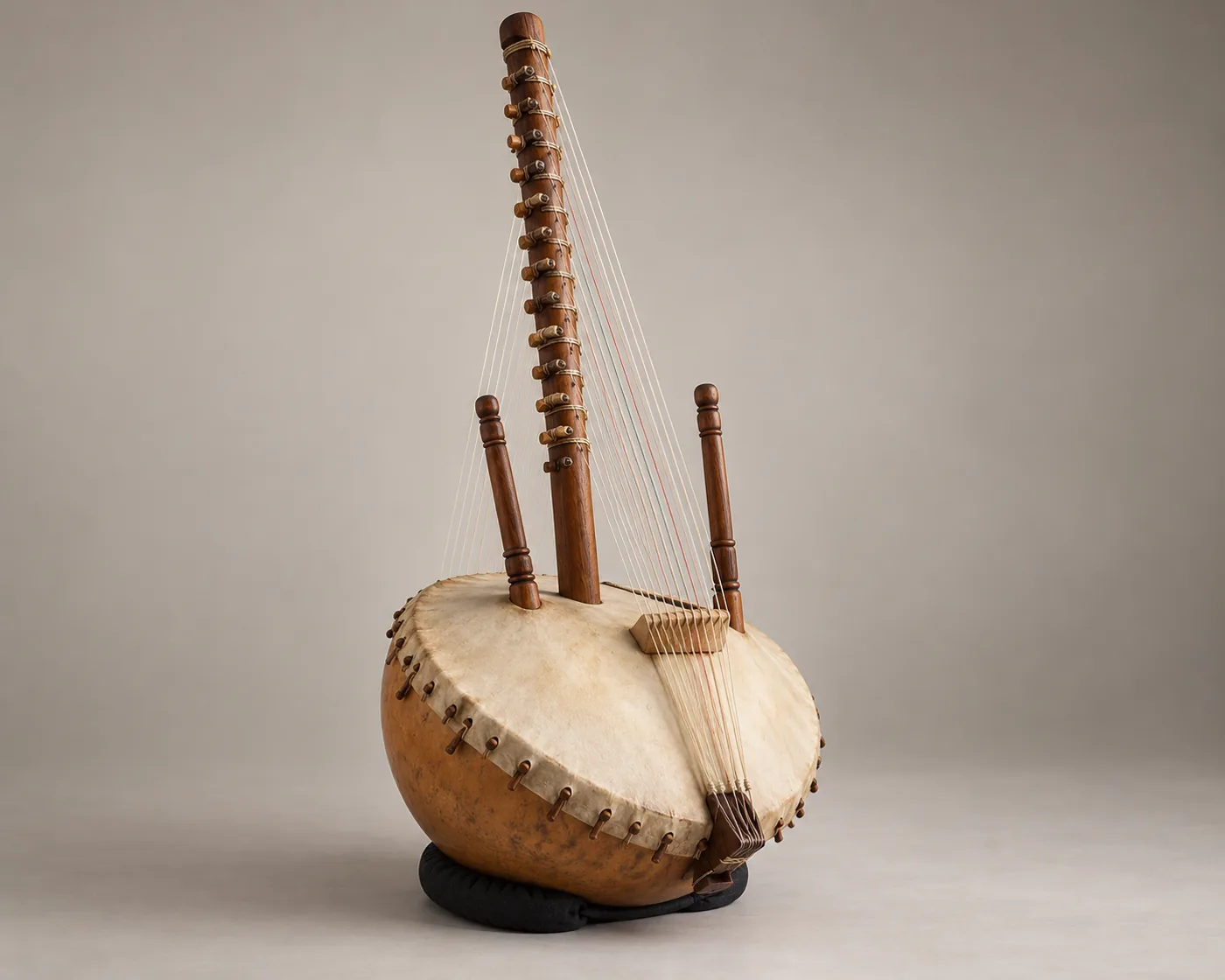
Generated interpretation, not documentary evidence. Approximate kora illustration with calabash resonator and strings; not a measured design or historical artifact.
Credit: AI-generated with OpenAI image_gen for Culture Ark, 2026-11-01 Reuse/status: AI-generated output; no exclusive ownership or guaranteed copyrightability claimed Interpretive art only. Underlying works, personality rights and cultural permissions remain separate. No score, choreography or technical reconstruction is supplied.
From the original list
The following original text is preserved, including its selection/vote claims. Preservation is not independent verification of every assertion.
Why: A 21-string harp-lute played by griots.
What to preserve: An instrument, Toumani Diabate recordings
Year and origin: 13th century · West Africa
Vote: 5/9 (historian 2 · future kid 1 · curator 2)
Learn more: Kora (instrument) on Wikipedia
Supplemental context
A typical kora has twenty-one strings and combines a long neck with a skin-covered calabash resonator. Strings pass across a tall bridge and are plucked with the fingers. The object alone cannot preserve a musician’s repertoire or social role; a future archive should connect instruments with named players and teaching relationships.
Creator/community: West African kora makers, jali and other musicians Place/era: West Africa; continuing instrument and performance traditions
Context and limits
The original thirteenth-century date is not verified here. The generated instrument is approximate: string count, bridge geometry, tuning and materials must not be inferred as a reliable construction plan or authenticated historical specimen.
Where to learn more
- https://apiarybee.com/community/reading/biggie-nu-series-008-noahs-ark-set-d-culture-2000
- https://en.wikipedia.org/wiki/Kora_(instrument)
Apiary library | Original Culture Ark article
Public ID and individual routes: pending publisher allocation. Internal source ID: D-0125
Part of the Culture Ark: 2,000 things people should still be able to see in 2,000 years, picked by AI research teams. This page keeps the original list entry for D-0125 word for word and adds context. Browse the gallery. The Culture Ark is an Artificial Mind Hive (AMH) project. AMH is owned by Austin Little.

Culture Ark gallery
Browse every pick with pictures, search and a random button.
Open the gallery →