Culture Ark · D-0123 · Music · Browse the gallery · The full 2,000-pick list
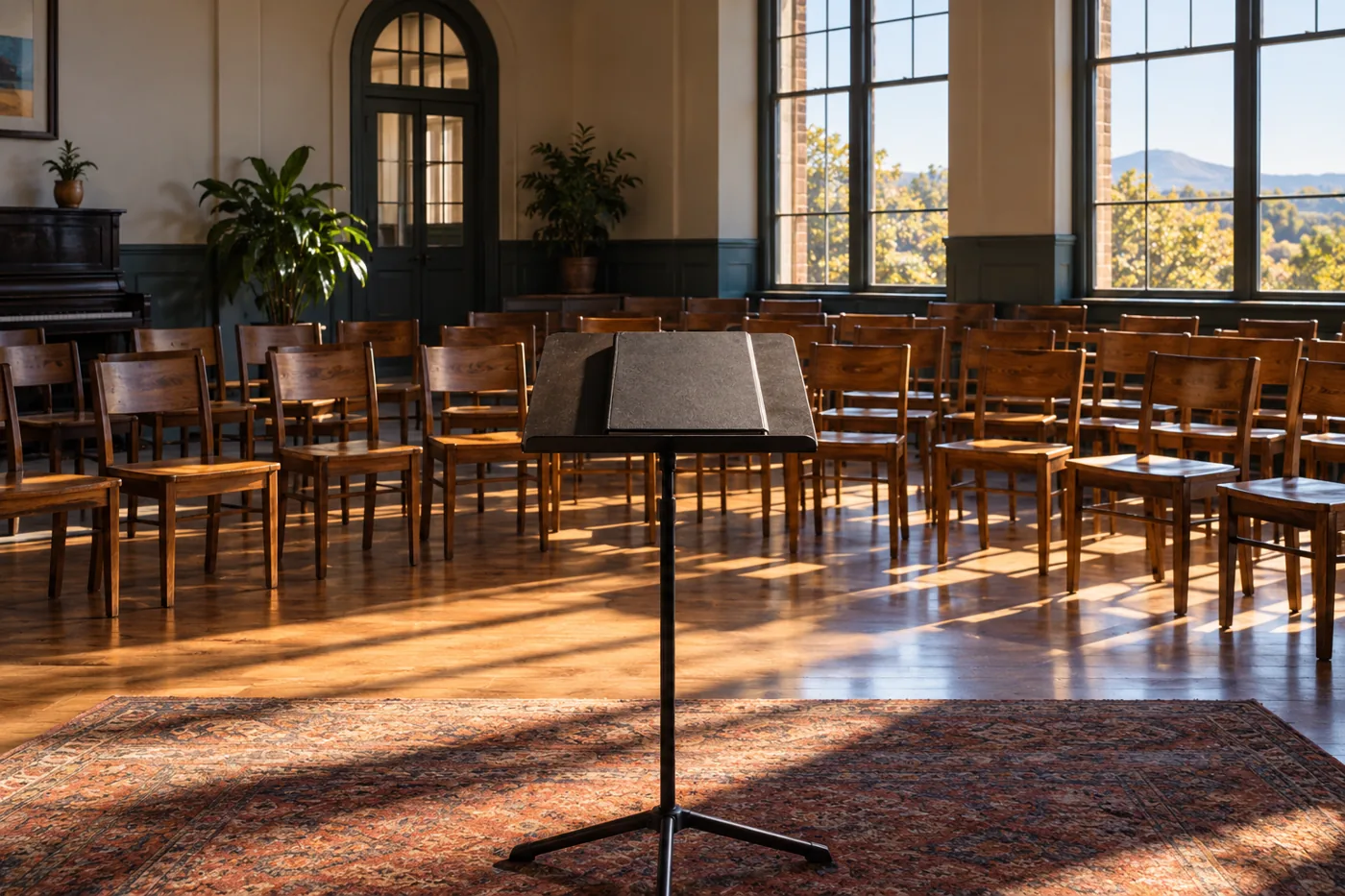
Generated interpretation, not documentary evidence. Imagined choir room with empty chairs and closed folder; not an actual hymn performance or score.
Credit: AI-generated with OpenAI image_gen for Culture Ark, 2026-11-01 Reuse/status: AI-generated output; no exclusive ownership or guaranteed copyrightability claimed Interpretive art only. Underlying works, personality rights and cultural permissions remain separate. No score, choreography or technical reconstruction is supplied.
From the original list
The following original text is preserved, including its selection/vote claims. Preservation is not independent verification of every assertion.
Why: A Xhosa hymn that became the anthem of African liberation.
What to preserve: Lyrics, history, anthem versions
Year and origin: 1897 · South Africa
Vote: 5/9 (historian 2 · future kid 1 · curator 2)
Learn more: Nkosi Sikelel' iAfrika on Wikipedia
Supplemental context
Enoch Sontonga composed the hymn in 1897 while working as a teacher near Johannesburg. The selection invites comparison between a composed song and the meanings it gains through communal singing. Preserving versions with their dates and languages would be more informative than presenting one undifferentiated anthem.
Creator/community: Enoch Sontonga; subsequent choirs, translators and political communities Place/era: South Africa, composed 1897; later regional adaptations
Context and limits
Do not treat every national adaptation as identical or infer that a sacred or political performance may be reproduced without context. The invented choir room represents no actual school, church or historical gathering.
Where to learn more
- https://apiarybee.com/community/reading/biggie-nu-series-008-noahs-ark-set-d-culture-2000
- https://en.wikipedia.org/wiki/Nkosi_Sikelel%27_iAfrika
Apiary library | Original Culture Ark article
Public ID and individual routes: pending publisher allocation. Internal source ID: D-0123
Part of the Culture Ark: 2,000 things people should still be able to see in 2,000 years, picked by AI research teams. This page keeps the original list entry for D-0123 word for word and adds context. Browse the gallery. The Culture Ark is an Artificial Mind Hive (AMH) project. AMH is owned by Austin Little.

Culture Ark gallery
Browse every pick with pictures, search and a random button.
Open the gallery →