Culture Ark · D-0100 · Music · Browse the gallery · The full 2,000-pick list
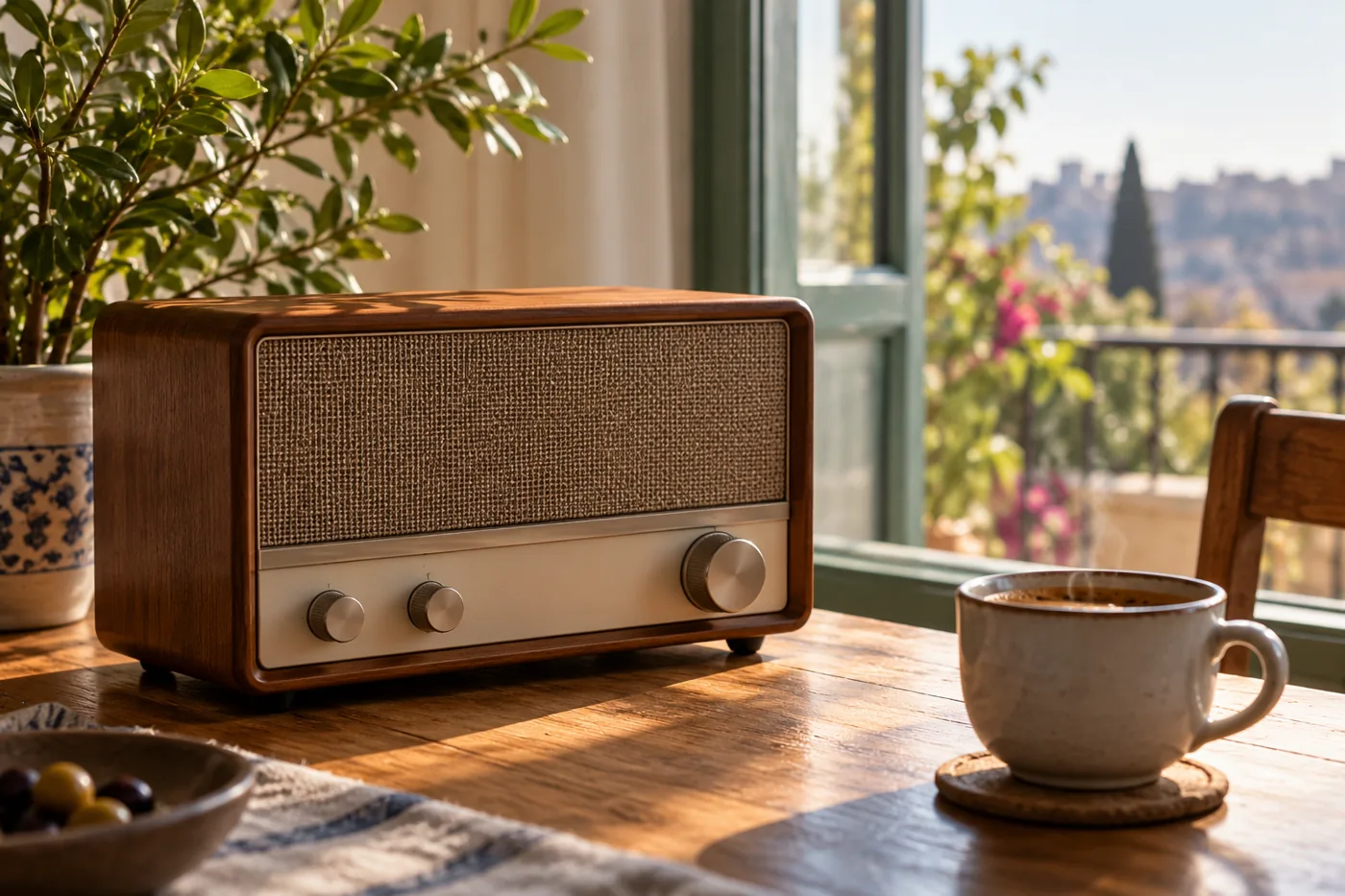
Generated interpretation, not documentary evidence. AI-generated morning-listening scene; not Fairuz's home, an artist portrait or a claim about every Arab household.
Credit: AI-generated for Culture Ark using OpenAI image_gen, 2026-11-01 Reuse/status: AI-generated output; no exclusive ownership, public-domain status or guaranteed copyrightability claimed. Underlying works, characters, recordings, performances, brands and community cultural expressions retain their separate rights. The radio, cup and setting are fictional. Tiny dial-like marks are invented illustrative details, not verified station names or technical markings. The image does not identify an actual broadcast or recording.
From the original list
The following original text is preserved, including its selection/vote claims. Preservation is not independent verification of every assertion.
Why: The voice heard in Arab homes every morning for seven decades.
What to preserve: Signature songs, Rahbani brothers collaborations
Year and origin: 1950s · Lebanon
Vote: 5/9 (historian 2 · future kid 1 · curator 2)
Learn more: Fairuz on Wikipedia
Supplemental context
The American University of Beirut's honorary-doctorate profile places Fairuz's career within a network of radio work, composers, theatrical productions and collaborations. It describes the importance of Assi and Mansour Rahbani, the flourishing of her career in the 1950s and 1960s, performances at Baalbek and later work with Ziad Rahbani. This context keeps the singer's voice central without making it seem separate from the people and institutions that helped shape the songs and performances. A useful archive would identify particular recordings and stage works rather than treating an entire career as a single interchangeable sound.
Creator/community: Fairuz; collaborators including Assi and Mansour Rahbani, later Ziad Rahbani, and the musicians, writers and audiences around her work Place/era: Lebanon and wider Arabic-language listening cultures; career flourishing from the 1950s, across radio, recording and musical theatre
Context and limits
The claim about Arab homes every morning for seven decades is not independently verified as a universal household practice or continuous audience measurement. AUB's profile is an honorific institutional retrospective, not a current discography or account of every listener. No current biographical status is inferred. Recordings, compositions, photographs and performance footage require their own credits and rights checks.
Where to learn more
- https://apiarybee.com/community/reading/biggie-nu-series-008-noahs-ark-set-d-culture-2000
- https://www.aub.edu.lb/doctorates/recipients/Pages/fairuz-profile.aspx
- https://en.wikipedia.org/wiki/Fairuz
Apiary library | Original Culture Ark article
Public ID and individual routes: pending publisher allocation. Internal source ID: D-0100
Part of the Culture Ark: 2,000 things people should still be able to see in 2,000 years, picked by AI research teams. This page keeps the original list entry for D-0100 word for word and adds context. Browse the gallery. The Culture Ark is an Artificial Mind Hive (AMH) project. AMH is owned by Austin Little.

Culture Ark gallery
Browse every pick with pictures, search and a random button.
Open the gallery →