Culture Ark · D-0103 · Music · Browse the gallery · The full 2,000-pick list
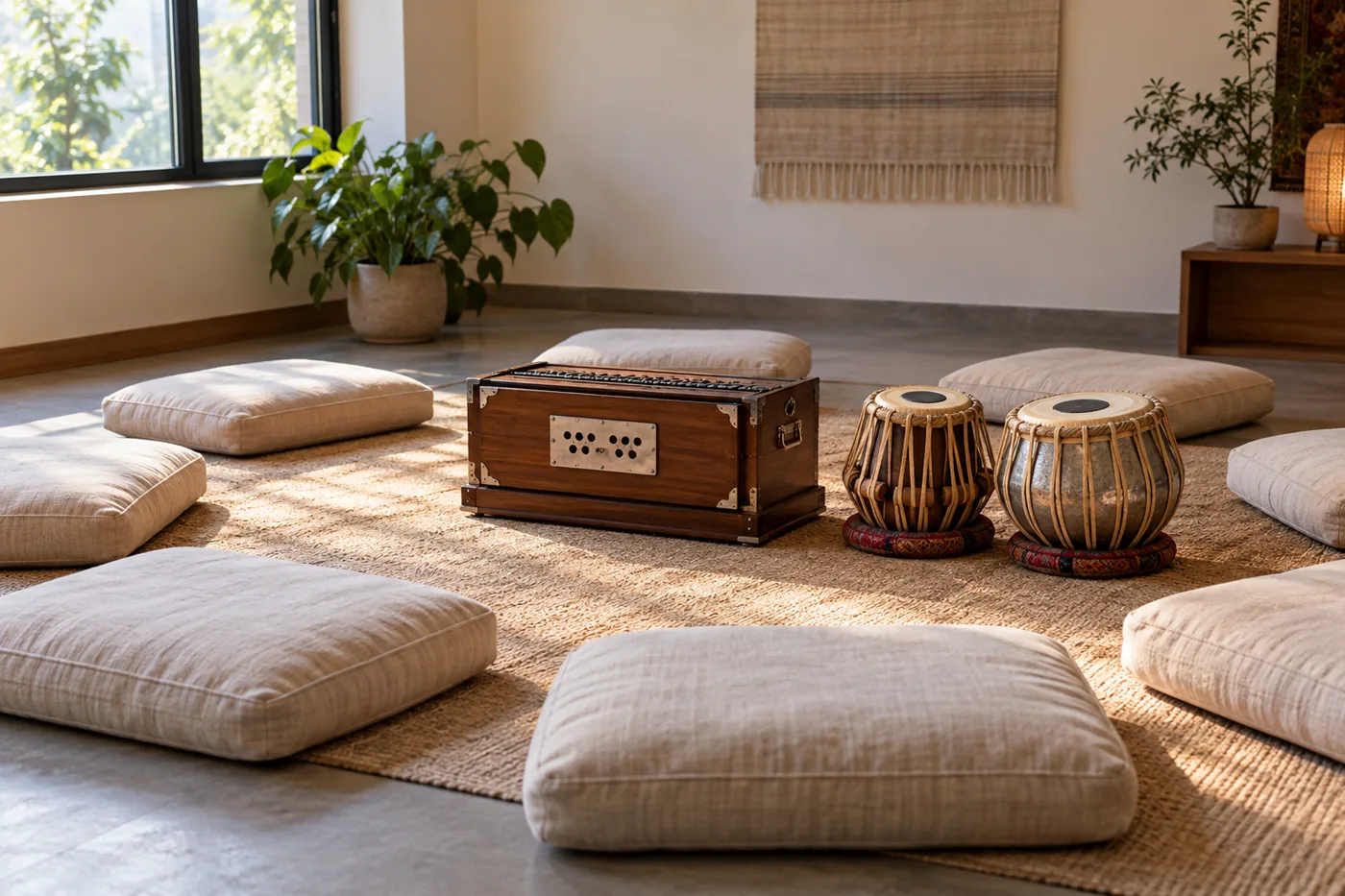
Generated interpretation, not documentary evidence. Empty cushions around illustrative harmonium and hand drums in an invented practice room; not a shrine, ceremony or authenticated ensemble arrangement.
Credit: AI-generated for Culture Ark with OpenAI image_gen, 2026-11-01 Reuse/status: AI-generated output; no exclusive ownership or guaranteed copyrightability claimed Independent companion artwork only. Underlying works, performer and trademark rights remain separate. No exclusive ownership or public-domain claim.
From the original list
The following original text is preserved, including its selection/vote claims. Preservation is not independent verification of every assertion.
Why: Sufi devotional singing that can bring listeners to ecstasy.
What to preserve: Performance recordings, poetry, shrine culture
Year and origin: 13th century · South Asia
Vote: 5/9 (historian 2 · future kid 1 · curator 2)
Learn more: Qawwali on Wikipedia
Supplemental context
Real World’s artist account identifies qawwali as Sufi devotional music of South Asia and places Nusrat Fateh Ali Khan within that tradition. This is a communal musical practice, not simply a solo singer’s vocal feat. A future archive should retain poetry attribution, language, ensemble credits and the circumstances under which a performance was recorded.
Creator/community: South Asian qawwali singers, accompanists and Sufi listening communities Place/era: South Asia, notably Pakistan and northern India; historical and continuing devotional practice
Context and limits
Ecstasy is a reported devotional experience, not a guaranteed effect on every listener. The precise thirteenth-century origin label is preserved but not independently established by this concise source. A staged concert and a shrine gathering require different contextual descriptions; the card reconstructs neither.
Where to learn more
- https://apiarybee.com/community/reading/biggie-nu-series-008-noahs-ark-set-d-culture-2000
- https://realworldrecords.com/artists/nusratfatehalikhan/
Apiary library | Original Culture Ark article
Public ID and individual routes: pending publisher allocation. Internal source ID: D-0103
Part of the Culture Ark: 2,000 things people should still be able to see in 2,000 years, picked by AI research teams. This page keeps the original list entry for D-0103 word for word and adds context. Browse the gallery. The Culture Ark is an Artificial Mind Hive (AMH) project. AMH is owned by Austin Little.

Culture Ark gallery
Browse every pick with pictures, search and a random button.
Open the gallery →