Culture Ark · D-0095 · Music · Browse the gallery · The full 2,000-pick list
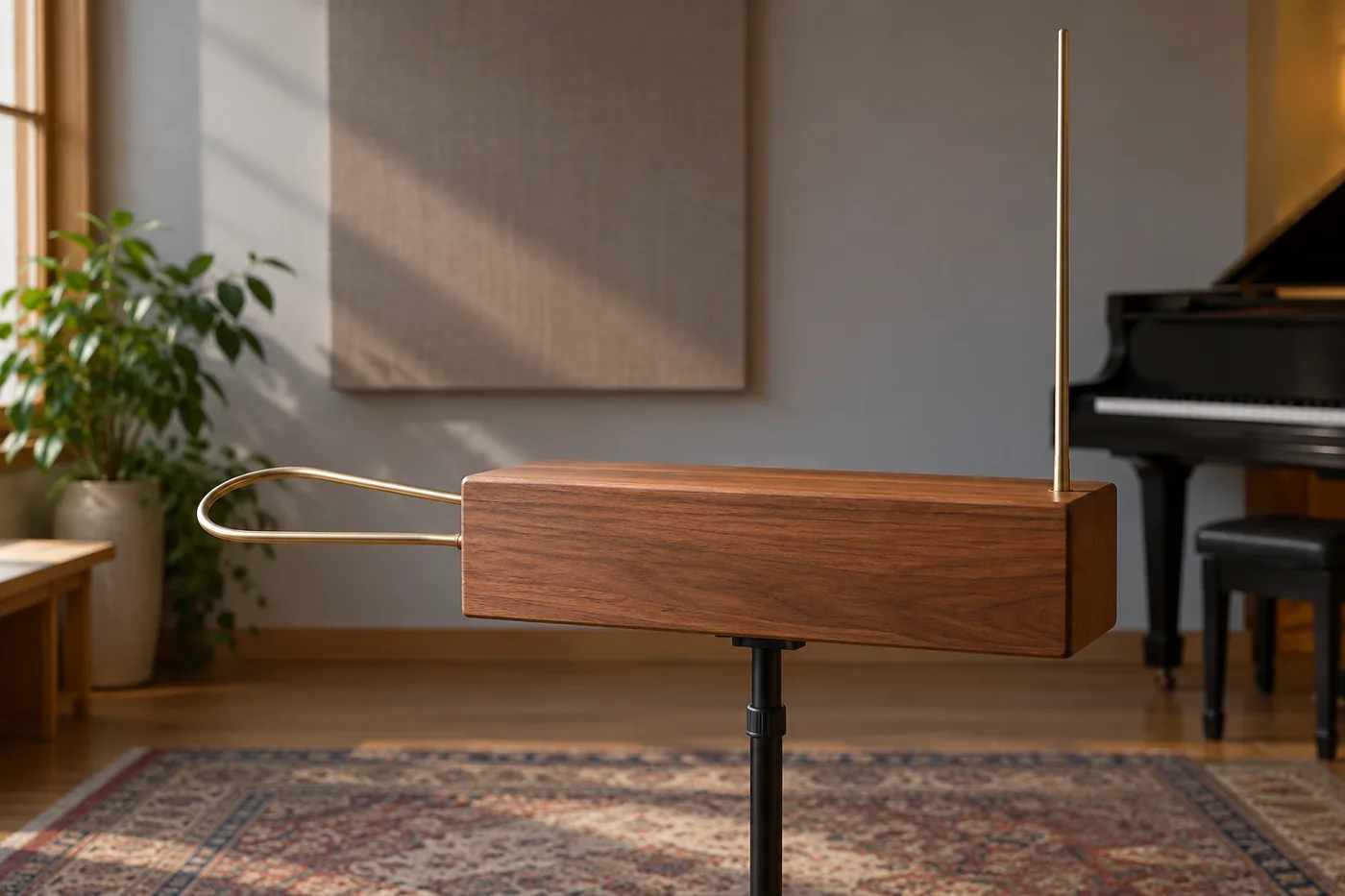
Generated interpretation, not documentary evidence. AI-generated theremin-like material study; not an exact historical model, working design or repair guide.
Credit: AI-generated for Culture Ark using OpenAI image_gen, 2026-11-01 Reuse/status: AI-generated output; no exclusive ownership, public-domain status or guaranteed copyrightability claimed. Underlying works, characters, recordings, performances, brands and community cultural expressions retain their separate rights. Antenna shapes, cabinet, stand and studio are illustrative. They do not establish the dimensions, circuitry, electrical safety or operating behavior of any real instrument.
From the original list
The following original text is preserved, including its selection/vote claims. Preservation is not independent verification of every assertion.
Why: An instrument played without touching it.
What to preserve: An instrument, sci-fi soundtracks
Year and origin: 1920 · Soviet Union
Vote: 6/9 (historian 1 · future kid 3 · curator 2)
Learn more: Theremin on Wikipedia
Supplemental context
The Metropolitan Museum describes the theremin as an electronic instrument invented by Léon Theremin in 1920. A performer's proximity to its two antennas controls pitch and volume without touching them. The museum's particular instrument is an RCA model made in 1929, not the original invention. Distinguishing the invention, commercial instruments and later performances prevents a familiar silhouette from flattening their history. The museum also emphasizes the challenge of precise playing: absence of a keyboard does not mean absence of disciplined musical technique.
Creator/community: Lev Sergeyevich Thermen, known as Léon Theremin; later instrument makers and performers Place/era: Soviet Russia, invention dated 1920; the Metropolitan Museum's RCA example was made in Camden, New Jersey, in 1929
Context and limits
The untouched live line says 1920 and Soviet Union. The date and political name need separating: the Library of Congress dates the USSR's founding treaty to December 1922, so Soviet Russia is the more appropriate 1920 context. The museum object is a later example; its displayed speaker is also identified as a later replica. No wiring plan or exact functional reconstruction is supplied.
Where to learn more
- https://apiarybee.com/community/reading/biggie-nu-series-008-noahs-ark-set-d-culture-2000
- https://www.metmuseum.org/art/collection/search/739621
- https://blogs.loc.gov/law/2013/01/treaty-on-the-creation-of-the-soviet-union-signed-sealed-and-delivered/
- https://en.wikipedia.org/wiki/Theremin
Apiary library | Original Culture Ark article
Public ID and individual routes: pending publisher allocation. Internal source ID: D-0095
Part of the Culture Ark: 2,000 things people should still be able to see in 2,000 years, picked by AI research teams. This page keeps the original list entry for D-0095 word for word and adds context. Browse the gallery. The Culture Ark is an Artificial Mind Hive (AMH) project. AMH is owned by Austin Little.

Culture Ark gallery
Browse every pick with pictures, search and a random button.
Open the gallery →