Culture Ark · D-0091 · Music · Browse the gallery · The full 2,000-pick list
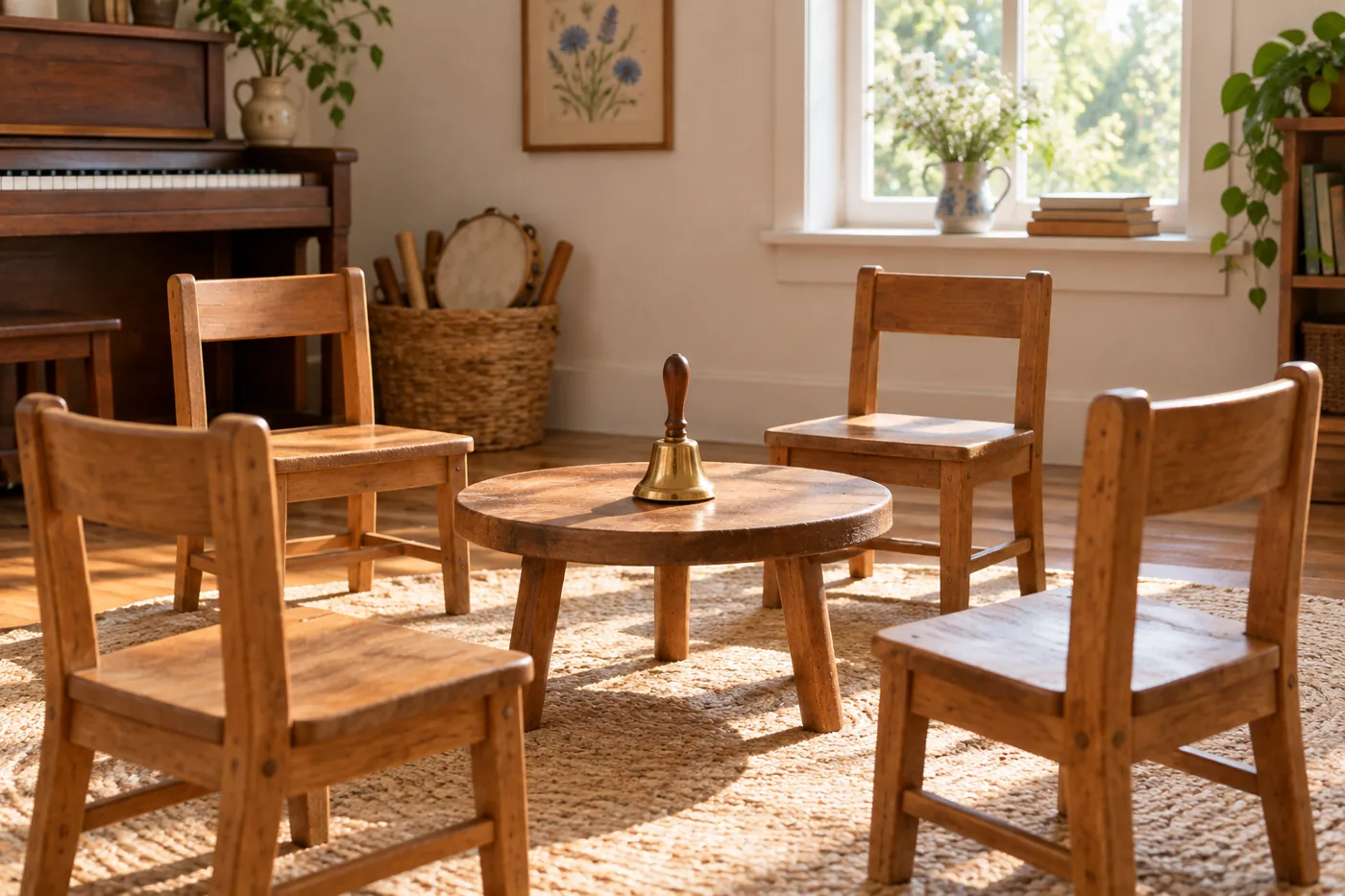
Generated interpretation, not documentary evidence. AI-generated setting for shared round singing; not a historical classroom, named performance or musical notation.
Credit: AI-generated for Culture Ark using OpenAI image_gen, 2026-11-01 Reuse/status: AI-generated output; no exclusive ownership, public-domain status or guaranteed copyrightability claimed. Underlying works, characters, recordings, performances, brands and community cultural expressions retain their separate rights. The bell and circle are visual associations, not evidence of the song's origin or a diagram specifying when voices enter. No actual children, singers or historical interior are represented.
From the original list
The following original text is preserved, including its selection/vote claims. Preservation is not independent verification of every assertion.
Why: A nursery round sung in dozens of languages.
What to preserve: Lyrics, round singing
Year and origin: 18th century · France
Vote: 6/9 (historian 2 · future kid 2 · curator 2)
Learn more: Frère Jacques on Wikipedia
Supplemental context
Frère Jacques is useful to preserve as an activity, not only as a tune. In a round, groups enter the same melody at different times, so an apparently simple song becomes an exercise in listening while continuing one's own part. The linked reference describes late eighteenth-century manuscript evidence and discusses a proposed attribution to Jean-Philippe Rameau. That proposal should not silently become an uncontested composer credit. A careful archive would distinguish a particular manuscript, printed edition, translation, arrangement and recorded performance rather than treating them as interchangeable copies of one timeless object.
Creator/community: Traditional French round and successive communities of singers; precise authorship remains qualified Place/era: France; late eighteenth-century manuscript evidence, with later publications and multilingual adaptations
Context and limits
The original eighteenth-century date is broad context, not a verified first-publication date. The secondary reference reports differing publication histories and an authorship proposal; these remain questions for manuscript-level research. The claim about dozens of languages has not been independently counted here. An old melody does not make every modern translation, arrangement or sound recording unrestricted.
Where to learn more
- https://apiarybee.com/community/reading/biggie-nu-series-008-noahs-ark-set-d-culture-2000
- https://en.wikipedia.org/wiki/Fr%C3%A8re_Jacques
Apiary library | Original Culture Ark article
Public ID and individual routes: pending publisher allocation. Internal source ID: D-0091
Part of the Culture Ark: 2,000 things people should still be able to see in 2,000 years, picked by AI research teams. This page keeps the original list entry for D-0091 word for word and adds context. Browse the gallery. The Culture Ark is an Artificial Mind Hive (AMH) project. AMH is owned by Austin Little.

Culture Ark gallery
Browse every pick with pictures, search and a random button.
Open the gallery →