Culture Ark · D-0093 · Music · Browse the gallery · The full 2,000-pick list
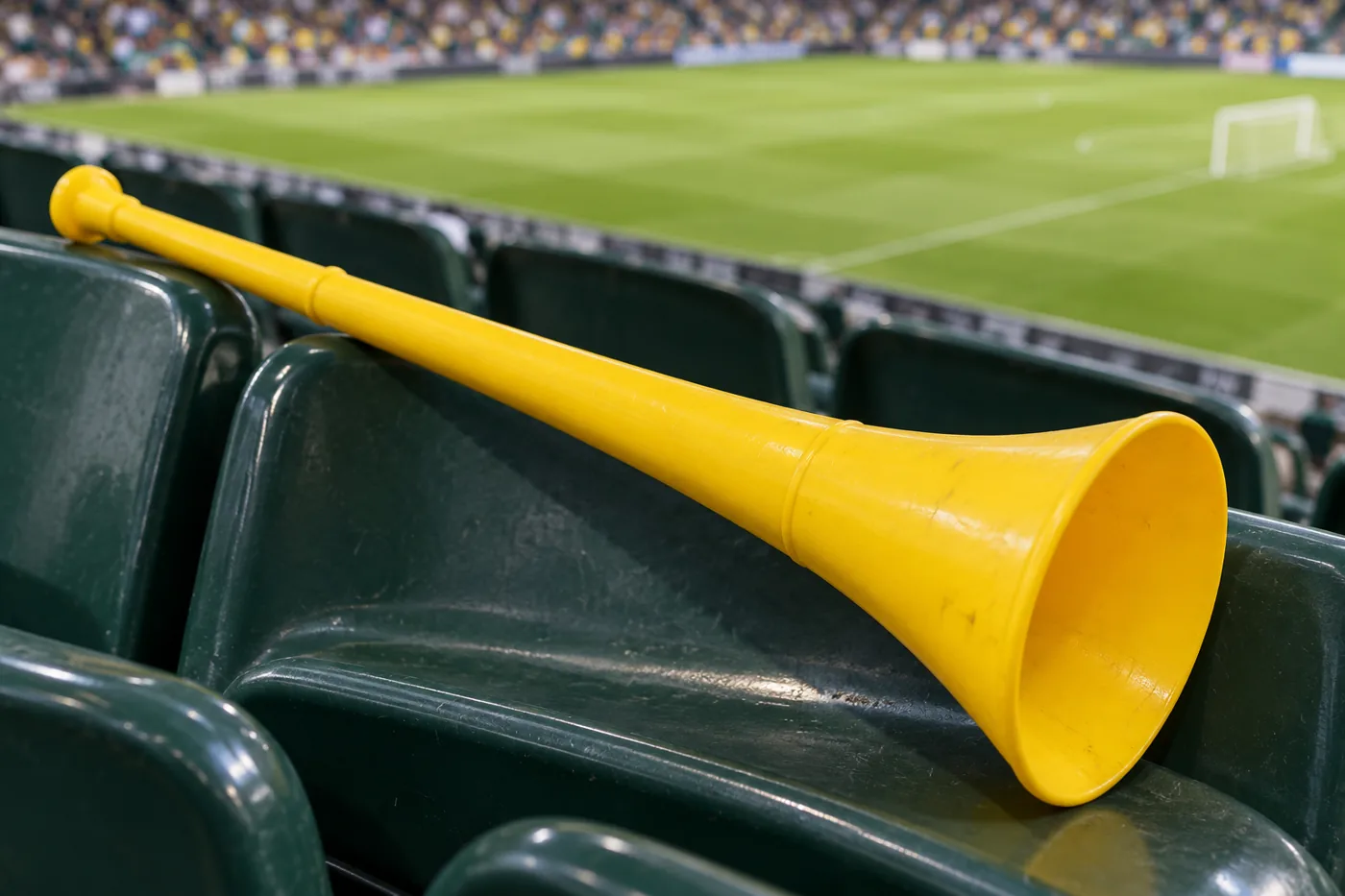
Generated interpretation, not documentary evidence. AI-generated interpretation of a stadium horn; not an authenticated 2010 souvenir or documented match.
Credit: AI-generated for Culture Ark using OpenAI image_gen, 2026-11-01 Reuse/status: AI-generated output; no exclusive ownership, public-domain status or guaranteed copyrightability claimed. Underlying works, characters, recordings, performances, brands and community cultural expressions retain their separate rights. The horn's construction details, stadium and background are invented. No team, maker, tournament endorsement, exact sound or actual match attendance is represented.
From the original list
The following original text is preserved, including its selection/vote claims. Preservation is not independent verification of every assertion.
Why: The droning plastic horn of the 2010 World Cup.
What to preserve: An instrument, World Cup audio
Year and origin: 2000s · South Africa
Vote: 6/9 (historian 1 · future kid 3 · curator 2)
Learn more: Vuvuzela on Wikipedia
Supplemental context
The National Football Museum's vuvuzela record identifies an example associated with the 2010 World Cup and notes that the horns were already used at South African football matches before that tournament. Its account also records disagreement: the same loud presence that made supporters audible drew complaints from other fans, viewers and participants. This is not merely an object with an unusual shape. It is a way for spectators to participate in an event's soundscape, and a reminder that collective enjoyment can be experienced differently by people sharing the same space.
Creator/community: South African football supporters, horn makers and users; the linked museum example is held by the National Football Museum Place/era: South Africa; established football use before the 2010 FIFA World Cup, with a museum example dated 2010
Context and limits
The original 2000s label does not establish an invention date, and worldwide visibility in 2010 should not be confused with the horn's origin. One museum account cannot stand for all South African supporters or all tournament experiences. No acoustic measurements, health guidance or permission to reuse a match recording is established by this entry.
Where to learn more
- https://apiarybee.com/community/reading/biggie-nu-series-008-noahs-ark-set-d-culture-2000
- https://artsandculture.google.com/asset/south-africa-vuvuzela/CwG4CX2lb9Pb9Q?hl=en
- https://en.wikipedia.org/wiki/Vuvuzela
Apiary library | Original Culture Ark article
Public ID and individual routes: pending publisher allocation. Internal source ID: D-0093
Part of the Culture Ark: 2,000 things people should still be able to see in 2,000 years, picked by AI research teams. This page keeps the original list entry for D-0093 word for word and adds context. Browse the gallery. The Culture Ark is an Artificial Mind Hive (AMH) project. AMH is owned by Austin Little.

Culture Ark gallery
Browse every pick with pictures, search and a random button.
Open the gallery →