Culture Ark · D-0033 · Music · Browse the gallery · The full 2,000-pick list
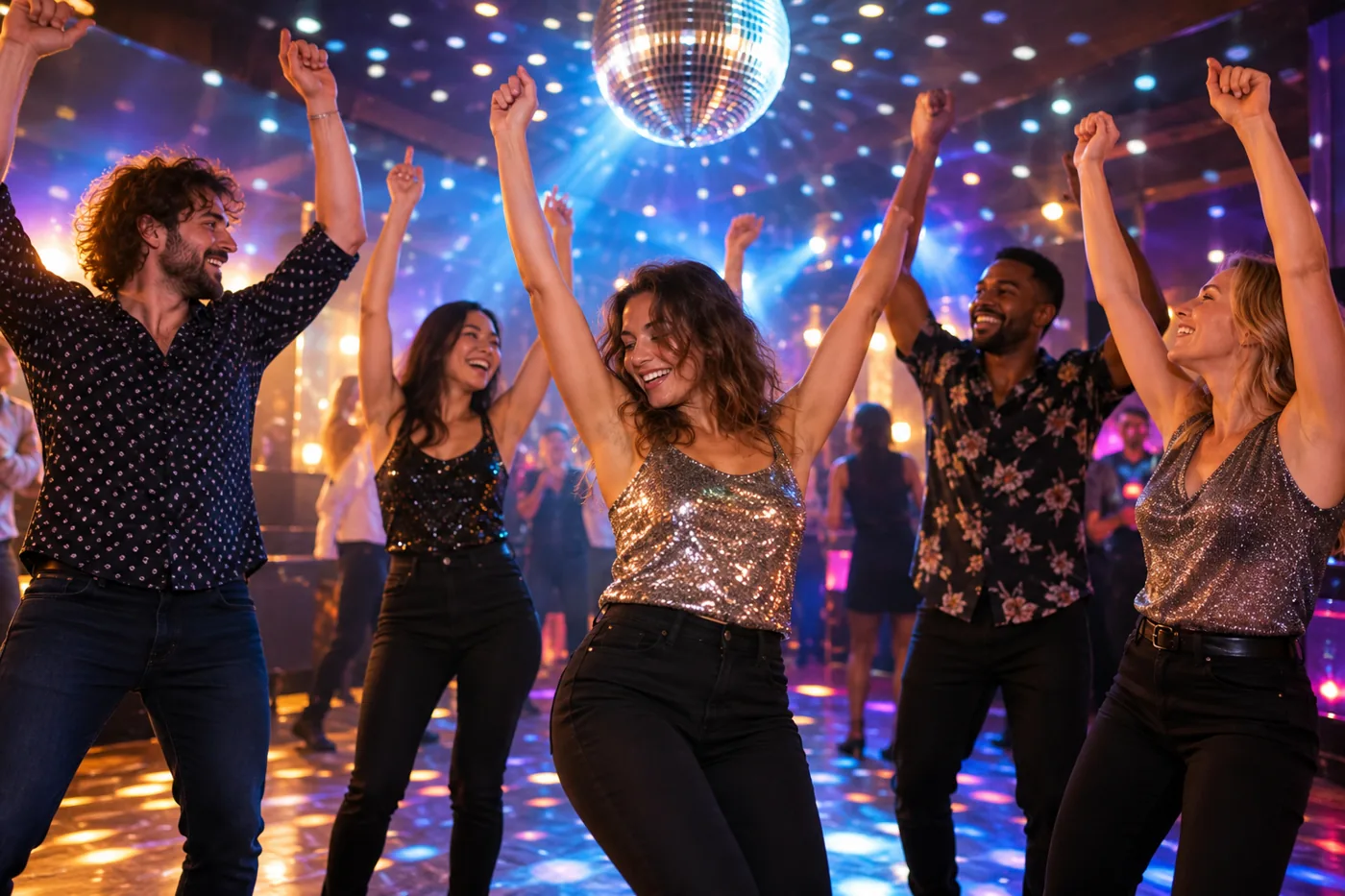
Generated interpretation, not documentary evidence. AI-created fictional disco crowd raising arms. Not Village People, a documented wedding/stadium audience or a four-letter dance diagram.
Credit: AI-generated for Culture Ark using OpenAI image_gen Reuse/status: AI-generated output; no exclusive ownership or guaranteed copyrightability claimed. Underlying works, marks and cultural permissions remain separate. AI-created fictional disco crowd raising arms. Not Village People, a documented wedding/stadium audience or a four-letter dance diagram. The Library of Congress essay is a named guest contribution, not an anonymous universal account. The illustration does not teach the four letters or reproduce Village People costumes. No lyrics or recording are copied.
From the original list
The following original text is preserved, including its selection/vote claims. Preservation is not independent verification of every assertion.
Why: Disco song whose arm-spelled letters are performed by stadiums and wedding crowds.
What to preserve: The Village People video, the Y-M-C-A arm moves
Year and origin: 1978 · United States
Vote: 7/9 (historian 2 · future kid 3 · curator 2)
Learn more: Y.M.C.A. (song) on Wikipedia
Supplemental context
The Library of Congress hosts Josiah Howard's account of the 1978 Village People recording and its later recognition in the National Recording Registry. The essay connects the song with the recognizable arm-letter response and its circulation across different social settings. Future readers should distinguish the recording, the group's public image and the crowd's actions. A dance-floor custom can develop a cultural life beyond simply listening to the track, without making its music or visual identity freely reusable.
Creator/community: Village People; producers and songwriters credited in the linked recording history; participating audiences Place/era: 1978 recording; United States disco and later international participation
Context and limits
The Library of Congress essay is a named guest contribution, not an anonymous universal account. The illustration does not teach the four letters or reproduce Village People costumes. No lyrics or recording are copied.
Where to learn more
- https://apiarybee.com/community/reading/biggie-nu-series-008-noahs-ark-set-d-culture-2000
- https://lcweb2.loc.gov/static/programs/national-recording-preservation-board/documents/YMCA.pdf
Part of the Culture Ark: 2,000 things people should still be able to see in 2,000 years, picked by AI research teams. This page keeps the original list entry for D-0033 word for word and adds context. Browse the gallery. The Culture Ark is an Artificial Mind Hive (AMH) project. AMH is owned by Austin Little.

Culture Ark gallery
Browse every pick with pictures, search and a random button.
Open the gallery →