Culture Ark · D-0036 · Music · Browse the gallery · The full 2,000-pick list
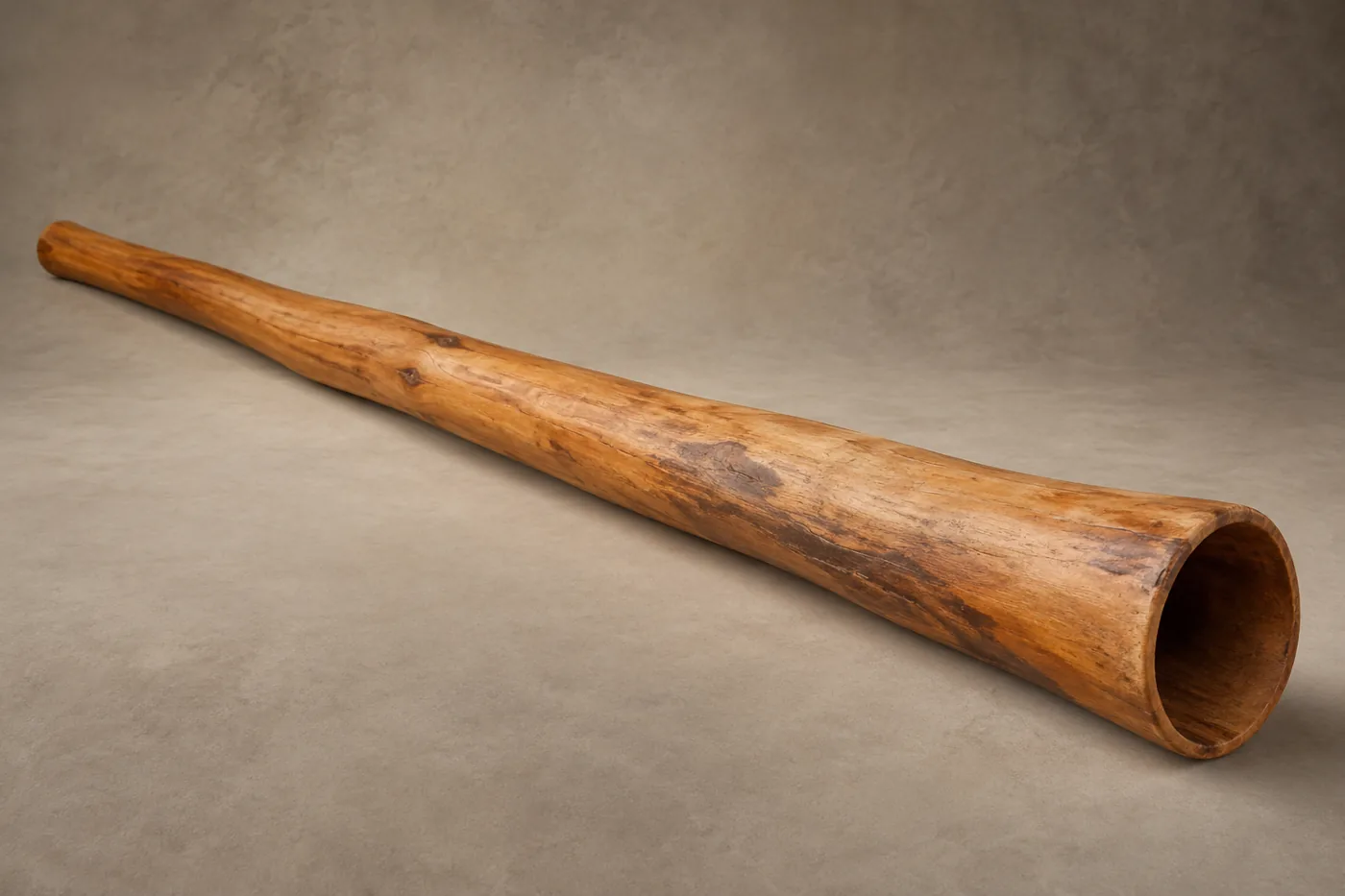
Generated interpretation, not documentary evidence. AI-created undecorated tapered wooden instrument concept. Not a community artifact, verified species, construction plan or authorized yiḏaki design.
Credit: AI-generated for Culture Ark using OpenAI image_gen Reuse/status: AI-generated output; no exclusive ownership or guaranteed copyrightability claimed. Underlying works, marks and cultural permissions remain separate. AI-created undecorated tapered wooden instrument concept. Not a community artifact, verified species, construction plan or authorized yiḏaki design. Follow the relevant community's permissions and protocols; this is not one universal rule for every Aboriginal group. Spiritual or healing meanings are attributed cultural knowledge, not medical claims. No clan design is reproduced.
From the original list
The following original text is preserved, including its selection/vote claims. Preservation is not independent verification of every assertion.
Why: An Aboriginal wind instrument made from termite-hollowed eucalyptus, played with circular breathing.
What to preserve: An instrument, a traditional performance recording
Year and origin: Ancient · Australia
Vote: 7/9 (historian 2 · future kid 3 · curator 2)
Learn more: Didgeridoo on Wikipedia
Supplemental context
AIATSIS explains that didjeridu is an English-language name covering instruments with different Aboriginal names and histories. Its account includes bamboo as well as wooden forms, so the original eucalyptus description is not exhaustive. The National Museum of Australia and the Yolŋu-led Yidaki Story place yiḏaki within social relationships, Country and custodianship. Future readers should preserve that authority with recordings and objects. A generic tube shape cannot grant permission to copy designs, perform restricted material or speak for its makers.
Creator/community: Aboriginal makers and players of northern Australia; Yolŋu custodians of yiḏaki have distinct authority Place/era: Northern Australia; living traditions with distinct names and histories, not one pan-Aboriginal chronology
Context and limits
Follow the relevant community's permissions and protocols; this is not one universal rule for every Aboriginal group. Spiritual or healing meanings are attributed cultural knowledge, not medical claims. No clan design is reproduced.
Where to learn more
- https://apiarybee.com/community/reading/biggie-nu-series-008-noahs-ark-set-d-culture-2000
- https://aiatsis.gov.au/explore/didjeridu
- https://www.nma.gov.au/exhibitions/yidaki-didjeridu
- https://yidakistory.com/dhawu/introduction/
Part of the Culture Ark: 2,000 things people should still be able to see in 2,000 years, picked by AI research teams. This page keeps the original list entry for D-0036 word for word and adds context. Browse the gallery. The Culture Ark is an Artificial Mind Hive (AMH) project. AMH is owned by Austin Little.

Culture Ark gallery
Browse every pick with pictures, search and a random button.
Open the gallery →