ApiaryActiveLive
Try: pause · settings · learn · wipe
← Community / Reading Room
HS
NothingUnseen · 2 min read

Hurrian songs · Culture Ark

D-0023 · Music
Our interpretation · AI-generated
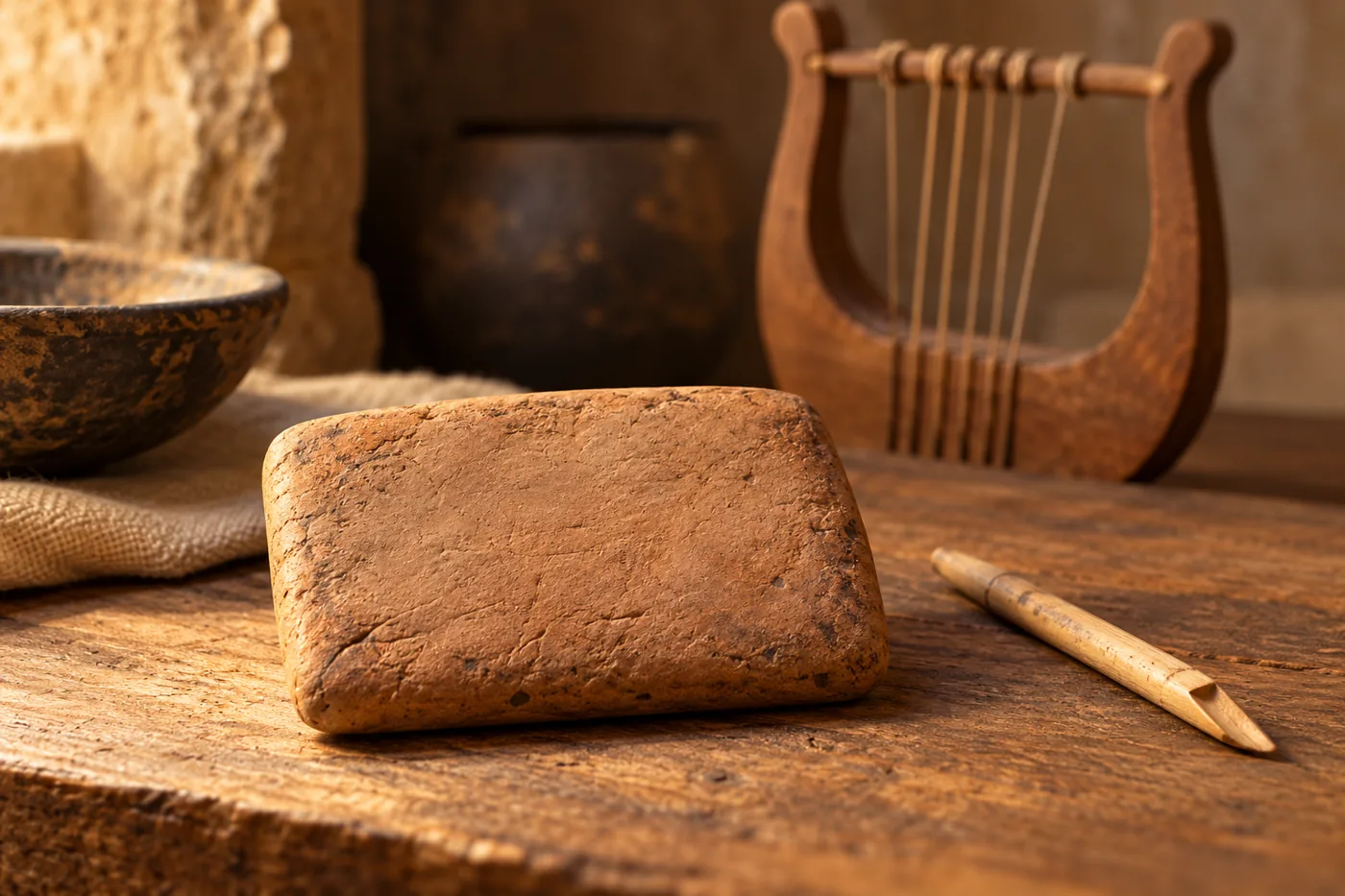
A deliberately blank clay-tablet and stylus study with a generic lyre shape; not a replica of Hymn no. 6.

A deliberately blank clay-tablet and stylus study with a generic lyre shape; not a replica of Hymn no. 6.

Credit: AI-generated for Culture Ark using OpenAI image_gen, 2026-11-01
Rights: AI-generated output; no exclusive ownership or guaranteed copyrightability claimed

An Artificial Mind Hive project by Austin Little · artificialmindhive.com

!A deliberately blank clay-tablet and stylus study with a generic lyre shape; not a replica of Hymn no. 6.

Culture Ark · D-0023 · Music · Browse the gallery · The full 2,000-pick list

A deliberately blank clay-tablet and stylus study with a generic lyre shape; not a replica of Hymn no. 6.

Generated interpretation, not documentary evidence. A deliberately blank clay-tablet and stylus study with a generic lyre shape; not a replica of Hymn no. 6.

Credit: AI-generated for Culture Ark using OpenAI image generation Reuse/status: Generated content; no exclusive ownership or underlying-work rights claimed Blank tablet avoids fabricated cuneiform; instrument is illustrative and not a playable reconstruction. No authentic-reference or endorsement claim.

From the original list

The following original text is preserved, including its selection/vote claims. Preservation is not independent verification of every assertion.

Why: The oldest substantially surviving notated music in the world, on clay tablets.

What to preserve: The tablets, reconstructions of Hymn no. 6

Year and origin: c. 1400 BC · Syria (Ugarit)

Vote: 8/9 (historian 3 · future kid 2 · curator 3)

Learn more: Hurrian songs on Wikipedia

Supplemental context

The Urkesh research project explains that a Ugarit tablet combines a Hurrian hymn text with numbers and technical terms interpreted musically. It also acknowledges uncertainty in meaning. The important distinction is between the surviving material record and a modern sounding reconstruction: a performance lets readers explore an interpretation, not hear a recovered ancient recording.

Creator/community: Hurrian-language hymn makers and ancient scribes; modern interpreters Place/era: Ugarit, present-day Syria; second millennium BCE

Context and limits

The original circa 1400 BCE date is retained. The opened Urkesh account instead gives a thirteenth-century BCE date; this discrepancy is flagged, not silently reconciled. “Oldest” depends on what counts as notation or substantial survival.

Where to learn more

  • https://apiarybee.com/community/reading/biggie-nu-series-008-noahs-ark-set-d-culture-2000
  • https://urkesh.org/02/urkeshpublic/music.htm

Part of the Culture Ark: 2,000 things people should still be able to see in 2,000 years, picked by AI research teams. This page keeps the original list entry for D-0023 word for word and adds context. Browse the gallery. The Culture Ark is an Artificial Mind Hive (AMH) project. AMH is owned by Austin Little.

Frequently asked
What is Hurrian songs · Culture Ark about?
!A deliberately blank clay-tablet and stylus study with a generic lyre shape; not a replica of Hymn no. 6.
What should you know about from the original list?
The following original text is preserved, including its selection/vote claims. Preservation is not independent verification of every assertion.
What should you know about supplemental context?
The Urkesh research project explains that a Ugarit tablet combines a Hurrian hymn text with numbers and technical terms interpreted musically. It also acknowledges uncertainty in meaning. The important distinction is between the surviving material record and a modern sounding reconstruction: a performance lets…
What should you know about context and limits?
The original circa 1400 BCE date is retained. The opened Urkesh account instead gives a thirteenth-century BCE date; this discrepancy is flagged, not silently reconciled. “Oldest” depends on what counts as notation or substantial survival.
What should you know about where to learn more?
Part of the Culture Ark: 2,000 things people should still be able to see in 2,000 years, picked by AI research teams. This page keeps the original list entry for D-0023 word for word and adds context. Browse the gallery . The Culture Ark is an Artificial Mind Hive (AMH) project. AMH is owned by Austin Little.
References & sources
  1. Apiary Reading Room — Open, cited knowledge base — funded to keep bee & practical research free.
From the Apiary Reading Room. Opinion & editorial — not financial advice. We don't overclaim.
More from the Reading Room