Culture Ark · D-0025 · Music · Browse the gallery · The full 2,000-pick list
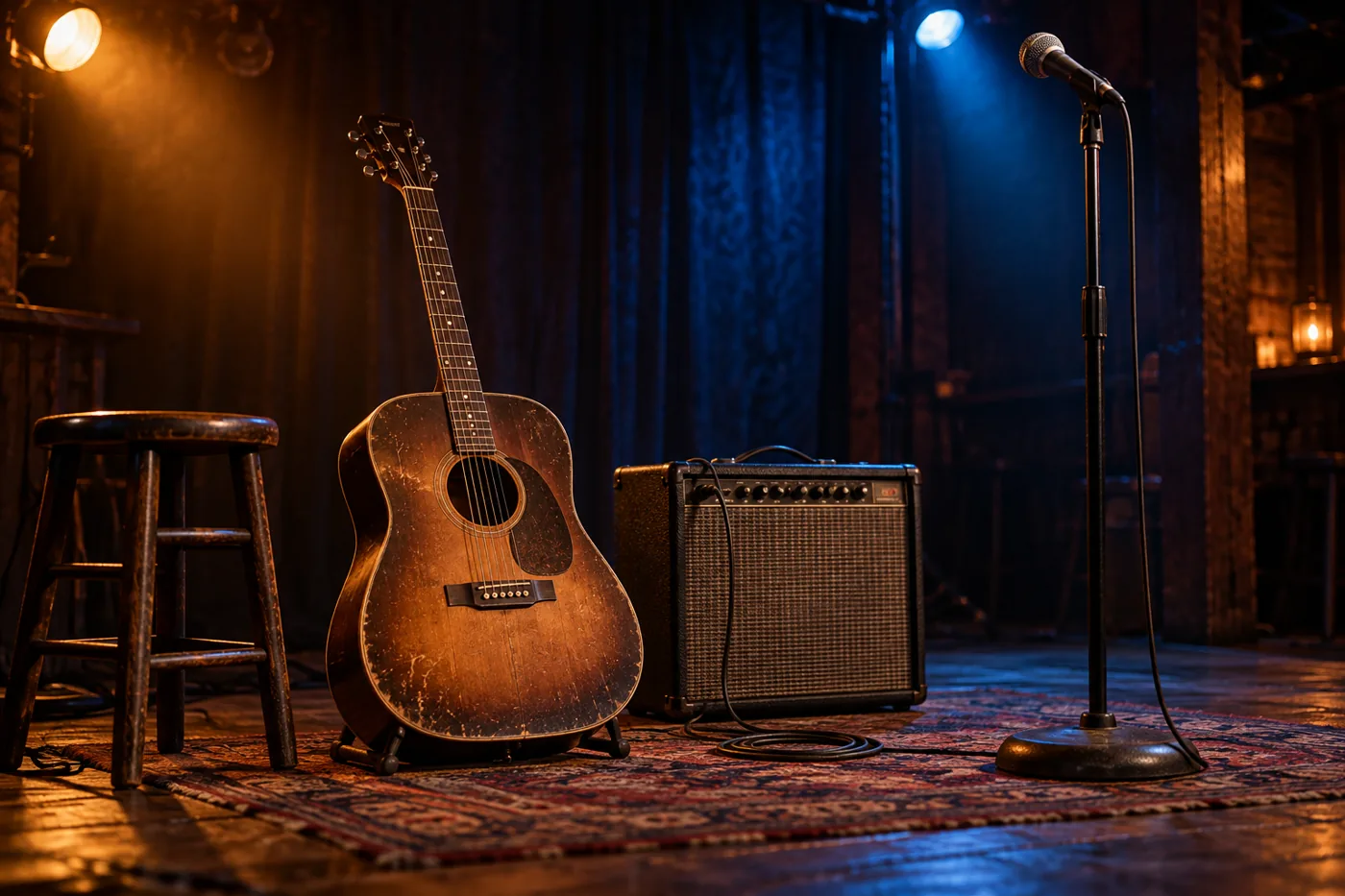
Generated interpretation, not documentary evidence. Generic guitar, amplifier and microphone on an invented stage, not Robert Johnson’s belongings.
Credit: AI-generated for Culture Ark using OpenAI image generation Reuse/status: Generated content; no exclusive ownership or underlying-work rights claimed Instrument silhouettes are clear; small surface marks are not asserted as brands or artifact inscriptions. No authentic-reference or endorsement claim.
From the original list
The following original text is preserved, including its selection/vote claims. Preservation is not independent verification of every assertion.
Why: The music of African American hardship that is the root of rock and roll.
What to preserve: Robert Johnson recordings, 12-bar form
Year and origin: 1860s · United States
Vote: 8/9 (historian 3 · future kid 2 · curator 3)
Learn more: Blues on Wikipedia
Supplemental context
The National Museum of African American Music traces blues through the post-slavery South, Delta performers and migration to cities. Its account includes both hardship and hope, and connects acoustic traditions with changing urban styles. Preserving those changes helps future listeners avoid reducing a diverse living music to a single mood, instrument or famous performer.
Creator/community: African American musicians and communities; subsequent performers Place/era: United States; nineteenth-century roots and continuing traditions
Context and limits
The original 1860s label is broad chronology, not a verified invention date. Twelve-bar form is useful context, not a definition of every blues performance. Robert Johnson is one figure among many; recordings remain distinct copyrighted objects.
Where to learn more
- https://apiarybee.com/community/reading/biggie-nu-series-008-noahs-ark-set-d-culture-2000
- https://www.nmaam.org/exhibit/crossroads/
Part of the Culture Ark: 2,000 things people should still be able to see in 2,000 years, picked by AI research teams. This page keeps the original list entry for D-0025 word for word and adds context. Browse the gallery. The Culture Ark is an Artificial Mind Hive (AMH) project. AMH is owned by Austin Little.

Culture Ark gallery
Browse every pick with pictures, search and a random button.
Open the gallery →