Culture Ark · D-0027 · Music · Browse the gallery · The full 2,000-pick list
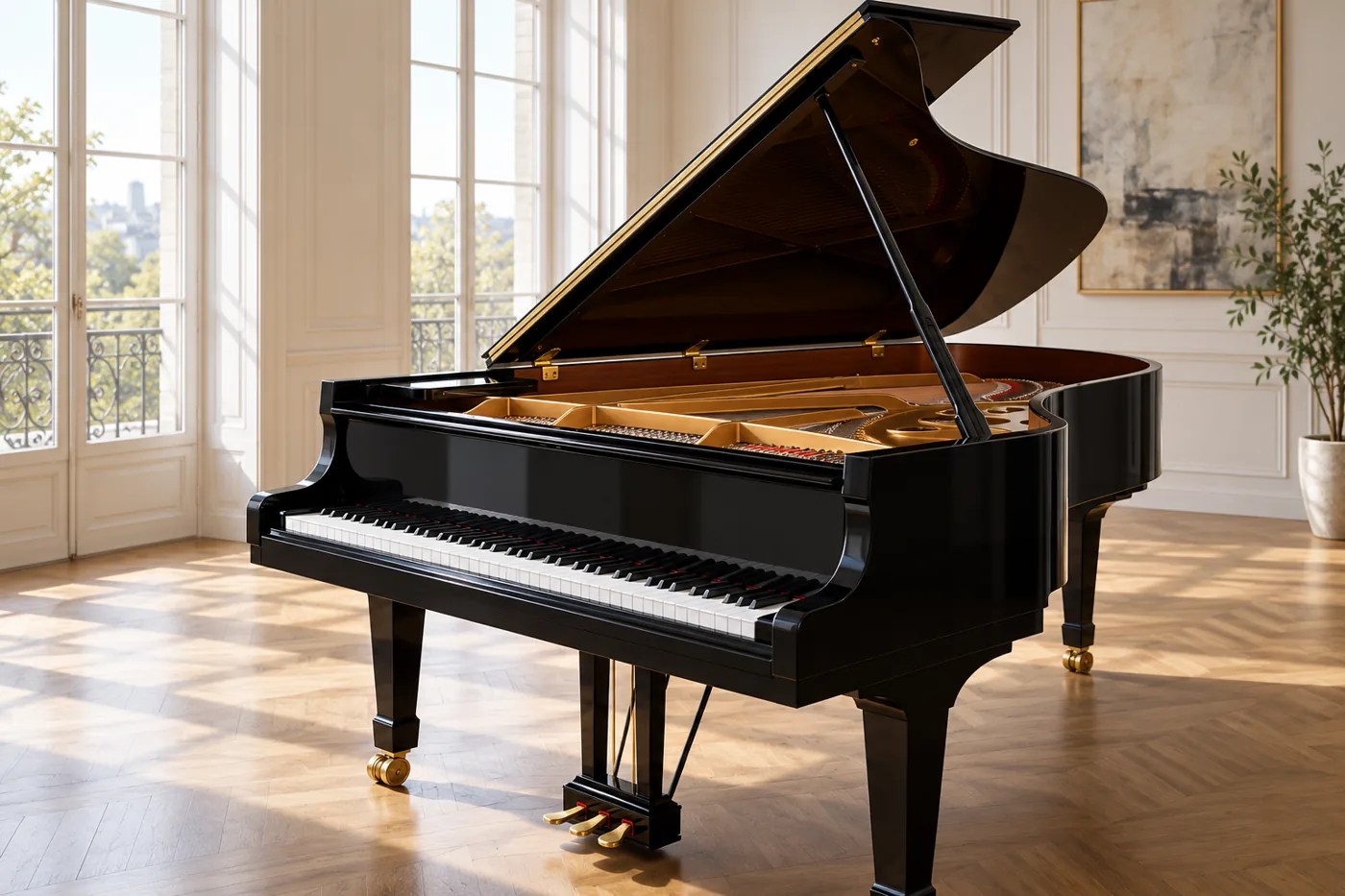
Generated interpretation, not documentary evidence. An invented modern grand piano in a music room, not the Met’s 1720 instrument.
Credit: AI-generated for Culture Ark using OpenAI image generation Reuse/status: Generated content; no exclusive ownership or underlying-work rights claimed Overall instrument and keyboard are legible; internal details are illustrative rather than engineering evidence. No authentic-reference or endorsement claim.
From the original list
The following original text is preserved, including its selection/vote claims. Preservation is not independent verification of every assertion.
Why: The universal instrument of homes and concert halls.
What to preserve: An instrument, Cristofori design
Year and origin: c. 1700 · Italy
Vote: 8/9 (historian 3 · future kid 2 · curator 3)
Learn more: Piano on Wikipedia
Supplemental context
The Metropolitan Museum explains the piano through a hammer action that permits changes of loudness with touch. Its surviving 1720 Cristofori instrument differs substantially from a modern grand in range and tone. A future archive can compare these forms instead of imagining that the familiar concert instrument appeared fully formed and unchanged.
Creator/community: Bartolomeo Cristofori; later piano makers, players and teachers Place/era: Italy around 1700; later international development
Context and limits
“Universal” in the preserved text is rhetorical: access and cultural use have never been uniform. The generated modern grand is not a Cristofori instrument, technical plan or demonstration of its historical sound.
Where to learn more
- https://apiarybee.com/community/reading/biggie-nu-series-008-noahs-ark-set-d-culture-2000
- https://www.metmuseum.org/de/essays/the-piano-the-pianofortes-of-bartolomeo-cristofori-1655-1731
Part of the Culture Ark: 2,000 things people should still be able to see in 2,000 years, picked by AI research teams. This page keeps the original list entry for D-0027 word for word and adds context. Browse the gallery. The Culture Ark is an Artificial Mind Hive (AMH) project. AMH is owned by Austin Little.

Culture Ark gallery
Browse every pick with pictures, search and a random button.
Open the gallery →