ApiaryActiveLive
Try: pause · settings · learn · wipe
← Community / Reading Room
R·
NothingUnseen · 2 min read

Reggae · Culture Ark

D-0019 · Music
Our interpretation · AI-generated
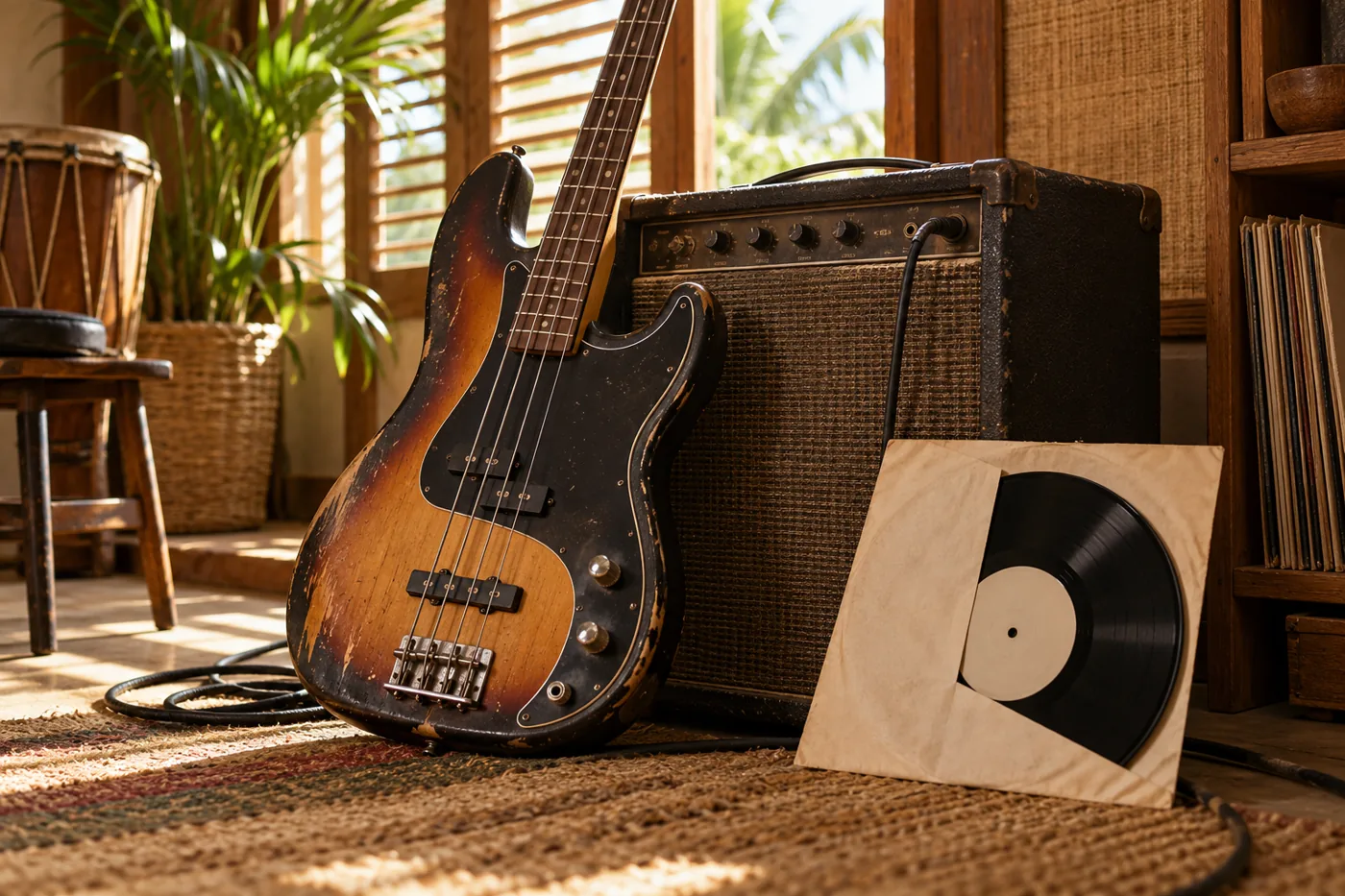
Generic bass, amplifier and blank-label record in a fictional room; tiny amplifier marks are not factual labels.

Generic bass, amplifier and blank-label record in a fictional room; tiny amplifier marks are not factual labels.

Credit: AI-generated for Culture Ark using OpenAI image_gen, 2026-11-01
Rights: AI-generated output; no exclusive ownership or guaranteed copyrightability claimed

An Artificial Mind Hive project by Austin Little · artificialmindhive.com

!Generic bass, amplifier and blank-label record in a fictional room; tiny amplifier marks are not factual labels.

Culture Ark · D-0019 · Music · Browse the gallery · The full 2,000-pick list

Generic bass, amplifier and blank-label record in a fictional room; tiny amplifier marks are not factual labels.

Generated interpretation, not documentary evidence. Generic bass, amplifier and blank-label record in a fictional room; tiny amplifier marks are not factual labels.

Credit: AI-generated for Culture Ark using OpenAI image_gen, 2026-11-01 Reuse/status: AI-generated output; no exclusive ownership or guaranteed copyrightability claimed Independent companion artwork only. Underlying works, performer and trademark rights remain separate. No exclusive ownership or public-domain claim.

From the original list

The following original text is preserved, including its selection/vote claims. Preservation is not independent verification of every assertion.

Why: Jamaica's offbeat music of resistance, love and Rastafari.

What to preserve: Classic recordings, sound system culture

Year and origin: 1960s · Jamaica

Vote: 8/9 (historian 3 · future kid 2 · curator 3)

Learn more: Reggae on Wikipedia

Supplemental context

UNESCO describes reggae’s development through earlier Jamaican styles and exchanges with other musical traditions. Its subjects include injustice, resistance, love and the human condition. A selection attentive to producers, audiences and teaching would show why reggae is more than a list of famous singers or a single rhythmic stereotype.

Creator/community: Jamaican musicians, producers, sound-system operators and communities Place/era: Jamaica; 1960s onward

Context and limits

Rastafari is crucial to important reggae histories but not every performer or listener shares one religion. Sound systems, recordings and songs require individual provenance and rights checks. The illustration shows generic studio objects, not a specific artist’s possessions or a working technical diagram.

Where to learn more

  • https://apiarybee.com/community/reading/biggie-nu-series-008-noahs-ark-set-d-culture-2000
  • https://ich.unesco.org/es/RL/el-reggae-de-jamaica-01398

Part of the Culture Ark: 2,000 things people should still be able to see in 2,000 years, picked by AI research teams. This page keeps the original list entry for D-0019 word for word and adds context. Browse the gallery. The Culture Ark is an Artificial Mind Hive (AMH) project. AMH is owned by Austin Little.

Frequently asked
What is Reggae · Culture Ark about?
!Generic bass, amplifier and blank-label record in a fictional room; tiny amplifier marks are not factual labels.
What should you know about from the original list?
The following original text is preserved, including its selection/vote claims. Preservation is not independent verification of every assertion.
What should you know about supplemental context?
UNESCO describes reggae’s development through earlier Jamaican styles and exchanges with other musical traditions. Its subjects include injustice, resistance, love and the human condition. A selection attentive to producers, audiences and teaching would show why reggae is more than a list of famous singers or a…
What should you know about context and limits?
Rastafari is crucial to important reggae histories but not every performer or listener shares one religion. Sound systems, recordings and songs require individual provenance and rights checks. The illustration shows generic studio objects, not a specific artist’s possessions or a working technical diagram.
What should you know about where to learn more?
Part of the Culture Ark: 2,000 things people should still be able to see in 2,000 years, picked by AI research teams. This page keeps the original list entry for D-0019 word for word and adds context. Browse the gallery . The Culture Ark is an Artificial Mind Hive (AMH) project. AMH is owned by Austin Little.
References & sources
  1. Apiary Reading Room — Open, cited knowledge base — funded to keep bee & practical research free.
From the Apiary Reading Room. Opinion & editorial — not financial advice. We don't overclaim.
More from the Reading Room