ApiaryActiveLive
Try: pause · settings · learn · wipe
← Community / Reading Room
PO
NothingUnseen · 2 min read

Peking opera · Culture Ark

D-0017 · Music
Our interpretation · AI-generated
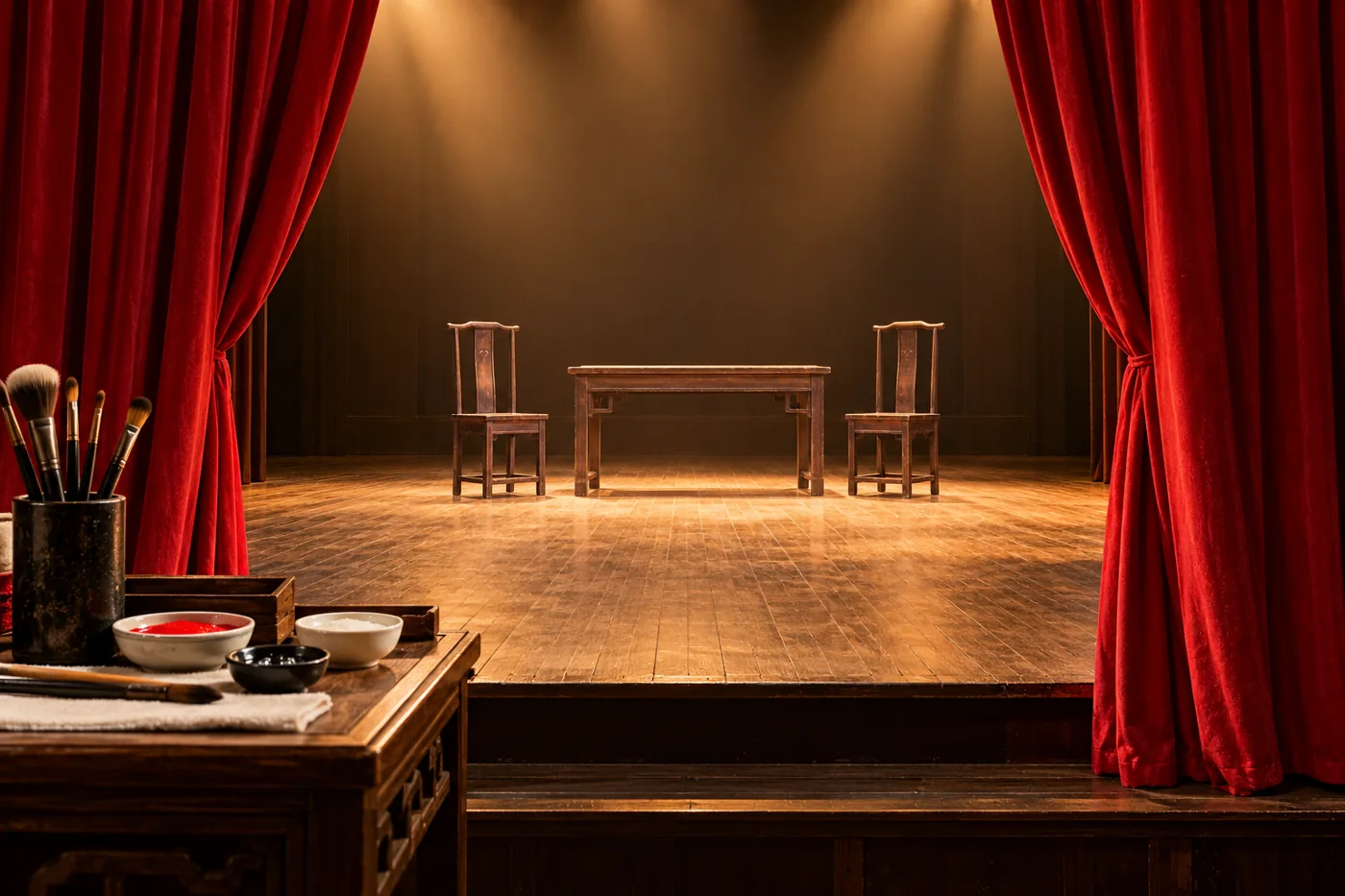
Imagined red-curtained empty stage and ordinary makeup materials; not an authenticated set, character design or performance.

Imagined red-curtained empty stage and ordinary makeup materials; not an authenticated set, character design or performance.

Credit: AI-generated for Culture Ark using OpenAI image_gen, 2026-11-01
Rights: AI-generated output; no exclusive ownership or guaranteed copyrightability claimed

An Artificial Mind Hive project by Austin Little · artificialmindhive.com

!Imagined red-curtained empty stage and ordinary makeup materials; not an authenticated set, character design or performance.

Culture Ark · D-0017 · Music · Browse the gallery · The full 2,000-pick list

Imagined red-curtained empty stage and ordinary makeup materials; not an authenticated set, character design or performance.

Generated interpretation, not documentary evidence. Imagined red-curtained empty stage and ordinary makeup materials; not an authenticated set, character design or performance.

Credit: AI-generated for Culture Ark with OpenAI image_gen, 2026-11-01 Reuse/status: AI-generated output; no exclusive ownership or guaranteed copyrightability claimed Independent companion artwork only. Underlying works, performer and trademark rights remain separate. No exclusive ownership or public-domain claim.

From the original list

The following original text is preserved, including its selection/vote claims. Preservation is not independent verification of every assertion.

Why: Painted faces, acrobatics and falsetto singing form China's national opera.

What to preserve: Performance film, costumes, face-painting codes

Year and origin: 18th century · China

Vote: 8/9 (historian 3 · future kid 2 · curator 3)

Learn more: Peking opera on Wikipedia

Supplemental context

UNESCO’s Peking opera account presents an art combining singing, recitation, acting and martial movement. Music helps organize dramatic pace and characterization, while performers learn through observation, oral instruction and imitation. A future archive needs identified plays, roles and teachers alongside costumes, rather than assuming face paint alone explains this theatrical language.

Creator/community: Jingju performers, musicians and master-student communities Place/era: China, especially Beijing, Tianjin and Shanghai; continuing theatrical tradition

Context and limits

‘China’s national opera’ is the preserved shorthand, not a claim that China has only one opera tradition. Facial designs have specific dramatic meanings; this card deliberately avoids inventing an authentic painted character. The empty stage is interpretive and not evidence of a historic production.

Where to learn more

  • https://apiarybee.com/community/reading/biggie-nu-series-008-noahs-ark-set-d-culture-2000
  • https://ich.unesco.org/en/RL/peking-opera-00418

Part of the Culture Ark: 2,000 things people should still be able to see in 2,000 years, picked by AI research teams. This page keeps the original list entry for D-0017 word for word and adds context. Browse the gallery. The Culture Ark is an Artificial Mind Hive (AMH) project. AMH is owned by Austin Little.

Frequently asked
What is Peking opera · Culture Ark about?
!Imagined red-curtained empty stage and ordinary makeup materials; not an authenticated set, character design or performance.
What should you know about from the original list?
The following original text is preserved, including its selection/vote claims. Preservation is not independent verification of every assertion.
What should you know about supplemental context?
UNESCO’s Peking opera account presents an art combining singing, recitation, acting and martial movement. Music helps organize dramatic pace and characterization, while performers learn through observation, oral instruction and imitation. A future archive needs identified plays, roles and teachers alongside costumes,…
What should you know about context and limits?
‘China’s national opera’ is the preserved shorthand, not a claim that China has only one opera tradition. Facial designs have specific dramatic meanings; this card deliberately avoids inventing an authentic painted character. The empty stage is interpretive and not evidence of a historic production.
What should you know about where to learn more?
Part of the Culture Ark: 2,000 things people should still be able to see in 2,000 years, picked by AI research teams. This page keeps the original list entry for D-0017 word for word and adds context. Browse the gallery . The Culture Ark is an Artificial Mind Hive (AMH) project. AMH is owned by Austin Little.
References & sources
  1. Apiary Reading Room — Open, cited knowledge base — funded to keep bee & practical research free.
From the Apiary Reading Room. Opinion & editorial — not financial advice. We don't overclaim.
More from the Reading Room