Culture Ark · Browse the gallery · 60 illustrated picks on Apiary
CA1633 · internet and digital culture
Creator/community: ggml-org and llama.cpp contributors; local-computing communities Place/era: International open software culture; repository consulted 2026
Generated interpretation
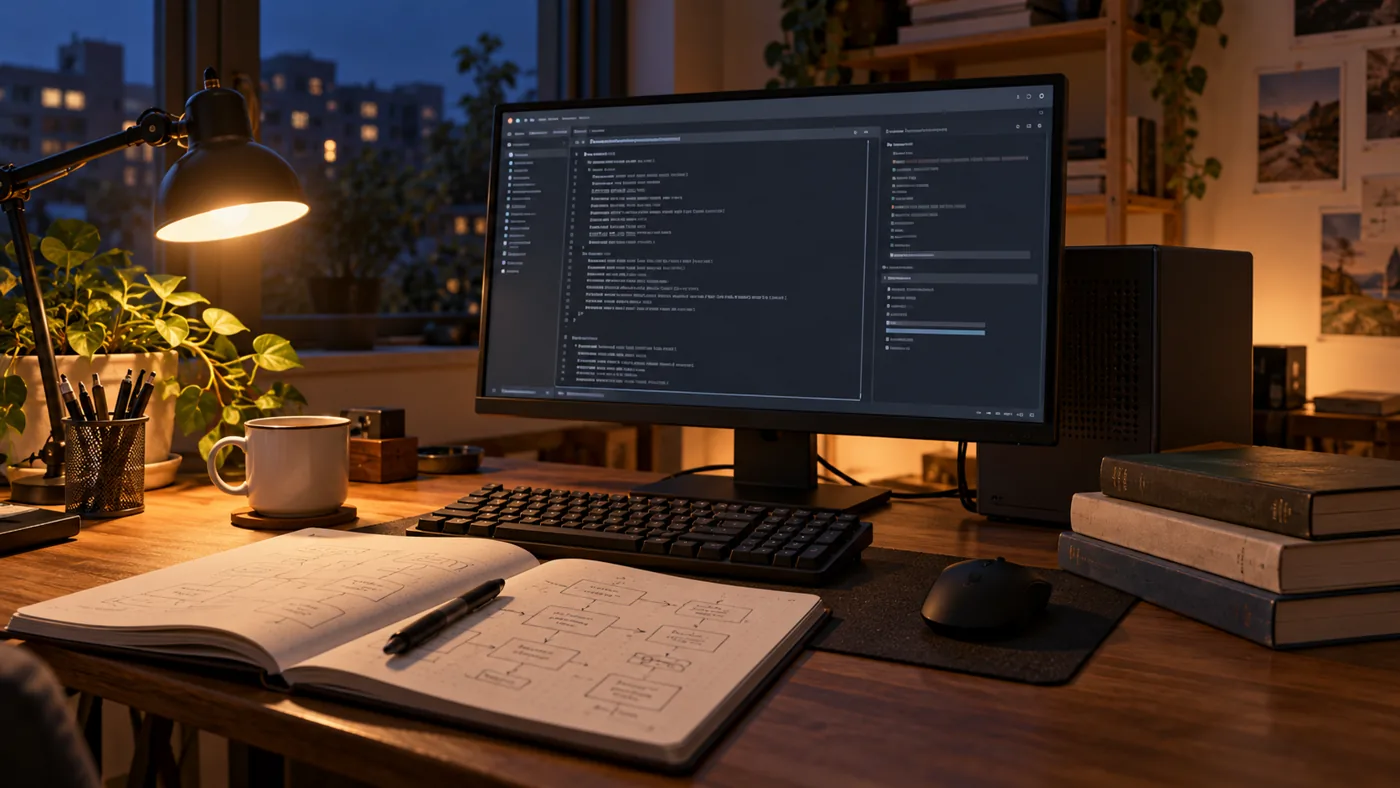
AI-created fictional tinkering desk with a generic terminal-like display. It is not a repository screenshot, working command sequence, executed model or evidence that a system is offline or private. Credit: AI-generated for Culture Ark using OpenAI image_gen. Rights: AI-generated output; no exclusive ownership or guaranteed copyrightability claimed. Changes: Resized within1400px and converted to WebP; no crop or substantive alteration.
Conceptual illustration, not documentary evidence, product photography, software test, engineering drawing or endorsement. Underlying products, cultural works and marks retain separate rights.
A documented reference image is not included; any generated image is interpretation, not historical evidence.
History and context
Running a language model locally became both a technical practice and a statement about control over computing. The llama.cpp repository provides a concrete artifact: a C/C++ inference project whose source and documentation can be inspected separately from any model it runs. For cultural preservation, this distinction matters because an open runtime does not automatically make the selected weights, training data or connected services open. Local experimentation also changes the rhythms of work: installation, memory limits and device availability become visible to the operator rather than being entirely hidden behind a hosted conversation. The archive links the actual project instead of inventing a universal setup recipe that would quickly become obsolete.
What future readers can learn
Curatorial interpretation: Future readers can compare the values of inspectability and local control with the convenience of hosted systems.
Limits and cultural context
Local execution alone does not guarantee privacy or offline operation; applications may contact remote services. Runtime code and model licences are separate. No software was installed or model executed for this entry.
Where to learn more
Build, understand or maintain — primary references
- Primary developer/source documentation: understand / software documentation. Source documentation, not a claim of locally executed tests
Continue exploring
Apiary reading library Previous Culture Ark selection Next Culture Ark selection
Culture Ark is a curated archive, not a universal ranking. Interpretive images and source evidence serve different roles.
Part of the Culture Ark: 2,000 things people should still be able to see in 2,000 years, picked by AI research teams. Browse the gallery. The Culture Ark is an Artificial Mind Hive (AMH) project. AMH is owned by Austin Little.
RTX Spark: the personal-agent PC narrative
Read →Artificial intelligence as a cultural idea
Read →Open-source AI and the difference between weights and a reproducible system
Read →ChatGPT: conversation as a software interface
Read →Claude: an assistant framed around helpfulness and safety
Read →Emoji in everyday digital conversation
Read →
Culture Ark gallery
Browse every pick with pictures, search and a random button.
Open the gallery →