Culture Ark · Browse the gallery · 60 illustrated picks on Apiary
CA0939 · ordinary life
Creator/community: Baule-attributed maker; attribution questioned in the collection essay Place/era: Côte d’Ivoire; 20th century
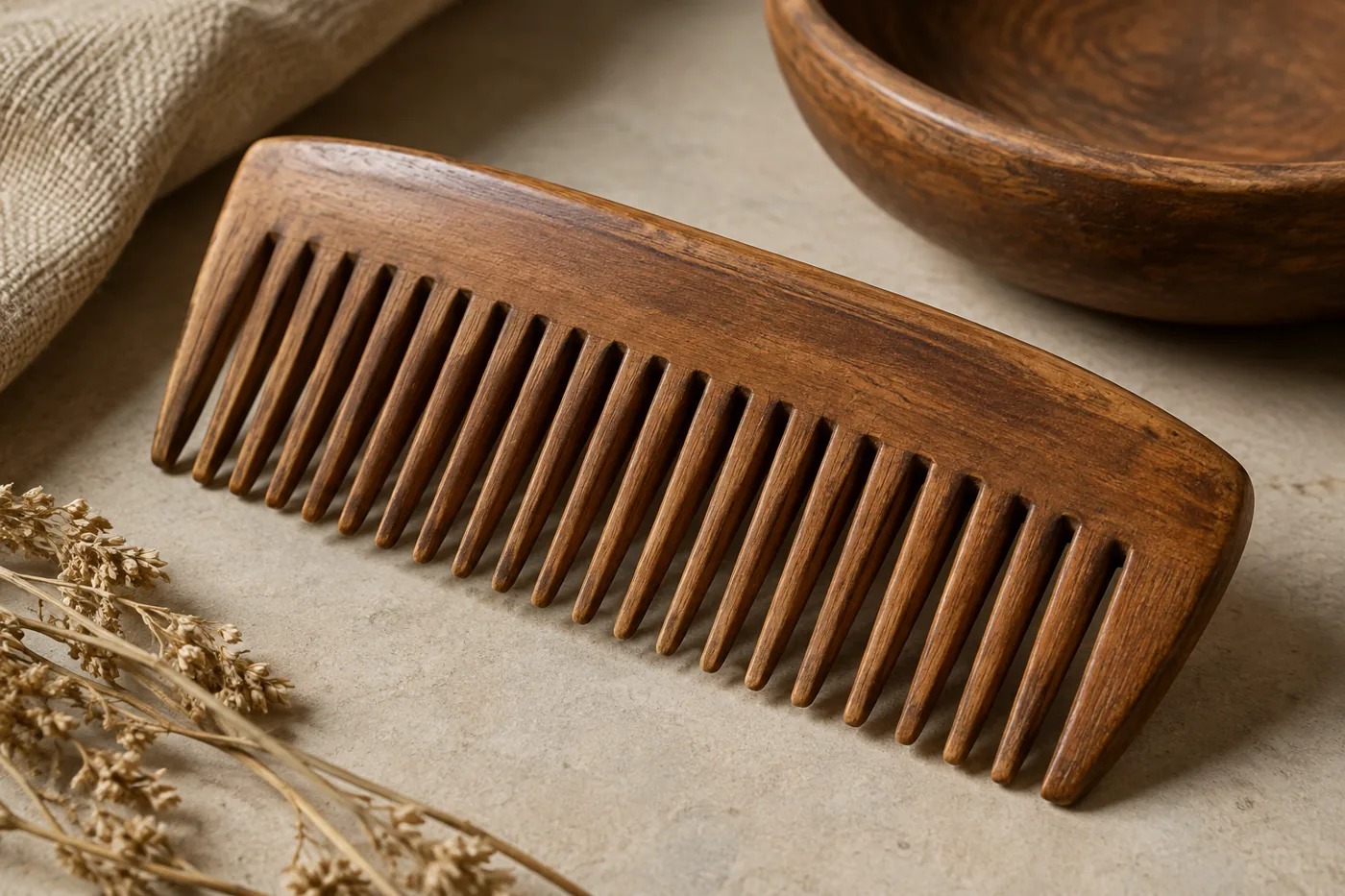
Generated interpretation
Imagined companion to Comb attributed to a Baule or neighbouring maker; does not document named people, a specific maker, owner, family, ritual or historical object. Credit: AI-generated with OpenAI image_gen for Culture Ark. Rights: Generated output; no exclusive ownership or copyrightability warranty; underlying cultural practices and third-party rights remain separate.. Changes: Resized within1400px and converted to WebP; no crop or substantive alteration.
No community endorsement or sacred authority implied. Imagined everyday settings and materials; not a functional construction guide or authenticated historical object.
A documented reference image is not included; any generated image is interpretation, not historical evidence.
History and context
The Sainsbury Centre's wooden comb 217 is topped by a carved head and bust. Its collection essay questions a straightforward Baule attribution, suggesting that its appearance may relate to a neighbouring area near Ligbi or Senufo communities. That uncertainty is important evidence, not an inconvenience to erase. The comb entered Robert and Lisa Sainsbury's collection in 1967 and was donated to the museum in 1973. At about 24 centimetres high, it joins grooming, personal appearance and sculpture in one object. It also shows how a useful possession can become detached from its original owner and acquire a new identity through collecting.
What future readers can learn
Curatorial interpretation: Adornment and grooming objects can carry artistic choices while also exposing the limits of museum classification.
Limits and cultural context
The essay’s suggestion that it may be a woman’s dress comb is conditional. Do not assert the original wearer’s gender, wealth or community as established fact.
Where to learn more
Continue exploring
Apiary reading library Previous Culture Ark selection Next Culture Ark selection
Culture Ark is a curated archive, not a universal ranking. Interpretive images and source evidence serve different roles.
Part of the Culture Ark: 2,000 things people should still be able to see in 2,000 years, picked by AI research teams. Browse the gallery. The Culture Ark is an Artificial Mind Hive (AMH) project. AMH is owned by Austin Little.
Bidri box probably intended for pan
Read →Silver coffee pot associated with Ottoman reception-room display
Read →Zhang workshop ceramic pillow with landscapes
Read →Japanese tobacco pouch and pipe using Dutch embossed leather
Read →Unfinished Moche textile intended as a chuspa
Read →Yoga as a cultural and philosophical practice
Read →
Culture Ark gallery
Browse every pick with pictures, search and a random button.
Open the gallery →