Culture Ark · Browse the gallery · 60 illustrated picks on Apiary
CA0935 · ordinary life
Creator/community: Unidentified German makers Place/era: German cultural context; ca. 1500–1525
Generated interpretation
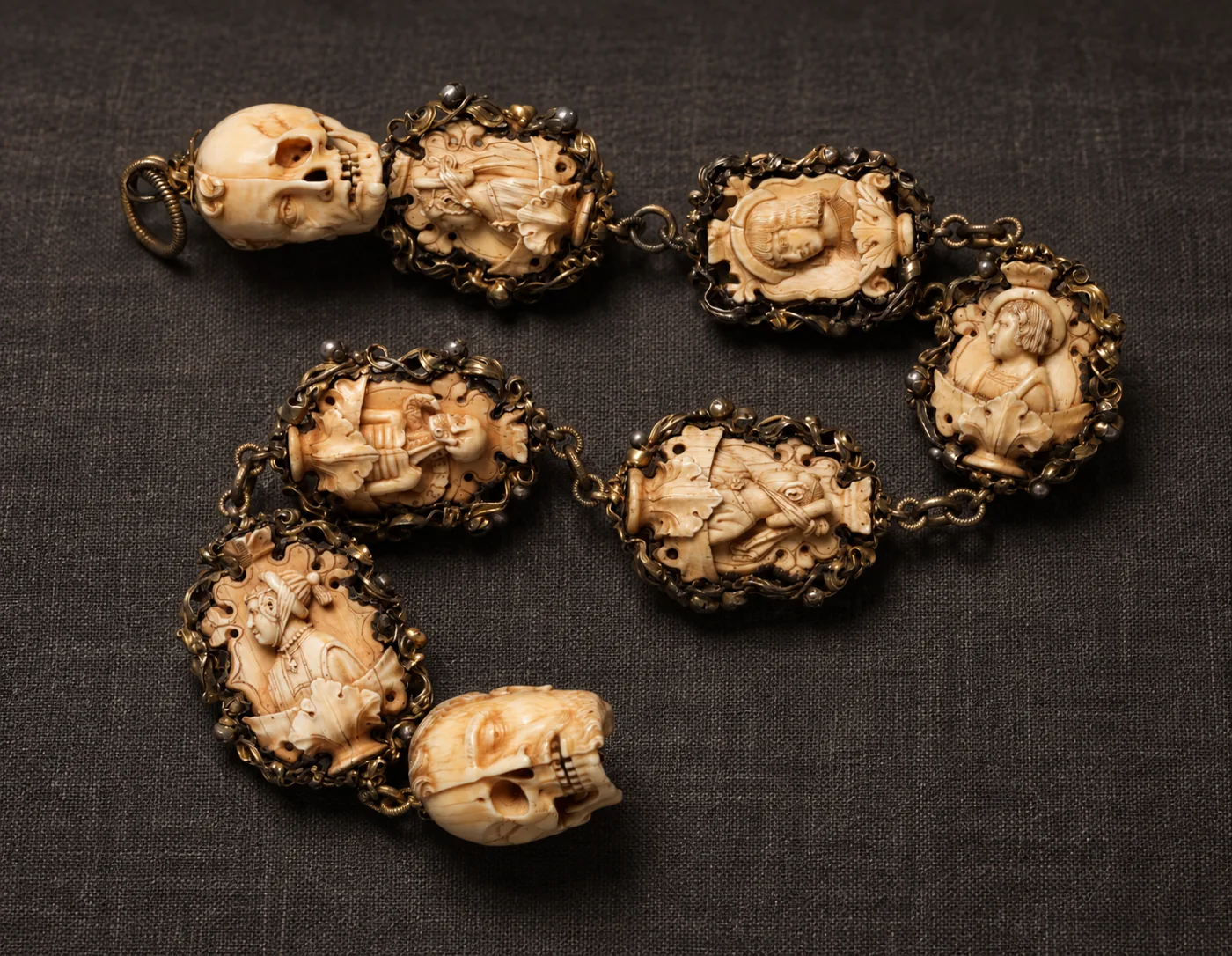
AI-created still life based on the public-domain rosary photograph. It preserves the small carved-bead and skull-terminal motif without depicting an actual prayer or adding graphic bodily decay. Credit: AI-generated for Culture Ark using OpenAI image_gen; public-domain reference credited below. Rights: AI-generated output; no exclusive ownership or guaranteed copyrightability claimed. Changes: Resized within1400px and converted to WebP; no crop or substantive alteration. Image source
Generated thematic illustration, not documentary evidence, an actual performance, or technical instruction. Cultural knowledge, underlying works, names and personality rights remain separate.
Documented reference / existing artwork
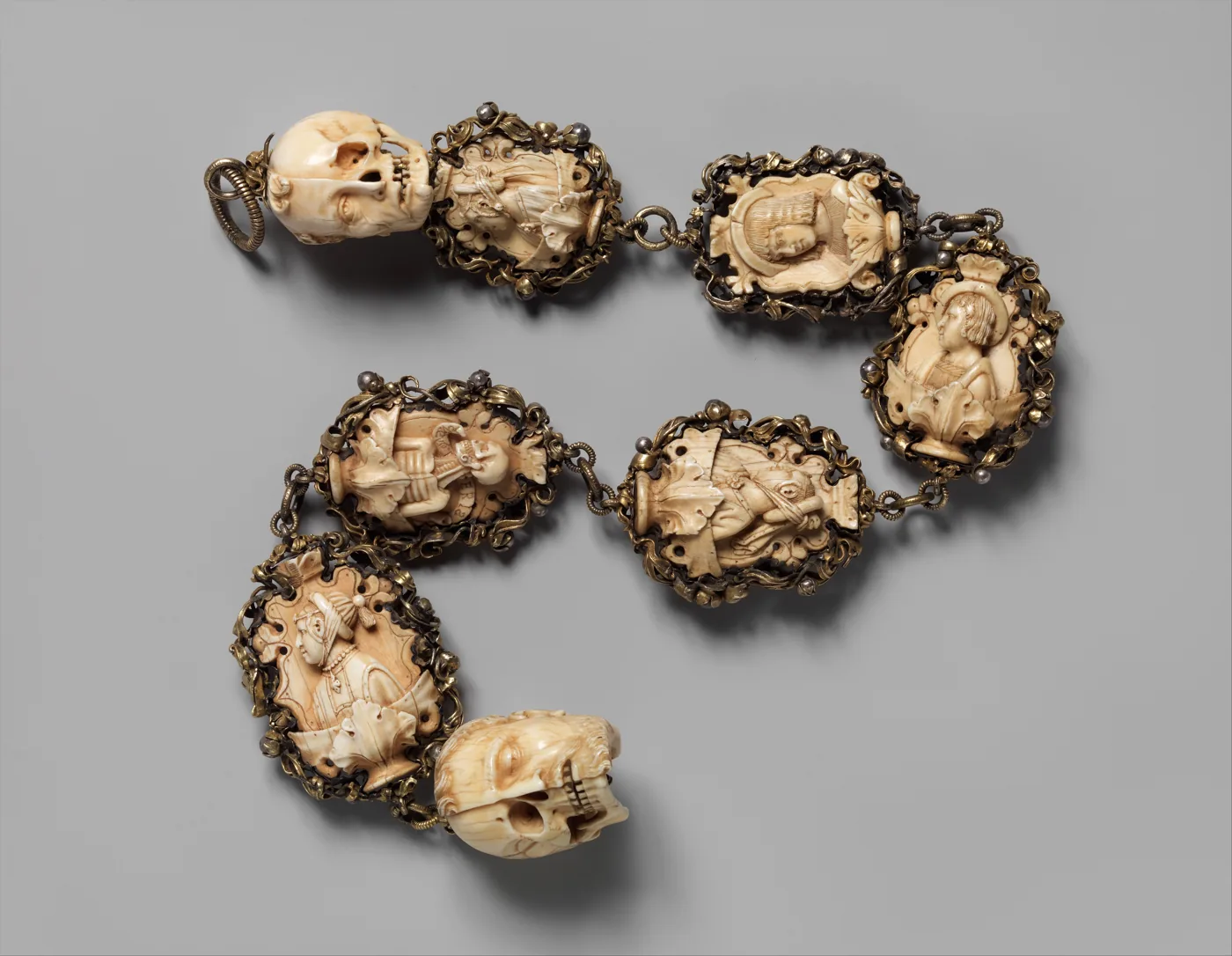
Rosary. ca. 1500–1525. The Metropolitan Museum of Art, 17.190.306. Credit: German / The Metropolitan Museum of Art. Gift of J. Pierpont Morgan, 1917. Rights: Public domain; Met Open Access. Changes: Resized within1400px and converted to WebP; no crop or substantive alteration. Image source Image licence
Met API explicitly marks isPublicDomain=true. Image reuse permission does not transfer ownership of the object or resolve cultural permissions, sacred significance, provenance or restitution questions. Retain the catalog context.
History and context
This early-16th-century rosary turns a devotional strand into a repeated encounter with mortality. The Met describes beads showing living figures on one side and skeletal forms on the other, with more graphic signs of decay at the terminals. Elephant ivory, silver and partly gilded mounts give the object a substantial material presence. It belongs here not as a universal model of Christian prayer but as a particular example of how belief could be reinforced through handling and looking. Its contrast between living appearance and death gives physical form to a moral reminder.
What future readers can learn
Curatorial interpretation: Religious routines could bring unsettling images into intimate, repeated daily use rather than keeping them apart in monumental settings.
Limits and cultural context
Contains death imagery. Historic ivory is described, not endorsed for new manufacture. Do not assume that this elaborate strand was typical of ordinary worshippers.
Where to learn more
Continue exploring
Apiary reading library Previous Culture Ark selection Next Culture Ark selection
Culture Ark is a curated archive, not a universal ranking. Interpretive images and source evidence serve different roles.
Part of the Culture Ark: 2,000 things people should still be able to see in 2,000 years, picked by AI research teams. Browse the gallery. The Culture Ark is an Artificial Mind Hive (AMH) project. AMH is owned by Austin Little.
Bidri box probably intended for pan
Read →Silver coffee pot associated with Ottoman reception-room display
Read →Zhang workshop ceramic pillow with landscapes
Read →Japanese tobacco pouch and pipe using Dutch embossed leather
Read →Unfinished Moche textile intended as a chuspa
Read →Yoga as a cultural and philosophical practice
Read →
Culture Ark gallery
Browse every pick with pictures, search and a random button.
Open the gallery →